Recent Episodes
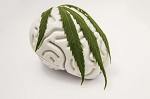
Pot Damages the teen Brain
If you're the parent of teenagers, it's time to talk about marijuana. So, what do you say when they retort, 'But it's being legalized everywhere!' Not true, but it is heading there. Dave, your kids are grown, but we can help parents inform their teens and it's timely because a recent survey found over one-third of high schoolers have smoked pot in the past year. These kids may not know their developing brain is especially sensitive to the effects of cannabis because the brain continues to evolve into early adulthood.
In one study, when scientists injected adolescent rats with a synthetic cannabinoid, similar to the active ingredient in marijuana, they saw a large spike in the brain's excitatory circuit. This circuit plays a role in reward and addiction and is called the nigrostriatal dopaminergic pathway. This pathway changes dynamically throughout puberty, so teens smoking marijuana may make themselves highly vulnerable to drug addiction.
The scary thing is that marijuana can cause abnormalities in this pathway which are also linked to schizophrenia and depression. Marijuana can also disrupt a teen's process of developing a good inhibitory system in the prefrontal cortex, so that they won't be able to plan or control their behavior as adults. It also may lower intelligence by changing activities in the brain that control growth of neurons in the prefrontal cortex. It's especially true during the later years of maturing.
So, parents, here you have it. Sure, smoking marijuana may have its rightful place, but when? And for whom? Those are vital questions we all have to ask.
More Information
Cannabinoid Exposure During Adolescence Disrupts Neural Regulation
Young rats injected with a synthetic cannabinoid have more of the brain's motivating dopaminergic signaling and fewer numbers of inhibitory neurons than controls...
National Institute on Drug Abuse for Teens Marijuana Fact Page
Marijuana is the dried leaves and flowers of the Cannabis sativa or Cannabis indica plant. Stronger forms of the drug include high potency strains - known as sinsemilla (sin-seh-me-yah), hashish (hash for short), and extracts including hash oil, shatter, wax, and budder. Of the more than 500 chemicals in marijuana, delta-9-tetrahydrocannabinol, known as THC, is responsible for many of the drug's psychotropic (mind-altering) effects. It's this chemical that distorts how the mind perceives the world. In other words, it is what makes you high...
602.07 / HHH1 - Adolescent cannabinoid exposure increases nigrostriatal dopaminergic transmission
Adolescence is a period characterized by gradual behavioral and physiological transition from childhood to adulthood. During adolescence, critical neuronal circuits changes to respond to physiological changes and to adapt to environmental stimuli (Sturman and Moghaddam 2011). In particular, nigrostriatal dopaminergic (DA) pathways are in constant change during the development of animals (McCutcheon and Marinelli 2009). In early adolescence, the DA activity is lower compared to adulthood, but during the middle and late adolescence, the DA activity is higher than in adults (McCutcheon and Marinelli 2009; Naneix et al 2012). The dynamic changes observed in DA circuits suggest that adolescence is a period of high vulnerability to the long-term effects associated to drugs of abuse (Schneider 2008)...