Recent Episodes
Public Health Concerns for Neanderthals
We're all living out the nightmare of the COVID zoonosis which is when a disease jumps from animals to humans. But the phenomenon is ancient as evidenced by the "Old Man of La Chapelle". He's a fossilized Neanderthal skeleton discovered in a French cave in nineteen-o-eight. Neanderthals disappeared forty thousand years ago.
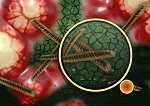
New analysis suggests that an infection he got from butchering animals led to changes in his bones that had long been mistaken for osteoarthritis. Even two years ago, an analysis reported that his bones showed signs of advanced osteoarthritis in the spine and hip. The new report came after scientists compared the impact of bone changes from various diseases. It led them to conclude inflammation was a major factor and to a diagnosis of Brucella infection.
People today get it from infected animals, contaminated foods, and aerosols. Brucellosis remains the leading zoonotic bacterial infection worldwide, mostly from cattle, sheep, goats, even dogs. It's rare in the US since animals are vaccinated and dairy is pasteurized. Symptoms include fever, fatigue, pain in muscles and joints. In some people the symptoms never go away and include arthritis, swelling of the testicles and heart, and neurologic symptoms. For years, the Neanderthal's remains made us think they stooped when they didn't.
Knowing that zoonosis has plagued not only us but our prehistoric cousins is sobering and warns us public health vigilance is key to our well-being.
More Information
Ancient case of disease spillover discovered in Neanderthal man who got sick butchering raw meat
Scientists studying ancient disease have uncovered one of the earliest examples of spillover -- when a disease jumps from an animal to a human -- and it happened to a Neanderthal man who likely got sick butchering or cooking raw meat...
Possible vertebral brucellosis infection in a Neanderthal
The La Chapelle-aux-Saints 1 skeleton of an old (>60-year-old) male Neanderthal is renowned for the advanced osteoarthritis of its spinal column and hip joint, and their implications for posture and lifestyle in these Mid- to Late Pleistocene humans. Reassessment of the pathologic lesions reveals erosions at multiple non-contiguous vertebrae and reactive bone formation extending far beyond the left hip joint, which suggests the additional diagnosis of brucellosis. This implies the earliest secure evidence of this zoonotic disease in hominin evolution...
homo neanderthalensis: la chapelle-aux-saints
The fossil La Chappelle-aux-Saints is represented by a nearly complete edentulous cranium and mandible...