Medical Discovery NewsBridging the World of Medical Discovery and You

Recent Episodes

Pump For Perfect Blood Sugar

MP3 WAV

  • For people with diabetes, the challenge is to keep their glucose, or blood sugar level, from getting too high or too low.

    Either way can make you pretty sick.

    The problem is, some people either forget to or find it hard to monitor their blood sugar levels throughout the day. So, ideally this is done for you. That could happen with a pump being developed to automatically measure the blood glucose level and administer the correct hormones.

    This new device is for people with Type 1 diabetes, where the pancreas stops making insulin. Normally, the pancreas secretes insulin into the bloodstream when we eat.

    As insulin circulates, it acts like a key by unlocking molecular doors that allow sugar to enter the body's cells.

    Without insulin, our cells would not get the energy they need, and the amount of sugar in our blood would get too high – eventually damaging the organs. That's why Type 1 diabetics must monitor their blood glucose levels and inject themselves with insulin.

    While a diabetic's blood sugar could get too high, it could also dip too low – something called hypoglycemia. That happens when you take too much insulin, don't eat enough or suddenly increase exercise without eating more.

    That's why the new device is ideal. It'll administer insulin to lower the blood glucose level and the hormone, glucagon, which raises it.

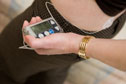
    The pump should be about the size of a cell phone. It'll be connected to a sensor implanted under the skin to take real time measurements of blood glucose levels.

    Then a computer chip will use a sophisticated algorithm to instruct the pump to deliver the appropriate amount of hormones.

    The research team could have the pump ready for regulatory approval within seven years. If successful, millions of diabetics could live healthier and more active lives.

More Information

For a very readable article go to ScienceNews magazine online where they described the development of this dual pump that is mated to a sensor that will monitor and maintain healthy blood glucose levels.
For more information...

A similar article appeared at boston.com and sciencedaily.com.

To learn about the Juvenile Diabetes Research Foundation's artificial pancreas project go here.

For reliable and extensive information about diabetes, go to the web site provided by MedlinePlus. MedlinePlus is the National Institutes of Health's Web site for patients and their families and friends. Produced by the National Library of Medicine, it brings you information about diseases, conditions, and wellness issues in language you can understand. MedlinePlus offers reliable, up-to-date health information, anytime, anywhere, for free. The webpage about diabetes can be found here.


Two individuals wearing headphones stand in a recording booth, speaking into microphones with a music stand holding printed pages between them.

 Medicine...

Medicine is constantly advancing – that is a great thing about life in the 21st century. But it doesn’t just happen. Dedicated biomedical scientists are making discoveries that translate into those new medical advances.

Biomedical science is broad, encompassing everything from social science to microbiology, biochemistry, epidemiology, to structural biology and bioinformatics to name just a few areas. And, it can involve basic fundamental biology, the use of AI and chemistry to clinical studies that evaluate new medicines in patients.

No matter the research focus, the goal is always the same, to advance human health. It may take a few months, a few years or for fundamental science, a few decades. Few people make the connection that biomedical science is medicine and that biomedical scientists are working today on the medicine of tomorrow. Our weekly 500-word newspaper columns and 2-minute radio shows and podcasts provide insights into a broad range of biomedical science topics.

Medical Discovery News is dedicated to explaining discoveries in biomedical research and their promise for the future of medicine.

Podcasts

Alternatively, you can copy and paste the following web address (URL) into iTunes as a new subscription:
https://www.medicaldiscoverynews.com/shows/audio/mdnews.rss

You can also search and subscribe to "Medical Discovery News" in the podcast section of iTunes.

The www.medicaldiscoverynews.com web site and Medical Discovery News radio program (Program) are made possible by The University of Texas Medical Branch at Galveston (UTMB)as a community service and are intended to advance UTMB's mission of providing scholarly teaching, innovative scientific investigation, and state-of-the-art patient care in a learning environment to better the health of society and its commitment to the discovery of new innovative biomedical and health services knowledge leading to increasingly effective and accessible health care for the citizens of Texas.

All information provided on the web site and in the Program is for informational purposes only and is not intended for use as diagnosis or treatment of a health problem or as a substitute for consulting a licensed medical professional. Any information obtained by participating as a web site visitor or program listener is not intended to and should not be considered to constitute medical advice.

Thoughts and opinions expressed on the Program or on the website are those of the authors or guests and do not necessarily reflect the opinions of UTMB. The provision of links to other websites is not to be construed as written or implied sponsorship or endorsement of such websites by UTMB.

Please contact Dr. David Niesel or Dr. Norbert Herzog via email with any concerns, suggestions or comments.

All rights are reserved to information provided on the website or other information sources. No part of these programs can be reproduced stored in a retrieval system or transcribed in any form or by any means for personal or financial gained without the express written permission of Drs. Niesel and Dr. Herzog.