Medical Discovery NewsBridging the World of Medical Discovery and You

Recent Episodes

Restoring Retinas

MP3 WAV

  • Norbert, you know we have to do these every once in a while' the senior episodes. I can't even disagree with you anymore since the aches and pains are just piling on! So this time we're talking about retinal detachment which can happen the older we get. The good news is there's a new gel being developed that improves the outcome of surgeries to repair torn retinas.

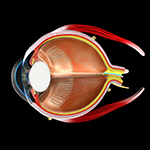
    When light shines into our eyes, it passes through the cornea, aqueous humor, lens, and something called vitreous body which maintains the shape of our eyes. The vitreous body consists of a clear jelly-like substance that transmits light to the retina in the back of the eye. It also presses on the retina to keep it together.

    With age, the vitreous can start to liquefy and lose structure which pulls on the retina, risking a tear and detachment. The problem with the existing treatment is that it replaces the vitreous body with either a gas or oil but each carries its own complications.

    The new gel, however, seems to be biocompatible and retains vision. They start with two types of star-shaped polymers each with a unique reactive chemical group on the ends. In separate reactions, they allow both polymers to start the reactions to create a gel but stop the process before it's complete. Then they mixed the two types of polymers together, injected them into rabbit eyes and let the polymerization go to completion.

    The rabbit's repaired retinas stayed attached for over four hundred days. Not only were there no side effects, the gel didn't alter vision. They still need to work out issues such as whether the gel is easily removable and will remain stable and clear for years.

More Information

Biomedicine: An improved gel for detached retinas
Surgical repair of a detached retina involves the injection of a gas or silicone oil into the eye to hold the retina in place. The development of a gel with more-desirable properties than these substances might improve the success of this procedure...

Retinal detachment repair
Retinal detachment repair is eye surgery to place a retina back into its normal position. The retina is the light-sensitive tissue in the back of the eye. Detachment means that it has pulled away from the layers of tissue around it. This article describes the repair of rhegmatogenous retinal detachments. These occur due to a hole or tear in the retina...

Fast-forming hydrogel with ultralow polymeric content as an artificial vitreous body
Degradation-induced swelling in implanted hydrogels can cause severe adverse reactions in surrounding tissues. Here, we report a new class of hydrogel with extremely low swelling pressure, and demonstrate its use as an artificial vitreous body...

 Medicine...

Medicine is constantly advancing – that is a great thing about life in the 21st century. But it doesn’t just happen. Dedicated biomedical scientists are making discoveries that translate into those new medical advances.

Biomedical science is broad, encompassing everything from social science to microbiology, biochemistry, epidemiology, to structural biology and bioinformatics to name just a few areas. And, it can involve basic fundamental biology, the use of AI and chemistry to clinical studies that evaluate new medicines in patients.

No matter the research focus, the goal is always the same, to advance human health. It may take a few months, a few years or for fundamental science, a few decades. Few people make the connection that biomedical science is medicine and that biomedical scientists are working today on the medicine of tomorrow. Our weekly 500-word newspaper columns and 2-minute radio shows and podcasts provide insights into a broad range of biomedical science topics.

Medical Discovery News is dedicated to explaining discoveries in biomedical research and their promise for the future of medicine.

Podcasts

Alternatively, you can copy and paste the following web address (URL) into iTunes as a new subscription:
https://www.medicaldiscoverynews.com/shows/audio/mdnews.rss

You can also search and subscribe to "Medical Discovery News" in the podcast section of iTunes.

See all podcasts and radio stations

The www.medicaldiscoverynews.com web site and Medical Discovery News radio program (Program) are made possible by The University of Texas Medical Branch at Galveston (UTMB)as a community service and are intended to advance UTMB's mission of providing scholarly teaching, innovative scientific investigation, and state-of-the-art patient care in a learning environment to better the health of society and its commitment to the discovery of new innovative biomedical and health services knowledge leading to increasingly effective and accessible health care for the citizens of Texas.

All information provided on the web site and in the Program is for informational purposes only and is not intended for use as diagnosis or treatment of a health problem or as a substitute for consulting a licensed medical professional. Any information obtained by participating as a web site visitor or program listener is not intended to and should not be considered to constitute medical advice.

Thoughts and opinions expressed on the Program or on the website are those of the authors or guests and do not necessarily reflect the opinions of UTMB. The provision of links to other websites is not to be construed as written or implied sponsorship or endorsement of such websites by UTMB.

Please contact Dr. David Niesel or Dr. Norbert Herzog via email with any concerns, suggestions or comments.

All rights are reserved to information provided on the website or other information sources. No part of these programs can be reproduced stored in a retrieval system or transcribed in any form or by any means for personal or financial gained without the express written permission of Drs. Niesel and Dr. Herzog.