Recent Episodes
Restoring the Microbiome of C-Section Babies
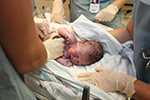
Among the many decisions facing a new mother is whether to have a natural childbirth or a caesarian section. Sometimes, due to medical circumstances, a C-section is the only choice. The question is whether C-section births have a negative health impact on the baby.
Some reports have linked it to later obesity, asthma, and Type I diabetes. So scientists have been asking, 'What is different during C-section births?'
For one, we know natural childbirth is stressful to the baby, who receives mechanoconductive signals as it's muscularly moved through the birth canal. Researchers have also examined the microbiome of babies born by C-section and natural birth.
Our microbiome is the total population of microbes that live in and on us, which outnumber our own cells. They're a first line of defense against invading disease-causing microbes and influence factors such as our metabolism, emotions and even behavior. Scientists found that babies born vaginally are exposed to microbes in the birth canal while C-section babies end up with a microbiome resembling their mother's skin.
In a recent study, eighteen mothers who were planning on C-section deliveries agreed to have their babies' mouth, face, and body swabbed with their vaginal microbiome right after birth. After one month of monitoring the babies' bacterial populations of the skin, mouth, arm, foot and anus, their microbiome were found to resemble those of vaginally born babies.
What won't be clear for years is whether these babies will benefit from being swabbed compared to the un-swabbed C-section babies. If so, it cements the broad influence our microbiome has on our health.