Medical Discovery NewsBridging the World of Medical Discovery and You

Recent Episodes

Ripley in a Dish

MP3 WAV

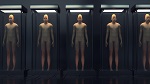
  • If you're a fan of the Alien movies with Sigourney Weaver, she plays the ultimate hero, Ripley. In the fourth movie of the series, there was a "company" effort to clone her and so you saw incubation chambers with floating version of Ripley in various stages of development.

    The thing is, Dave, it's not so futuristic. Scientists have gotten pretty far with test tube embryos of mice. In one experiment, while some embryos were left in a mother's womb, others were harvested and grown in the lab. The lab ones grew in a nutrient solution first then were transferred to a gently swirling glass beaker.

    Amazingly the embryos' development followed their genetic code whether they were in the uterus or lab. By day eleven, a beating heart appeared along with buds of tissue for limbs, signs of the digestive tract and auditory and visual systems. At this point, the embryos in the lab needed a functioning blood supply to get to full term but that's still a challenge scientists haven't met.

    Being able to view closeup how mouse embryos develop can maybe give us a better insight into birth defects and how to intervene to improve human health. As for whether we can be grown in a lab? Our embryos are highly complex and while our information is also stored in genetic code, there's likely to be a lot of cross-talk with the mother's cells and tissues crucial to our growth. Plus, just as in the Alien movie, the many incomplete and defective versions of Ripley is a very real ethical issue.

    Still, like it or not, one day it's coming.

More Information

What's next for lab-grown human embryos?
Researchers are now permitted to grow human embryos in the lab for longer than 14 days. Here's what they could learn...

Limit on lab-grown human embryos dropped by stem-cell body
The International Society for Stem Cell Research relaxed the famous 14-day rule on culturing human embryos in its latest research guidelines...

Advance In Human Embryo Research Rekindles Ethical Debate
Scientists have been able to make and study human embryos in their labs for decades. But they have never been able to keep them alive outside a woman's womb for more than about a week. That limitation meant scientists were unable to conduct a range of detailed research into early human development. But now researchers say they have discovered a way to keep human embryos alive in the laboratory about a week longer than ever before, and through a critical period of development...


Two individuals wearing headphones stand in a recording booth, speaking into microphones with a music stand holding printed pages between them.

 Medicine...

Medicine is constantly advancing – that is a great thing about life in the 21st century. But it doesn’t just happen. Dedicated biomedical scientists are making discoveries that translate into those new medical advances.

Biomedical science is broad, encompassing everything from social science to microbiology, biochemistry, epidemiology, to structural biology and bioinformatics to name just a few areas. And, it can involve basic fundamental biology, the use of AI and chemistry to clinical studies that evaluate new medicines in patients.

No matter the research focus, the goal is always the same, to advance human health. It may take a few months, a few years or for fundamental science, a few decades. Few people make the connection that biomedical science is medicine and that biomedical scientists are working today on the medicine of tomorrow. Our weekly 500-word newspaper columns and 2-minute radio shows and podcasts provide insights into a broad range of biomedical science topics.

Medical Discovery News is dedicated to explaining discoveries in biomedical research and their promise for the future of medicine.

Podcasts

Alternatively, you can copy and paste the following web address (URL) into iTunes as a new subscription:
https://www.medicaldiscoverynews.com/shows/audio/mdnews.rss

You can also search and subscribe to "Medical Discovery News" in the podcast section of iTunes.

The www.medicaldiscoverynews.com web site and Medical Discovery News radio program (Program) are made possible by The University of Texas Medical Branch at Galveston (UTMB)as a community service and are intended to advance UTMB's mission of providing scholarly teaching, innovative scientific investigation, and state-of-the-art patient care in a learning environment to better the health of society and its commitment to the discovery of new innovative biomedical and health services knowledge leading to increasingly effective and accessible health care for the citizens of Texas.

All information provided on the web site and in the Program is for informational purposes only and is not intended for use as diagnosis or treatment of a health problem or as a substitute for consulting a licensed medical professional. Any information obtained by participating as a web site visitor or program listener is not intended to and should not be considered to constitute medical advice.

Thoughts and opinions expressed on the Program or on the website are those of the authors or guests and do not necessarily reflect the opinions of UTMB. The provision of links to other websites is not to be construed as written or implied sponsorship or endorsement of such websites by UTMB.

Please contact Dr. David Niesel or Dr. Norbert Herzog via email with any concerns, suggestions or comments.

All rights are reserved to information provided on the website or other information sources. No part of these programs can be reproduced stored in a retrieval system or transcribed in any form or by any means for personal or financial gained without the express written permission of Drs. Niesel and Dr. Herzog.