Medical Discovery NewsBridging the World of Medical Discovery and You

Recent Episodes

Risky Business

MP3 WAV

  • As scientists, we've made sacrifices some might consider a hardship. Our training took years, plus many, many lab hours and nights spent on the computer - all for modest pay. But honestly, those sacrifices pale in comparison to our predecessors, some of whom were persecuted, tortured, and killed for their beliefs.

    One major figure was a highly educated scientist known as Rhazes. He lived in Iran between 860 and 932 AD and was regarded in Europe as one of the fifteen great sources of knowledge. Rhazes authored medical texts used by Western physicians until the rise of modern medicine. Yet, Rhazes was persecuted for his open-mindedness and belief that religious fanaticism breeds war and hatred. For that, he was exiled multiple times.

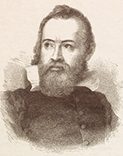
    Scientific giant Galileo Galilei was born in 1564 in Pisa, Italy. The mathematician disproved Aristotle's dogma that heavier objects fall faster than lighter ones. Then, after hearing about the telescope, he made one without ever having seen it. Eventually, he used a telescope to identify Jupiter's moons and began thinking Earth was not the center of the universe. He wrote in support of Copernicus' theory that Earth was rotating around the sun. When denounced by the Catholic Church, Galileo stated the bible was irrelevant in scientific arguments, which got him a lifetime house arrest.

    Another persecuted scientist was Michael Servetus, a Spanish physician in the 16th century who discovered pulmonary circulation but was burned alive by the Protestant Inquisition.

    Even Albert Einstein was a victim. His theory of relativity and passivist stance brought him to Hitler's attention. Fortunately, Einstein was in California when the Nazis seized his property and burned his books.

    Without the courage of these early scientists, some of the greatest discoveries would have had to wait. What they endured highlights the importance of an intellectually open society.

More Information

Notable Scientists: Life Sciences
A compilation of biographies of well-known and influential scientists.

Rhazes (835-925 A.D.): Medical Scholar of Islam
A great article on Abu Bakr Mohammad ibn Zakariya al-Razi, known in the West as Rhazes. Additional information is available here and here.

Galileo Galilei
A biography of one of the most intriguing and revered of scientists. Another extensive biography of him is available here.

Henry Oldenburg
Henry Oldenburg is a much less well-known man involved in science who was accused and jailed for treason simply for communicating with scientists around the world during a time of war for England. A great article on his arrest and imprisonment is available here.

Michael Servetus
The Servetus International Society was established in March 2003 and has a web page with a great deal of information about Michael Servetus, a Spanish physician who escaped the Spanish Inquisition only to be arrested, tortured, and burned at the stake by the Protestant Inquisition in Switzerland.

Albert Einstein
Almost everyone has heard of Albert Einstein and has seen one of the many images of him. However, fewer people know about his life. The Nobel Prize Foundation offers this nice biography on him. Additional information is available on the Albert Einstein Web site.

Two individuals wearing headphones stand in a recording booth, speaking into microphones with a music stand holding printed pages between them.

 Medicine...

Medicine is constantly advancing – that is a great thing about life in the 21st century. But it doesn’t just happen. Dedicated biomedical scientists are making discoveries that translate into those new medical advances.

Biomedical science is broad, encompassing everything from social science to microbiology, biochemistry, epidemiology, to structural biology and bioinformatics to name just a few areas. And, it can involve basic fundamental biology, the use of AI and chemistry to clinical studies that evaluate new medicines in patients.

No matter the research focus, the goal is always the same, to advance human health. It may take a few months, a few years or for fundamental science, a few decades. Few people make the connection that biomedical science is medicine and that biomedical scientists are working today on the medicine of tomorrow. Our weekly 500-word newspaper columns and 2-minute radio shows and podcasts provide insights into a broad range of biomedical science topics.

Medical Discovery News is dedicated to explaining discoveries in biomedical research and their promise for the future of medicine.

Podcasts

Alternatively, you can copy and paste the following web address (URL) into iTunes as a new subscription:
https://www.medicaldiscoverynews.com/shows/audio/mdnews.rss

You can also search and subscribe to "Medical Discovery News" in the podcast section of iTunes.

The www.medicaldiscoverynews.com web site and Medical Discovery News radio program (Program) are made possible by The University of Texas Medical Branch at Galveston (UTMB)as a community service and are intended to advance UTMB's mission of providing scholarly teaching, innovative scientific investigation, and state-of-the-art patient care in a learning environment to better the health of society and its commitment to the discovery of new innovative biomedical and health services knowledge leading to increasingly effective and accessible health care for the citizens of Texas.

All information provided on the web site and in the Program is for informational purposes only and is not intended for use as diagnosis or treatment of a health problem or as a substitute for consulting a licensed medical professional. Any information obtained by participating as a web site visitor or program listener is not intended to and should not be considered to constitute medical advice.

Thoughts and opinions expressed on the Program or on the website are those of the authors or guests and do not necessarily reflect the opinions of UTMB. The provision of links to other websites is not to be construed as written or implied sponsorship or endorsement of such websites by UTMB.

Please contact Dr. David Niesel or Dr. Norbert Herzog via email with any concerns, suggestions or comments.

All rights are reserved to information provided on the website or other information sources. No part of these programs can be reproduced stored in a retrieval system or transcribed in any form or by any means for personal or financial gained without the express written permission of Drs. Niesel and Dr. Herzog.