
Medical Discovery NewsBridging the World of Medical Discovery and You

Recent Episodes

illustration of woman's breast

Screening When Breasts are Dense

MP3 WAV

  • Many women who recently learned they have dense breast tissue may not know that extra screening can save lives.  

    Dense breast tissue shows up whiter than fatty breast tissue, which makes it harder to spot the white lesions of early-stage breast cancer. This means cancer in dense breast may be discovered later, giving these women poorer survival outcomes.  

    A new study of 9,000 UK women questioned whether extra screening can find cancer and which types are best. The short answer is yes. There are three types of scans and they all beat regular mammograms. The Automated Breast Ultrasound uses 3D ultrasound technology to image the entire breast.  

    The AbMRI injects a dye before the patient gets a magnetic scan to produce high-resolution images of the breast and body.  The last is Contrast Enhanced Mammography which is like a regular mammogram, but with an IV injection of iodine-based dye. It highlights abnormal blood vessels and hyperactive tissues that can happen with cancer.   

    The last two scans detected 85 cancers that regular mammograms missed. The MRI and iodine mammogram also found three times as many invasive cancers as the whole breast ultrasound. The tumors they found were also smaller, which means they can detect early-stage cancer.  That can lead to better outcomes.  

    Researchers predict adding the two scans would detect 3,500 more cancers a year in the UK, saving an extra 700 lives. Talk with your doctor about getting extra scans if you have dense breast tissue.     

More Information

Comparison of supplemental breast cancer imaging techniques—interim results from the BRAID randomised controlled trial
It is not known which supplemental imaging technique is most beneficial for women with dense breasts attending breast screening. This study compares abbreviated MRI, automated whole breast ultrasound (ABUS), and contrast-enhanced mammography versus standard of care in women with dense breasts and a negative mammogram. We report on interim results from the first round of supplemental imaging.

Pros and Cons for Automated Breast Ultrasound (ABUS): A Narrative Review
Automated breast ultrasound (ABUS) is an ultrasound technique that tends to be increasingly used as a supplementary technique in the evaluation of patients with dense glandular breasts. Patients with dense breasts have an increased risk of developing breast cancer compared to patients with fatty breasts. Furthermore, for this group of patients, mammography has a low sensitivity in detecting breast cancers, especially if it is not associated with architectural distortion or calcifications. ABUS is a standardized examination with many advantages in both screening and diagnostic settings: it increases the detection rate of breast cancer, improves the workflow, and reduces the examination time. 

Abbreviated Breast MRI: State of the Art
Abbreviated MRI is an umbrella term, defined as a focused MRI examination tailored to answer a single specific clinical question. For abbreviated breast MRI, this question is: "Is there evidence of breast cancer?" Abbreviated MRI of the breast makes maximum use of the fact that the kinetics of breast cancers and of benign tissue differ most in the very early postcontrast phase; therefore, abbreviated breast MRI focuses on this period. 
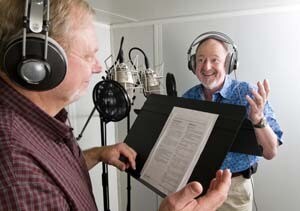
Two individuals wearing headphones stand in a recording booth, speaking into microphones with a music stand holding printed pages between them.

 Medicine...

Medicine is constantly advancing – that is a great thing about life in the 21st century. But it doesn’t just happen. Dedicated biomedical scientists are making discoveries that translate into those new medical advances.

Biomedical science is broad, encompassing everything from social science to microbiology, biochemistry, epidemiology, to structural biology and bioinformatics to name just a few areas. And, it can involve basic fundamental biology, the use of AI and chemistry to clinical studies that evaluate new medicines in patients.

No matter the research focus, the goal is always the same, to advance human health. It may take a few months, a few years or for fundamental science, a few decades. Few people make the connection that biomedical science is medicine and that biomedical scientists are working today on the medicine of tomorrow. Our weekly 500-word newspaper columns and 2-minute radio shows and podcasts provide insights into a broad range of biomedical science topics.

Medical Discovery News is dedicated to explaining discoveries in biomedical research and their promise for the future of medicine.

Podcasts

Alternatively, you can copy and paste the following web address (URL) into iTunes as a new subscription:
https://www.medicaldiscoverynews.com/shows/audio/mdnews.rss

You can also search and subscribe to "Medical Discovery News" in the podcast section of iTunes.

The www.medicaldiscoverynews.com web site and Medical Discovery News radio program (Program) are made possible by The University of Texas Medical Branch at Galveston (UTMB)as a community service and are intended to advance UTMB's mission of providing scholarly teaching, innovative scientific investigation, and state-of-the-art patient care in a learning environment to better the health of society and its commitment to the discovery of new innovative biomedical and health services knowledge leading to increasingly effective and accessible health care for the citizens of Texas.

All information provided on the web site and in the Program is for informational purposes only and is not intended for use as diagnosis or treatment of a health problem or as a substitute for consulting a licensed medical professional. Any information obtained by participating as a web site visitor or program listener is not intended to and should not be considered to constitute medical advice.

Thoughts and opinions expressed on the Program or on the website are those of the authors or guests and do not necessarily reflect the opinions of UTMB. The provision of links to other websites is not to be construed as written or implied sponsorship or endorsement of such websites by UTMB.

Please contact Dr. David Niesel or Dr. Norbert Herzog via email with any concerns, suggestions or comments.

All rights are reserved to information provided on the website or other information sources. No part of these programs can be reproduced stored in a retrieval system or transcribed in any form or by any means for personal or financial gained without the express written permission of Drs. Niesel and Dr. Herzog.