Recent Episodes
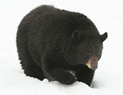
Sleep Like the Bears
Most people believe bears hibernate in the winter, but scientists have long questioned this assumption because during the five to seven months bears hibernate, their body temperatures remain close to normal. As a result, scientists have argued that bears don't truly hibernate like smaller mammals whose body temperatures drop to freezing or below.
So do bears truly hibernate? Turns out they do. Researchers at the Institute for Arctic Studies in Fairbanks, Alaska, monitored a group of hibernating Alaskan black bears. They discovered while the bears' body temperatures stayed between 86 to 96.8 degrees Fahrenheit, their metabolism plummeted 75 percent, which proves bears do go into a hibernating state. But how these animals manage to do this is a mystery since low metabolism is normally tied to low body temperature.
Researchers were further mystified by additional findings such as how black bears keep their muscle tone through four to six months of hibernation despite not getting up to eat, drink, urinate or defecate. Being able to unlock this mystery could help scientists develop therapies for people, especially the critically ill who are often bedridden. When people lie around, even for just a month, they can lose a third of their muscle mass. Some critically ill patients end up so weak they can't breathe on their own and have to be connected to a ventilator. Compare this to a black bear who, after slumbering for six months, can get up and walk out strong and healthy.
Here's something else. While a bear's heart rate is around 55 beats per minute in the summer, it drops to just nine beats per minute during hibernation, which means the bear only needs to take two to three breaths a minute. Yet the heart does not suffer permanent damage from a lack of oxygen. Dr. Paul Iazzo from the University of Minnesota, who's been studying hibernating bears for a dozen years, believes bears have a hibernation inducing trigger called a delta opioid agonist. He thinks the opioid circulates in a hibernating bear's blood, which then protects its heart and other muscles while the bear is in a low-oxygen, inactive state.To test these protective effects of hibernation, Dr. Iazzo's team first treated pigs' hearts with hibernating bear hormones before inducing a heart attack and found 50 percent fewer heart muscle cells died compared with pigs that weren't treated. Next he wants to see if injecting the hormones following a heart attack will be as effective at protecting the heart.
Researchers believe harnessing the biology of hibernation would not only be groundbreaking but have far reaching applications for humans. It's possible people could one day be placed in hibernation while waiting for transplants, for long duration space travel, or possibly during an injured soldier's transport from the battlefield to a hospital.
As more studies show how important sleep is for human health, this redefines the term, “rest in peace.”
More Information
Hibernation in black bears: Independence of metabolic suppression from body temperature
Original journal article that provides reports on the Alaskan bears hibernating characteristics.
T?ien, ?. et al. Science February 18, 2011. Vol 331: 906-909.
Life on Low Flame in Hibernation
Summary and commentary on the original report in the same Science issue.
G. Heldmaier. Science February 18, 2011. Vol 331:866-867.
Understanding bears could help us survive heart attacks, researchers say.
University of Minnesota researchers think lessons learned from hibernating black bears will help save human lives in a unique study that could someday improve the odds of surviving a heart attack'
Hibernating Bears Slow Down More, Cool Down Less.
PBS NewsHour story on the Science magazine report that describes the work in an understandable way that includes a video of the hibernating bear.






