Medical Discovery NewsBridging the World of Medical Discovery and You

Recent Episodes

Smart Superbugs

MP3 WAV

  • Most people aren't aware that hospitals are breeding grounds for superbugs which are bacteria that are hard to kill.

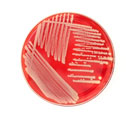
    One of these superbugs is Klebsiella pneumoniae which is resistant to all antibiotics used to treat these types of infections. Klebsiella is now responsible for sixty percent of all intensive care unit infections.

    One reason hospitals are ideal environments for superbugs is that people who are sick can have weaker immune systems. And they're often on antibiotics, giving bacteria the "learning curve" to evolve and develop resistance.

    Scientists studying these hardy bacteria recently discovered one of its defenses. Typically, in a bacterial population, only a few may become highly resistant. But this small group can improve the survival of the entire population by working together as a unit.

    They do this by producing a "signaling" molecule called indole which warns the bacterial community of the presence of antimicrobial drug. The bacteria then activate protective mechanisms such as molecular pumps that can prevent antibiotic action. They can also activate oxidative stress protectors to improve their survival.

    This is a new concept that bacteria can work together to resist the killing power of antibiotics. It's like a family coming together to overcome a hardship.

    The good news is better practices at hospitals and other health care facilities can help to prevent infections. We've already seen lower infection rates for a superbug called Methacillin resistant Staphylococcus aureus or MRSA, which has fallen by thirty percent.

    While that's encouraging, infection rates for other emerging superbugs is rising. Klebsiella, for example, has been found in 35 states and will likely spread.

    That's why we need to protect patients by being vigilant with good hygiene and continue to study the properties of these super bacteria.

More Information

Resistance Map tracks rise in Superbugs across the Country
This site is sponsored by Robert Wood Johnson Foundation and shows a graphic view of regions of the United States showing the growing antibiotic resistance threat.
For more information...

Methicillin-resistant Staphylococcus aureus - MRSA
This is a Medline plus website that provides extensive information about Methicillin-resistant Staphylococcus aureus what is commonly called MRSA.
For more information...

Bacterial charity work leads to population-wide resistance
Research article in the respected journal Nature by Lee and others in 2010 that describes the communication among bacterial populations that can lead to increased ability to cause disease.
HH Lee, MN Molla, ChR Cantor & JJ Collins: Bacterial charity work leads to population-wide resistance. Nature, Vol 467, pp. 82-86, 2 September 2010, doi:10.1038/nature09354


Two individuals wearing headphones stand in a recording booth, speaking into microphones with a music stand holding printed pages between them.

 Medicine...

Medicine is constantly advancing – that is a great thing about life in the 21st century. But it doesn’t just happen. Dedicated biomedical scientists are making discoveries that translate into those new medical advances.

Biomedical science is broad, encompassing everything from social science to microbiology, biochemistry, epidemiology, to structural biology and bioinformatics to name just a few areas. And, it can involve basic fundamental biology, the use of AI and chemistry to clinical studies that evaluate new medicines in patients.

No matter the research focus, the goal is always the same, to advance human health. It may take a few months, a few years or for fundamental science, a few decades. Few people make the connection that biomedical science is medicine and that biomedical scientists are working today on the medicine of tomorrow. Our weekly 500-word newspaper columns and 2-minute radio shows and podcasts provide insights into a broad range of biomedical science topics.

Medical Discovery News is dedicated to explaining discoveries in biomedical research and their promise for the future of medicine.

Podcasts

Alternatively, you can copy and paste the following web address (URL) into iTunes as a new subscription:
https://www.medicaldiscoverynews.com/shows/audio/mdnews.rss

You can also search and subscribe to "Medical Discovery News" in the podcast section of iTunes.

The www.medicaldiscoverynews.com web site and Medical Discovery News radio program (Program) are made possible by The University of Texas Medical Branch at Galveston (UTMB)as a community service and are intended to advance UTMB's mission of providing scholarly teaching, innovative scientific investigation, and state-of-the-art patient care in a learning environment to better the health of society and its commitment to the discovery of new innovative biomedical and health services knowledge leading to increasingly effective and accessible health care for the citizens of Texas.

All information provided on the web site and in the Program is for informational purposes only and is not intended for use as diagnosis or treatment of a health problem or as a substitute for consulting a licensed medical professional. Any information obtained by participating as a web site visitor or program listener is not intended to and should not be considered to constitute medical advice.

Thoughts and opinions expressed on the Program or on the website are those of the authors or guests and do not necessarily reflect the opinions of UTMB. The provision of links to other websites is not to be construed as written or implied sponsorship or endorsement of such websites by UTMB.

Please contact Dr. David Niesel or Dr. Norbert Herzog via email with any concerns, suggestions or comments.

All rights are reserved to information provided on the website or other information sources. No part of these programs can be reproduced stored in a retrieval system or transcribed in any form or by any means for personal or financial gained without the express written permission of Drs. Niesel and Dr. Herzog.