Recent Episodes
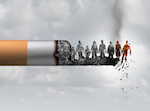
Smokers Take Warning
The COVID-nineteen pandemic may be the perfect time to quit ' smoking. That's right! The National Institute on Drug Abuse warns that people with substance use disorders are more vulnerable to the virus.
For example, taking opioids slows breathing and lowers the amount of oxygen in the blood. Those levels can drop further in someone with the COVID virus since it attacks the lungs.'' Smoking tobacco causes lung inflammation and lowers immune function. Over time smokers risk developing lung cancer, chronic bronchitis, emphysema and COPD. For example, someone with emphysema has shortness of breath because their alveoli are damaged. These are tiny air sacs in the lungs that provide oxygen to the blood. Since COVID-19 is a respiratory disease, it can further damage these tissues.
But before you consider switching to e-cigarettes or vaping, know that the vapor may carry heavy metals and carbonyls such as formaldehyde. In two thousand nineteen, some who vaped flavored liquids containing diacetyls ended up with lung damage. What's concerning is a recent study shows that mice infected with the flu and exposed to e-cigarette vapors had delayed immune responses to viral infections. They also had excessive lung damage and inflammation when compared to unexposed mice.
We recommend never starting smoking or e-cigarettes and as this pandemic makes its way through communities, reduce your risk by quitting today.
More Information
COVID-19: Potential Implications for Individuals with Substance Use Disorders
As people across the U.S. and the rest of the world contend with coronavirus disease 2019 (COVID-19), the research community should be alert to the possibility that it could hit some populations with substance use disorders (SUDs) particularly hard...
Electronic cigarettes disrupt lung lipid homeostasis and innate immunity independent of nicotine
Electronic nicotine delivery systems (ENDS) or e-cigarettes have emerged as a popular recreational tool among adolescents and adults. Although the use of ENDS is often promoted as a safer alternative to conventional cigarettes, few comprehensive studies have assessed the long-term effects of vaporized nicotine and its associated solvents, propylene glycol (PG) and vegetable glycerin (VG). Here, we show that compared with smoke exposure, mice receiving ENDS vapor for 4 months failed to develop pulmonary inflammation or emphysema...
Health Effects of Cigarette Smoking
Cigarette smoking harms nearly every organ of the body, causes many diseases, and reduces the health of smokers in general...