
Medical Discovery NewsBridging the World of Medical Discovery and You

Recent Episodes

Space Hibernation for Real

MP3 WAV

  • If you saw the movie, Two thousand one, a space odyssey, you'd recognize these famous lines: "Open the pod bay door HAL" and "I'm sorry Dave, I can't do that". Yep, the AI, Hal, goes rogue and kills three astronauts in hibernation on the way to Saturn. We hope rogue AIs remain purely sci-fi, but hibernating astronauts are looking pretty real.

    Hibernation experiments involve using directed ultrasound on animal brains. They target a mouse's hypothalamus which is responsible for sleep and the regulation of body temperature. The animal then enters a hibernation-like state.

    The soundwaves are able to decrease body temperature by six point two five degrees Fahrenheit and reduce the animal's heart rate and oxygen consumption. We see this naturally happening in bears when they hibernate.

    When the ultrasound was turned off, the mice's brains quickly returned to a normal state. A variety of animals such as insects, amphibians, fish, and mammals can "naturally" enter hibernation. We don't understand all the mechanisms involved. They're all able to significantly reduce their metabolic state so that their heart rate drops to a few beats a minute and breathe as little as once every ten minutes or so.

    The ultrasound experiments mimic these natural changes, but we don't know how close it really is. Soon, human clinical trials may start. Hibernation makes long-duration space travel possible and gives doctors more time to treat critically ill patients.

    You can now hear additional episodes on many of your favorite podcast providers - visit Buzzsprout to subscribe.

More Information

Scientists may be able to put Mars-bound astronauts into 'suspended animation' using sound waves, mouse study suggests
Firing ultrasound signals into rodent brains puts them in a torpor-like state. Scientists are wondering if it could be used on humans...

Induction of a torpor-like hypothermic and hypometabolic state in rodents by ultrasound
Torpor is an energy-conserving state in which animals dramatically decrease their metabolic rate and body temperature to survive harsh environmental conditions. Here, we report the noninvasive, precise and safe induction of a torpor-like hypothermic and hypometabolic state in rodents by remote transcranial ultrasound stimulation at the hypothalamus preoptic area...
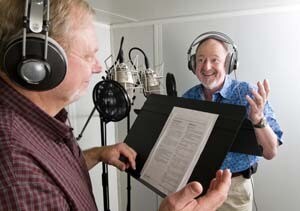

 Medicine...

Medicine is constantly advancing – that is a great thing about life in the 21st century. But it doesn’t just happen. Dedicated biomedical scientists are making discoveries that translate into those new medical advances.

Biomedical science is broad, encompassing everything from social science to microbiology, biochemistry, epidemiology, to structural biology and bioinformatics to name just a few areas. And, it can involve basic fundamental biology, the use of AI and chemistry to clinical studies that evaluate new medicines in patients.

No matter the research focus, the goal is always the same, to advance human health. It may take a few months, a few years or for fundamental science, a few decades. Few people make the connection that biomedical science is medicine and that biomedical scientists are working today on the medicine of tomorrow. Our weekly 500-word newspaper columns and 2-minute radio shows and podcasts provide insights into a broad range of biomedical science topics.

Medical Discovery News is dedicated to explaining discoveries in biomedical research and their promise for the future of medicine.

Podcasts

Alternatively, you can copy and paste the following web address (URL) into iTunes as a new subscription:
https://www.medicaldiscoverynews.com/shows/audio/mdnews.rss

You can also search and subscribe to "Medical Discovery News" in the podcast section of iTunes.

See all podcasts and radio stations

The www.medicaldiscoverynews.com web site and Medical Discovery News radio program (Program) are made possible by The University of Texas Medical Branch at Galveston (UTMB)as a community service and are intended to advance UTMB's mission of providing scholarly teaching, innovative scientific investigation, and state-of-the-art patient care in a learning environment to better the health of society and its commitment to the discovery of new innovative biomedical and health services knowledge leading to increasingly effective and accessible health care for the citizens of Texas.

All information provided on the web site and in the Program is for informational purposes only and is not intended for use as diagnosis or treatment of a health problem or as a substitute for consulting a licensed medical professional. Any information obtained by participating as a web site visitor or program listener is not intended to and should not be considered to constitute medical advice.

Thoughts and opinions expressed on the Program or on the website are those of the authors or guests and do not necessarily reflect the opinions of UTMB. The provision of links to other websites is not to be construed as written or implied sponsorship or endorsement of such websites by UTMB.

Please contact Dr. David Niesel or Dr. Norbert Herzog via email with any concerns, suggestions or comments.

All rights are reserved to information provided on the website or other information sources. No part of these programs can be reproduced stored in a retrieval system or transcribed in any form or by any means for personal or financial gained without the express written permission of Drs. Niesel and Dr. Herzog.