
Medical Discovery NewsBridging the World of Medical Discovery and You

Recent Episodes

Testing Your Age

MP3 WAV

  • Some would argue that a person's biological age is more indicative of how old they are than their chronological age. If there was a test to tell if someone had the body of a twenty-year-old, how many would take it? Despite a limited understanding of biological age, companies are now testing anyone willing to pay up to $750 to learn their "biological" age.

    The problem with this test is people may take the results literally when they shouldn't. That's exacerbated by some news media reporting the test can go as far as to tell a client how long they'll live. These companies are basing their results on something found in all human cells called telomeres, which are structures at the ends of chromosomes.

    Chromosomes are made of twisted double stranded molecules of DNA. Telomeres play an important role in protecting DNA because they act as caps on the ends of chromosomes, keeping them from fraying or intertwining, thus preventing DNA mutation.

    One of the consequences of aging is every time a cell in the body divides, the telomeres get shorter. When the telomeres get too short, cells can no longer divide, and they die. So, the length of the telomere is a good measurement of a cell's age and is what some companies are now using to determine a person's biological age.

    The telomere measuring tests use a technology called quantitative real time polymerase chain reaction. From one drop of blood, white blood cells are isolated, broken open, and then the DNA is purified so the telomere length can be measured. This signal is compared to an unaltered gene and then a telomere score is generated. It's unclear how accurate these tests are on different people.

    It's a fact that people born with shorter than average telomeres have a shorter lifespan, but it's unknown if longer telomeres equal longer lives. Until statistics are available on what telemere lengths actually predict, these tests can't tell much.

    So, there's not enough data to support the claims of the companies producing these tests. Some argue the tests provide an opportunity for people with short chromosomes to alter their behavior if necessary, yet there's concern insurance companies could misuse this information to set life insurance premiums.

    Just because a test is available does not necessarily mean it should be used or that there is sufficient data to understand what the results mean. What is already known is lifestyle can help determine lifespan and health. So until telomeres can reveal more, exercising and making healthy food choices are the proven and dependable options.

More Information

Are telomeres the key to aging and cancer?
A nice introduction to telomeres from the University of Utah's Genetic Science Center. Teaching resources and lesson plans are available.

What are telomeres and telomerase?
UT Southwestern University offers this web site which will teach you the basics of telomeres and telomerase. It also covers potential applications of current telomerase research.

Anti-Aging Pill Targets Telomeres at the Ends of Chromosomes
Scientific American examines whether the secrets to anti-aging are at the tips of our chromosomes.
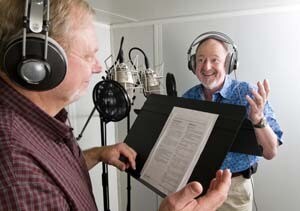

Two individuals wearing headphones stand in a recording booth, speaking into microphones with a music stand holding printed pages between them.

 Medicine...

Medicine is constantly advancing – that is a great thing about life in the 21st century. But it doesn’t just happen. Dedicated biomedical scientists are making discoveries that translate into those new medical advances.

Biomedical science is broad, encompassing everything from social science to microbiology, biochemistry, epidemiology, to structural biology and bioinformatics to name just a few areas. And, it can involve basic fundamental biology, the use of AI and chemistry to clinical studies that evaluate new medicines in patients.

No matter the research focus, the goal is always the same, to advance human health. It may take a few months, a few years or for fundamental science, a few decades. Few people make the connection that biomedical science is medicine and that biomedical scientists are working today on the medicine of tomorrow. Our weekly 500-word newspaper columns and 2-minute radio shows and podcasts provide insights into a broad range of biomedical science topics.

Medical Discovery News is dedicated to explaining discoveries in biomedical research and their promise for the future of medicine.

Podcasts

Alternatively, you can copy and paste the following web address (URL) into iTunes as a new subscription:
https://www.medicaldiscoverynews.com/shows/audio/mdnews.rss

You can also search and subscribe to "Medical Discovery News" in the podcast section of iTunes.

The www.medicaldiscoverynews.com web site and Medical Discovery News radio program (Program) are made possible by The University of Texas Medical Branch at Galveston (UTMB)as a community service and are intended to advance UTMB's mission of providing scholarly teaching, innovative scientific investigation, and state-of-the-art patient care in a learning environment to better the health of society and its commitment to the discovery of new innovative biomedical and health services knowledge leading to increasingly effective and accessible health care for the citizens of Texas.

All information provided on the web site and in the Program is for informational purposes only and is not intended for use as diagnosis or treatment of a health problem or as a substitute for consulting a licensed medical professional. Any information obtained by participating as a web site visitor or program listener is not intended to and should not be considered to constitute medical advice.

Thoughts and opinions expressed on the Program or on the website are those of the authors or guests and do not necessarily reflect the opinions of UTMB. The provision of links to other websites is not to be construed as written or implied sponsorship or endorsement of such websites by UTMB.

Please contact Dr. David Niesel or Dr. Norbert Herzog via email with any concerns, suggestions or comments.

All rights are reserved to information provided on the website or other information sources. No part of these programs can be reproduced stored in a retrieval system or transcribed in any form or by any means for personal or financial gained without the express written permission of Drs. Niesel and Dr. Herzog.