Medical Discovery NewsBridging the World of Medical Discovery and You

Recent Episodes

The Black Death Revealed

MP3 WAV

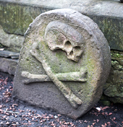
  • Underneath the heart of London's financial district lie the remnants of the East Smithfield Cemetery. There lie some 24-hundred bodies, each carefully laid with layers of charcoal in between. Around many bodies are trinkets revealing the lives they once lived. They are victims of the Bubonic Plague, or Black Death, as it's also known, and within five years, the disease wiped out between one-third to one-half of not only London's population but Europe's as well.

    Now East Smithfield has provided scientists with crucial material which confirmed the bacterium, Yersinia pestis, was responsible for the Black Death by allowing them to sequence the microbe's genome. This settles an old debate among scientists. Doubts about whether the plague caused the 14th century pandemic persisted because today's plague infects and kills far fewer numbers.

    Determining the full genetic sequence of the old strain could explain what made it so virulent. Researchers focused on samples of dental pulp, the innermost layer of tissue in teeth from the East Smithfield bodies. They were able to extract, purify and enrich for the Yersinia genetic information using a technique called targeted capture.

    A lab-synthesized ‘bait' DNA snagged ancient Yersinia DNA strands, leaving soil-microbe DNA and other material behind. Then using DNA sequencers, they read snippets of the nearly seven hundred year old microbe.

    Turns out, the old strain is remarkably similar to today's plague, which led researchers to hypothesize that climate, age distribution and living conditions of 14th century London and Europe contributed to the pandemic. Downtown London in 1348 was densely packed and filthy; the climate was wet and cold; and food was in short supply. People also didn't have access to antibiotics.

    Understanding how the microbe behaved then can help people prepare for future outbreaks of this and other microbes. Yersinia strains sicken about three thousand people around the world every year. With antibiotics, however, 85% recover, reinforcing the power of modern medical capabilities.

More Information

Hunting for a Mass Killer in Medieval Graveyards
The New York Times reports on the ongoing attempts to sequence the microbe that causes Bubonic Plague.

The lost plague - London graveyards suggest that Black Death strain may be extinct
Discover Magazine article regarding the ancient strain of Yersinia pestis, the microbe responsible for the Black Death.

A draft genome of Yersinia pestis from victims of the Black Death
2011 research article on these recent studies, published in the esteemed scientific journal Nature.

Two individuals wearing headphones stand in a recording booth, speaking into microphones with a music stand holding printed pages between them.

 Medicine...

Medicine is constantly advancing – that is a great thing about life in the 21st century. But it doesn’t just happen. Dedicated biomedical scientists are making discoveries that translate into those new medical advances.

Biomedical science is broad, encompassing everything from social science to microbiology, biochemistry, epidemiology, to structural biology and bioinformatics to name just a few areas. And, it can involve basic fundamental biology, the use of AI and chemistry to clinical studies that evaluate new medicines in patients.

No matter the research focus, the goal is always the same, to advance human health. It may take a few months, a few years or for fundamental science, a few decades. Few people make the connection that biomedical science is medicine and that biomedical scientists are working today on the medicine of tomorrow. Our weekly 500-word newspaper columns and 2-minute radio shows and podcasts provide insights into a broad range of biomedical science topics.

Medical Discovery News is dedicated to explaining discoveries in biomedical research and their promise for the future of medicine.

Podcasts

Alternatively, you can copy and paste the following web address (URL) into iTunes as a new subscription:
https://www.medicaldiscoverynews.com/shows/audio/mdnews.rss

You can also search and subscribe to "Medical Discovery News" in the podcast section of iTunes.

The www.medicaldiscoverynews.com web site and Medical Discovery News radio program (Program) are made possible by The University of Texas Medical Branch at Galveston (UTMB)as a community service and are intended to advance UTMB's mission of providing scholarly teaching, innovative scientific investigation, and state-of-the-art patient care in a learning environment to better the health of society and its commitment to the discovery of new innovative biomedical and health services knowledge leading to increasingly effective and accessible health care for the citizens of Texas.

All information provided on the web site and in the Program is for informational purposes only and is not intended for use as diagnosis or treatment of a health problem or as a substitute for consulting a licensed medical professional. Any information obtained by participating as a web site visitor or program listener is not intended to and should not be considered to constitute medical advice.

Thoughts and opinions expressed on the Program or on the website are those of the authors or guests and do not necessarily reflect the opinions of UTMB. The provision of links to other websites is not to be construed as written or implied sponsorship or endorsement of such websites by UTMB.

Please contact Dr. David Niesel or Dr. Norbert Herzog via email with any concerns, suggestions or comments.

All rights are reserved to information provided on the website or other information sources. No part of these programs can be reproduced stored in a retrieval system or transcribed in any form or by any means for personal or financial gained without the express written permission of Drs. Niesel and Dr. Herzog.