
Medical Discovery NewsBridging the World of Medical Discovery and You

Recent Episodes

The Case Against Propofol

MP3 WAV

  • Most people had never heard of the drug propofol until Michael Jackson died from an overdose. His doctor was recently convicted and sentenced for being reckless when he administered the general anesthetic.

    Since Jackson's death, several scientific papers have begun urging the US Drug Enforcement Administration to regulate the drug. You may already be asking, though - why would anyone use propofol recreationally?

    Within seconds, it acts on a person's central nervous system, sedating them. A mistake can cause a drop in blood pressure, obstructed airway, respiratory failure, and even death. With such high risks, propofol does seem only useful in medical settings on surgical and intensive care patients who are highly monitored.
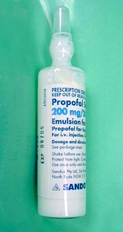
    Before officials could classify it a controlled substance, they'd have to ask, "Is propofol being abused?" One condition for abuse is first documenting recreational use. Recent scientific papers cite medical personnel abusing propofol. Several involve anesthesiologists where one in particular self injected 10 to 15 times daily, and another died of an overdose at the hospital where she worked.

    A study in the 1980s tried to establish propofol's potential for abuse. The people given propofol described positive feelings ranging from euphoria to sexual disinhibition. The study concluded propofol may be addictive.

    Officials would also need to establish withdrawal symptoms and tolerance. In past studies, people taken off propofol had anxiety, hallucinations, and intense food cravings. A few studies, limited to the intensive care unit, suggest patients grew tolerant to the drug.

    But there's just not enough data to prove either withdrawal or tolerance for propofol exist. Over the years, propofol use has increased mostly because it's available, works quickly and doesn't last long. These properties make hiding propofol abuse very easy, especially for medical personnel with access. That could all change if propofol becomes a controlled substance.

More Information

Propofol and the Death of Michael Jackson
Article by Aidan O'Donnell, published by Oxford University Press, explaining that propofol is safe and highly useful in the hands of anesthesiologists and trained medical personnel, but should be administered in the hospital.

Clinical Effects and Lethal and Forensic Aspects of Propofol
Levy, Richard J. "Clinical Effects and Lethal and Forensic Aspects of Propofol." Journal of Forensic Sciences (2011); vol 56: S142-147.

The Abuse Potential of Propofol
Wilson, Courtney, Peter Canning, and E. Martin Caravati. "The Abuse Potential of Propofol." Clinical Toxicology 48.3 (2010): 165-70.


Two individuals wearing headphones stand in a recording booth, speaking into microphones with a music stand holding printed pages between them.

 Medicine...

Medicine is constantly advancing – that is a great thing about life in the 21st century. But it doesn’t just happen. Dedicated biomedical scientists are making discoveries that translate into those new medical advances.

Biomedical science is broad, encompassing everything from social science to microbiology, biochemistry, epidemiology, to structural biology and bioinformatics to name just a few areas. And, it can involve basic fundamental biology, the use of AI and chemistry to clinical studies that evaluate new medicines in patients.

No matter the research focus, the goal is always the same, to advance human health. It may take a few months, a few years or for fundamental science, a few decades. Few people make the connection that biomedical science is medicine and that biomedical scientists are working today on the medicine of tomorrow. Our weekly 500-word newspaper columns and 2-minute radio shows and podcasts provide insights into a broad range of biomedical science topics.

Medical Discovery News is dedicated to explaining discoveries in biomedical research and their promise for the future of medicine.

Podcasts

Alternatively, you can copy and paste the following web address (URL) into iTunes as a new subscription:
https://www.medicaldiscoverynews.com/shows/audio/mdnews.rss

You can also search and subscribe to "Medical Discovery News" in the podcast section of iTunes.

The www.medicaldiscoverynews.com web site and Medical Discovery News radio program (Program) are made possible by The University of Texas Medical Branch at Galveston (UTMB)as a community service and are intended to advance UTMB's mission of providing scholarly teaching, innovative scientific investigation, and state-of-the-art patient care in a learning environment to better the health of society and its commitment to the discovery of new innovative biomedical and health services knowledge leading to increasingly effective and accessible health care for the citizens of Texas.

All information provided on the web site and in the Program is for informational purposes only and is not intended for use as diagnosis or treatment of a health problem or as a substitute for consulting a licensed medical professional. Any information obtained by participating as a web site visitor or program listener is not intended to and should not be considered to constitute medical advice.

Thoughts and opinions expressed on the Program or on the website are those of the authors or guests and do not necessarily reflect the opinions of UTMB. The provision of links to other websites is not to be construed as written or implied sponsorship or endorsement of such websites by UTMB.

Please contact Dr. David Niesel or Dr. Norbert Herzog via email with any concerns, suggestions or comments.

All rights are reserved to information provided on the website or other information sources. No part of these programs can be reproduced stored in a retrieval system or transcribed in any form or by any means for personal or financial gained without the express written permission of Drs. Niesel and Dr. Herzog.