Recent Episodes
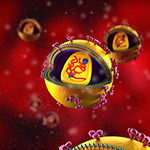
The Good Side of Viruses
While we're gaining more knowledge about the bacteria that live in and on us, we know very little about our virome. These are viruses that are part of the human microbiome, the total collection of viruses that we coexist with. We generally don't regard viruses highly. They're culprits of disease from the common cold to Ebola.
So, imagine our surprise at finding beneficial symbiotic viruses, ones that coevolved with humans for millennia. During the sequencing of the human genome, scientists found about eight percent that resemble infectious retroviruses similar to HIV. These human endogenous retroviruses or HERVs are remnants of retroviral infections in our ancestors that became fixed in the human genome.
HERVs may have played an important role in our evolution. While most of the HERVs we've sequenced have mutated so much that they're harmless and don't produce viral proteins, at least three remain intact.
The best example is HERV-W. Its envelope protein, which sits on the surface to bind to host cells, mediates the fusion of pre-cursor cells to form the placenta. You can't form the placenta without this protein.
Another example is the hepatitis G virus. This virus slows the spread of HIV to other cells in infected people. Other symbiotic viruses protect us from bacterial pathogens. The gamma-herpesvirus increases resistance to listeriosis which is the third leading cause of death by foodborne bacterial pathogens.
Our gut is also home to many types of viruses we don't understand, including ones that control bacterial populations. Considering viruses are the most abundant entities on earth, knowing which ones live with us is worthy of much study.