Recent Episodes
The Granddaddy of All Pandemics
You might notice that our sound quality isn't up to par because well, Norbert and I are recording this story on our tablets at home. We're sheltering in place because of COVID-nineteen. Even though you may be nervous about this pandemic, it has a long way to go before reaching modern history's granddaddy of pandemics: the Spanish Flu.
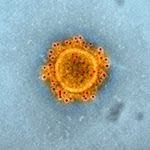
It was caused by an H-one-N-one virus that had jumped from birds to humans and even though it's called Spanish flu, we don't know its origin. The virus was first diagnosed in soldiers whose movements during World War One may have helped spread it. By the end of its run, one third of earth's people or five hundred million had been infected and fifty million or more died.
The virus targeted children under five, people between the ages of fifteen and thirty four and those over sixty five. In the US, nearly seven hundred thousand people died and dropped the average life expectancy by twelve years.
This flu came in two waves. In spring of nineteen-eighteen was a mild version of the virus, however by that fall, it had mutated and people rapidly fell ill sometimes dying just hours after developing symptoms. Others died in just three to four days from a devastating pneumonia.
Using clever medical detective work, scientist recovered the virus to study in the lab, but have not found a single feature to explain its high mortality. We hope today's pandemic will turn out differently.
More Information
The Deadly Virus: The Inflenza Epidemic of 1918
The influenza epidemic of 1918 killed more people than died in World War I...
CDC Influenza Page: 1918 Pandemic (H1N1 virus)
The 1918 influenza pandemic was the most severe pandemic in recent history. It was caused by an H1N1 virus with genes of avian origin. Although there is not universal consensus regarding where the virus originated, it spread worldwide during 1918-1919...