Recent Episodes
The Guts of Parkinson's
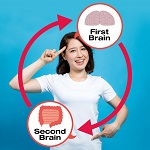
It's strange to think that Parkinson's disease may start in the gut, yet some studies point to that very cause. In Parkinson's, nerve cell death makes a person shake and lose their balance. Vital body functions like blood pressure are also altered. It's possible these nerve cells die from the inflammation caused by clumps of misfolded alpha-synuclein protein.
Back in two thousand three, a scientist found that Parkinson's patients' brains not only had these clumps in areas controlling movement but also areas that control the gut. He hypothesized that Parkinson's made its way up from the gut to the brain along a nerve called the vagus nerve.
To test the theory, scientists injected synthetic misfolded alpha synuclein into the guts of mice. After ten months, the alpha-synuclein accumulated at the vagus nerve and throughout the brain. They then studied whether misfolded proteins from the gut led to behavioral changes typical in mice with Parkinson's disease.
They compared mice in three groups: a control group, mice injected with misfolded alpha-synuclein, and injected mice but with severed vagus nerves. So, injected mice built poor, small nests compared to large, dense mounds made by the other two groups of mice. This shows a loss of motor function typical of Parkinson's.
Then, to test their anxiety levels, they placed the mice in large open boxes. Control mice and injected mice with severed vagus nerves spent thirty minutes confidently exploring the middle. But injected mice with intact vagus nerves spent less than five minutes in the center, indicating anxiety which is also a feature of Parkinson's disease.
So, can therapies target the vagus nerve? Not yet, but a lot more work is ahead. It's an exciting opportunity in Parkinson's research.
More Information
New research shows Parkinson's disease origins in the gut
A new study adds to the growing body of evidence that Parkinson's disease may start in the gut. Researchers found gut-to-brain propagation of alpha-synuclein spread via the vagus nerve. The study provides a more accurate model of Parkinson's progression and could lead to new treatments to halt or prevent this neurodegenerative disease...
National Institute on Aging Health Information Page: Parkinson's Disease
Parkinson's disease is a brain disorder that leads to shaking, stiffness, and difficulty with walking, balance, and coordination...
Alpha-Synuclein in Parkinson's Disease: From Pathogenetic Dysfunction to Potential Clinical Application
Parkinson's disease is a neurodegenerative disease/synucleinopathy that develops slowly; however, there is no efficient method of early diagnosis, nor is there a cure...