Medical Discovery NewsBridging the World of Medical Discovery and You

Recent Episodes

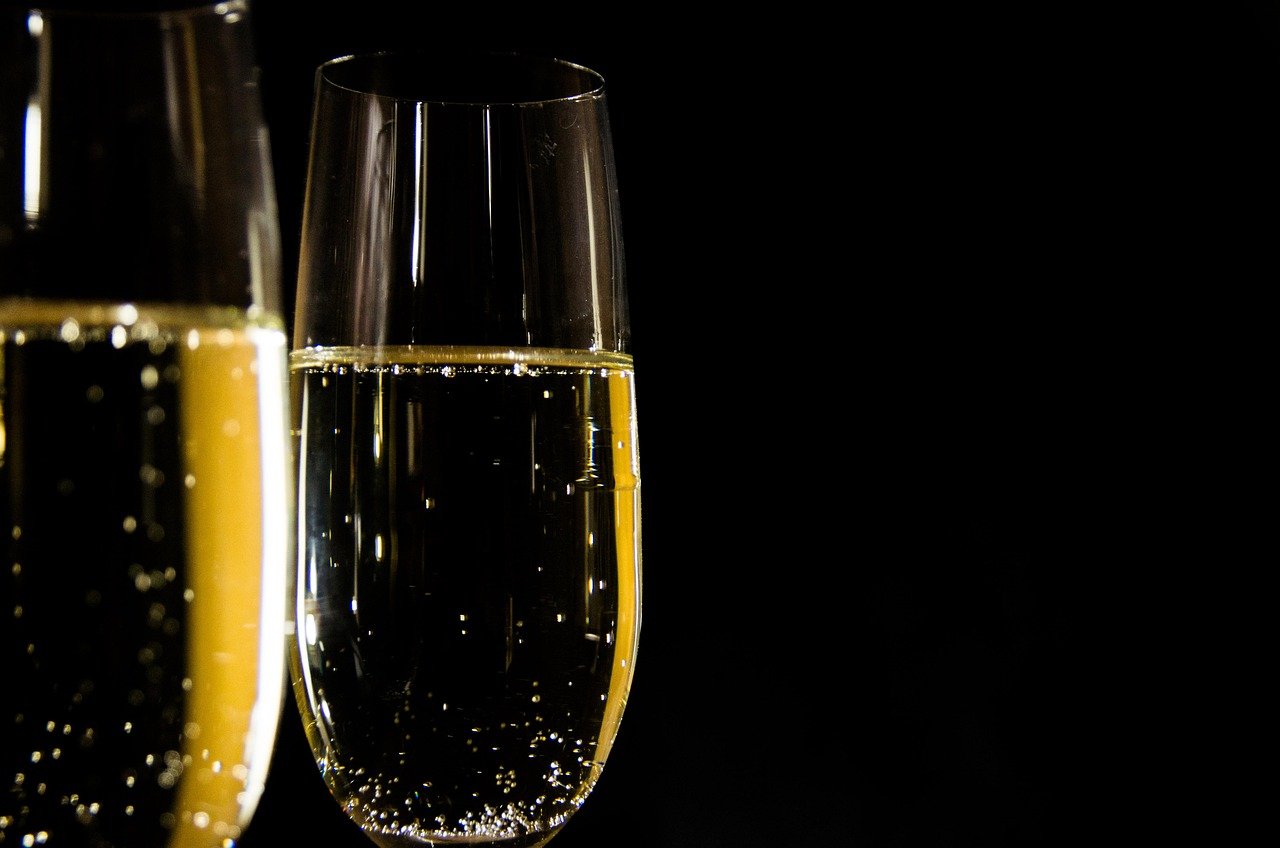
bubbly champagne in glass flutes

The Importance of Bubbles

MP3 WAV

  • When we make a champagne toast, we’re probably not thinking about the scientists who put the bubbles there.  But in the heart of the champagne region in France are scientists who make up the Effervescence and Champagne team at the University of Reims Champagne-Ardenne . Who knew?

    Making champagne requires a second fermentation inside the sealed bottle after the addition of yeast and sugar forms high-pressure carbon dioxide along with ethanol. The oldest confirmed report of sparkling wine is in the mid-16th century when Benedictine monks in the Abbey of Saint-Hilaire in France accidentally bottled a still wine with residual sugars and active yeast before the end of its fermentation.   

    Sparkling wine requires at least 1.2 grams of carbon dioxide per liter. Proteins in the wine stabilize the smaller bubbles that make up the foam at the top of a glass. Immediately after pouring champagne into a glass, the dissolved CO2 concentration drops depending on the wine temperature, bottle type, glass shape and how it’s poured. Pouring it straight down the flute loses more gas than a gentle pour down the side. Etched glass or soap residue also depletes bubbles.  

    Bubbles look great and act on the tongue’s receptors to achieve the mouth feel. Bubbles also help over a thousand volatile organic compounds in the wine evaporate releasing aroma and flavor. So much tradition and art goes into the production of fine champagne, and science may help us perfect that art.

More Information

Recent Progress in the Analytical Chemistry of Champagne and Sparkling Wines
The strong interplay between the various parameters at play in a bottle and in a glass of champagne or sparkling wine has been the subject of study for about two decades. After a brief overview of the history of champagne and sparkling wines, this article presents the key steps involved in the traditional method leading to the production of premium modern-day sparkling wines, with a specific focus on quantification of the dissolved CO2 found in the sealed bottles and in a glass.

Have scientists cracked the best way to drink champagne?
In a laboratory in the heart of France's wine country, a group of researchers carefully positions an ultra-high-speed camera. Like many good scientists, they are devoted to the practice of unpicking the Universe's secrets, seeking to describe the material world in the language of mathematics, physics and chemistry. The object of their study: the bubbles in champagne.

Champagne Wine Map
his map provides a detailed overview of the Champagne wine region of France, outlining its sub-regions, major cities, and notable areas such as Côte des Bar, Montagne de Reims, and Côte des Blancs, among others.
Two individuals wearing headphones stand in a recording booth, speaking into microphones with a music stand holding printed pages between them.

 Medicine...

Medicine is constantly advancing – that is a great thing about life in the 21st century. But it doesn’t just happen. Dedicated biomedical scientists are making discoveries that translate into those new medical advances.

Biomedical science is broad, encompassing everything from social science to microbiology, biochemistry, epidemiology, to structural biology and bioinformatics to name just a few areas. And, it can involve basic fundamental biology, the use of AI and chemistry to clinical studies that evaluate new medicines in patients.

No matter the research focus, the goal is always the same, to advance human health. It may take a few months, a few years or for fundamental science, a few decades. Few people make the connection that biomedical science is medicine and that biomedical scientists are working today on the medicine of tomorrow. Our weekly 500-word newspaper columns and 2-minute radio shows and podcasts provide insights into a broad range of biomedical science topics.

Medical Discovery News is dedicated to explaining discoveries in biomedical research and their promise for the future of medicine.

Podcasts

Alternatively, you can copy and paste the following web address (URL) into iTunes as a new subscription:
https://www.medicaldiscoverynews.com/shows/audio/mdnews.rss

You can also search and subscribe to "Medical Discovery News" in the podcast section of iTunes.

The www.medicaldiscoverynews.com web site and Medical Discovery News radio program (Program) are made possible by The University of Texas Medical Branch at Galveston (UTMB)as a community service and are intended to advance UTMB's mission of providing scholarly teaching, innovative scientific investigation, and state-of-the-art patient care in a learning environment to better the health of society and its commitment to the discovery of new innovative biomedical and health services knowledge leading to increasingly effective and accessible health care for the citizens of Texas.

All information provided on the web site and in the Program is for informational purposes only and is not intended for use as diagnosis or treatment of a health problem or as a substitute for consulting a licensed medical professional. Any information obtained by participating as a web site visitor or program listener is not intended to and should not be considered to constitute medical advice.

Thoughts and opinions expressed on the Program or on the website are those of the authors or guests and do not necessarily reflect the opinions of UTMB. The provision of links to other websites is not to be construed as written or implied sponsorship or endorsement of such websites by UTMB.

Please contact Dr. David Niesel or Dr. Norbert Herzog via email with any concerns, suggestions or comments.

All rights are reserved to information provided on the website or other information sources. No part of these programs can be reproduced stored in a retrieval system or transcribed in any form or by any means for personal or financial gained without the express written permission of Drs. Niesel and Dr. Herzog.