Medical Discovery NewsBridging the World of Medical Discovery and You

Recent Episodes

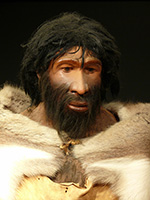
The Neanderthal in Us

MP3 WAV

  • When we were teenagers, my cousin used to scream - 'David, you are a Neanderthal'. And back then, she was at least partially right. New research suggests that as a person of European descent, I could blame my genes. There's apparently a significant amount of Neanderthal DNA in our genome.

    The first Neanderthal genome sequenced was from bone fragments of three individuals from the Vindija Cave in Croatia in two-thousand-ten. Two others were obtained from the Altai Mountains in Siberia. The latest came from a bone fragment of a fifty thousand year old Neanderthal also found in the Vindija Cave.

    The difference in the sequences between the oldest and newest individuals is small suggesting that Neanderthals lived in isolated communities. So, where and when did the interbreeding occur? Previous studies had confirmed that modern day Africans do not have Neanderthal genes, which suggests the interbreeding with Homo sapiens happened after they left Africa.

    Scientists now place the amount of Neanderthal DNA for West Asians and Europeans at about two to three percent. And they've identified sixteen gene variants in our genome that clearly have Neanderthal origins. These gene variants affect a range of functions in us such as allergies, depression, blood clots, immunological disorders, cholesterol levels, and belly fat. Another study found that the Neanderthal gene sequences present in Europeans could influence Vitamin D levels and subsequently how we react to sunlight exposure, our hair color, and sleep patterns.

    Ugh...sleep and weight, two challenges most of us struggle with. Good thing being Neanderthal makes me better looking...Oh the lies we tell ourselves.

More Information

Neanderthal DNA contributes to human gene expression
The last Neanderthal died 40,000 years ago, but much of their genome lives on, in bits and pieces, through modern humans...

Is your Neandertal DNA making your belly fat? Ancient genome offers clues
The insult "You're a Neandertal!" has taken on dramatic new meaning in the past few years, as researchers have begun to identify the genes many of us inherited from our long-extinct relatives...

 Medicine...

Medicine is constantly advancing – that is a great thing about life in the 21st century. But it doesn’t just happen. Dedicated biomedical scientists are making discoveries that translate into those new medical advances.

Biomedical science is broad, encompassing everything from social science to microbiology, biochemistry, epidemiology, to structural biology and bioinformatics to name just a few areas. And, it can involve basic fundamental biology, the use of AI and chemistry to clinical studies that evaluate new medicines in patients.

No matter the research focus, the goal is always the same, to advance human health. It may take a few months, a few years or for fundamental science, a few decades. Few people make the connection that biomedical science is medicine and that biomedical scientists are working today on the medicine of tomorrow. Our weekly 500-word newspaper columns and 2-minute radio shows and podcasts provide insights into a broad range of biomedical science topics.

Medical Discovery News is dedicated to explaining discoveries in biomedical research and their promise for the future of medicine.

Podcasts

Alternatively, you can copy and paste the following web address (URL) into iTunes as a new subscription:
https://www.medicaldiscoverynews.com/shows/audio/mdnews.rss

You can also search and subscribe to "Medical Discovery News" in the podcast section of iTunes.

See all podcasts and radio stations

The www.medicaldiscoverynews.com web site and Medical Discovery News radio program (Program) are made possible by The University of Texas Medical Branch at Galveston (UTMB)as a community service and are intended to advance UTMB's mission of providing scholarly teaching, innovative scientific investigation, and state-of-the-art patient care in a learning environment to better the health of society and its commitment to the discovery of new innovative biomedical and health services knowledge leading to increasingly effective and accessible health care for the citizens of Texas.

All information provided on the web site and in the Program is for informational purposes only and is not intended for use as diagnosis or treatment of a health problem or as a substitute for consulting a licensed medical professional. Any information obtained by participating as a web site visitor or program listener is not intended to and should not be considered to constitute medical advice.

Thoughts and opinions expressed on the Program or on the website are those of the authors or guests and do not necessarily reflect the opinions of UTMB. The provision of links to other websites is not to be construed as written or implied sponsorship or endorsement of such websites by UTMB.

Please contact Dr. David Niesel or Dr. Norbert Herzog via email with any concerns, suggestions or comments.

All rights are reserved to information provided on the website or other information sources. No part of these programs can be reproduced stored in a retrieval system or transcribed in any form or by any means for personal or financial gained without the express written permission of Drs. Niesel and Dr. Herzog.