
Medical Discovery NewsBridging the World of Medical Discovery and You

Recent Episodes

The New Revolution: Convergence

MP3 WAV

  • Here's a term few of you may have heard: Convergence. It's being hailed as the newest revolution in modern biology.

    Sounds like a big deal, and it kind of is, because convergence is a new way of thinking which marries expertise from diverse specialties to create innovative, ground-breaking products and medical treatments.

    A good example of this integrated research approach is at the Massachusetts Institute of Technology. There, an award-winning materials engineer was recruited to work with the school's cancer scientists.

    Together, they're developing viruses that can build microscopic electronic parts. This virus-produced wiring could provide the circuitry and power for implantable medical devices in the future.

    So, what convergence does is bring together disciplines that were traditionally separate. For example: having basic biochemists and cell biologists work with computer scientists and engineers. The researchers share not only expertise, but actual work space. This increases their opportunity to mind-share.

    This results in ground-breaking work. Imagine nanoparticles, many times smaller than the human cell, delivering cancer-fighting drugs directly to tumors. How about microscopic chips that can detect cancer cells roaming the blood stream?

    Scientists believe discoveries like these will be accelerated with convergence, not only in medical science but also in resolving future food, water, energy, climate and security needs.

    At our university, microbiologists and engineers are developing miniature devices to detect microbes that could be used for bioterrorism, such as the Ebola virus. Elsewhere, biologists and engineers are harnessing single cell algae as factories to produce biodiesel.

    What you may not realize is the economic payoff of these innovations. The 23 billion dollars spent on biomedical research in 2007 led to more than 50 billion dollars in goods and services.

    With proper funding, scientists believe convergence has and will continue to create a fundamental shift, and countless opportunities to improve lives around the world.

More Information

The power of 'convergence'
In white paper, MIT scientists discuss potential for revolutionary advances in biomedicine and other fields.

Cancer cures find biology-physics convergence with MIT 'genius'
Angela Belcher, a materials engineer at the Massachusetts Institute of Technology and a 2004 winner of a MacArthur Foundation genius award, tailors viruses that build microscopic electronic parts such as transistors. She was recruited by MIT's cancer scientists to uncover new ways to detect tumors early and deliver drugs more safely.

MIT calls for more 'convergence' in research
"A group of prominent Massachusetts Institute of Technology (MIT) researchers has coined a new name for research that combines disciplines ' "convergence," they call it ' and called for policies to support these kinds of cross-cutting studies."
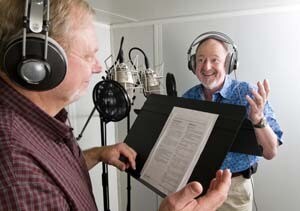

Two individuals wearing headphones stand in a recording booth, speaking into microphones with a music stand holding printed pages between them.

 Medicine...

Medicine is constantly advancing – that is a great thing about life in the 21st century. But it doesn’t just happen. Dedicated biomedical scientists are making discoveries that translate into those new medical advances.

Biomedical science is broad, encompassing everything from social science to microbiology, biochemistry, epidemiology, to structural biology and bioinformatics to name just a few areas. And, it can involve basic fundamental biology, the use of AI and chemistry to clinical studies that evaluate new medicines in patients.

No matter the research focus, the goal is always the same, to advance human health. It may take a few months, a few years or for fundamental science, a few decades. Few people make the connection that biomedical science is medicine and that biomedical scientists are working today on the medicine of tomorrow. Our weekly 500-word newspaper columns and 2-minute radio shows and podcasts provide insights into a broad range of biomedical science topics.

Medical Discovery News is dedicated to explaining discoveries in biomedical research and their promise for the future of medicine.

Podcasts

Alternatively, you can copy and paste the following web address (URL) into iTunes as a new subscription:
https://www.medicaldiscoverynews.com/shows/audio/mdnews.rss

You can also search and subscribe to "Medical Discovery News" in the podcast section of iTunes.

The www.medicaldiscoverynews.com web site and Medical Discovery News radio program (Program) are made possible by The University of Texas Medical Branch at Galveston (UTMB)as a community service and are intended to advance UTMB's mission of providing scholarly teaching, innovative scientific investigation, and state-of-the-art patient care in a learning environment to better the health of society and its commitment to the discovery of new innovative biomedical and health services knowledge leading to increasingly effective and accessible health care for the citizens of Texas.

All information provided on the web site and in the Program is for informational purposes only and is not intended for use as diagnosis or treatment of a health problem or as a substitute for consulting a licensed medical professional. Any information obtained by participating as a web site visitor or program listener is not intended to and should not be considered to constitute medical advice.

Thoughts and opinions expressed on the Program or on the website are those of the authors or guests and do not necessarily reflect the opinions of UTMB. The provision of links to other websites is not to be construed as written or implied sponsorship or endorsement of such websites by UTMB.

Please contact Dr. David Niesel or Dr. Norbert Herzog via email with any concerns, suggestions or comments.

All rights are reserved to information provided on the website or other information sources. No part of these programs can be reproduced stored in a retrieval system or transcribed in any form or by any means for personal or financial gained without the express written permission of Drs. Niesel and Dr. Herzog.