Medical Discovery NewsBridging the World of Medical Discovery and You

Recent Episodes

The Origins of the ICU

MP3 WAV

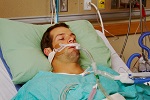
  • For intensive care doctors, covid-nineteen offers an eerily similar look at how doctors sixty years ago fought to save patients from another viral disease, polio. And this shared experience is poignant because that's when intensive care medicine was born, thanks to a Danish doctor.

    Bj'rn Ibsen had a bold idea for giving patients air using mechanical ventilation, the precursor to the modern ventilator. Polio can paralyze chest muscles making it hard to breathe. At the time, patients were placed inside negative pressure boxes while their heads stuck out in order to allow their chest to relax, expand, and improve breathing. They were known as iron lungs but some people still died from respiratory failure.

    Ibsen had a better idea. He wanted to apply not negative but positive air pressure directly into the lungs then allow the body to exhale normally. To do this, they made a cut at the neck, inserted a tube into the windpipe and attached a rubber bag to be pumped manually. The bag was attached to a tank of fifty percent oxygen and nitrogen, and a soda lime container removed carbon dioxide.

    If carbon dioxide isn't dispelled, acid can build up in the blood and cause organ failure. Turns out, this killed some polio patients, but Ibsen's invention solves that problem. Today's ventilators are able to deliver the right amount of air and pressure and they save lives.

More Information

The outbreak that invented intensive care
A heroic community effort at a daring hospital saved lives, led to today's ventilators and revolutionized medicine ' it holds lessons for our times...

The Surprisingly Long History of the Ventilator, the Machine You Never Want to Need
For doctors, resorting to a ventilator is an extreme measure, used when a patient's lungs cannot supply enough oxygen on their own. Ventilators can also give a patient's body time to rest when breathing is difficult, and allow doctors to more easily remove lung secretions or deliver medications directly to the respiratory system...

The physiological challenges of the 1952 Copenhagen poliomyelitis epidemic and a renaissance in clinical respiratory physiology
The 1952 Copenhagen poliomyelitis epidemic provided extraordinary challenges in applied physiology. Over 300 patients developed respiratory paralysis within a few weeks, and the ventilator facilities at the infectious disease hospital were completely overwhelmed. The heroic solution was to call upon 200 medical students to provide round-the-clock manual ventilation using a rubber bag attached to a tracheostomy tube...


Two individuals wearing headphones stand in a recording booth, speaking into microphones with a music stand holding printed pages between them.

 Medicine...

Medicine is constantly advancing – that is a great thing about life in the 21st century. But it doesn’t just happen. Dedicated biomedical scientists are making discoveries that translate into those new medical advances.

Biomedical science is broad, encompassing everything from social science to microbiology, biochemistry, epidemiology, to structural biology and bioinformatics to name just a few areas. And, it can involve basic fundamental biology, the use of AI and chemistry to clinical studies that evaluate new medicines in patients.

No matter the research focus, the goal is always the same, to advance human health. It may take a few months, a few years or for fundamental science, a few decades. Few people make the connection that biomedical science is medicine and that biomedical scientists are working today on the medicine of tomorrow. Our weekly 500-word newspaper columns and 2-minute radio shows and podcasts provide insights into a broad range of biomedical science topics.

Medical Discovery News is dedicated to explaining discoveries in biomedical research and their promise for the future of medicine.

Podcasts

Alternatively, you can copy and paste the following web address (URL) into iTunes as a new subscription:
https://www.medicaldiscoverynews.com/shows/audio/mdnews.rss

You can also search and subscribe to "Medical Discovery News" in the podcast section of iTunes.

The www.medicaldiscoverynews.com web site and Medical Discovery News radio program (Program) are made possible by The University of Texas Medical Branch at Galveston (UTMB)as a community service and are intended to advance UTMB's mission of providing scholarly teaching, innovative scientific investigation, and state-of-the-art patient care in a learning environment to better the health of society and its commitment to the discovery of new innovative biomedical and health services knowledge leading to increasingly effective and accessible health care for the citizens of Texas.

All information provided on the web site and in the Program is for informational purposes only and is not intended for use as diagnosis or treatment of a health problem or as a substitute for consulting a licensed medical professional. Any information obtained by participating as a web site visitor or program listener is not intended to and should not be considered to constitute medical advice.

Thoughts and opinions expressed on the Program or on the website are those of the authors or guests and do not necessarily reflect the opinions of UTMB. The provision of links to other websites is not to be construed as written or implied sponsorship or endorsement of such websites by UTMB.

Please contact Dr. David Niesel or Dr. Norbert Herzog via email with any concerns, suggestions or comments.

All rights are reserved to information provided on the website or other information sources. No part of these programs can be reproduced stored in a retrieval system or transcribed in any form or by any means for personal or financial gained without the express written permission of Drs. Niesel and Dr. Herzog.




