Medical Discovery NewsBridging the World of Medical Discovery and You

Recent Episodes

The Woman Who First Pictured DNA

MP3 WAV

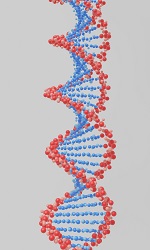
  • A newspaper headline in 1939 declared "Woman Scientist Explains" when talking about Florence Bell because there were so few of them. The thing is Bell deserved the accolade, regardless of whether she was a man or woman. She was the first to take an image of our DNA using a technology called x-ray crystallography.

    Shortly after graduating from Girton College in 1935, she began working with Lawrence Bragg and his father. The pair had won a Nobel Prize for the discovery of X-Ray crystallography.

    The Braggs had shown how X-rays could be used to reveal the arrangement of atoms and molecules in simple crystals such as salt. Other scientists applied the technique to biological molecules and Bell left to join that work. Soon she began describing the structure of protein fibers in jellyfish, shark fins, and hair. Then she published images of the thymonucleic acid, what we now call DNA.

    Descriptions using the images were helpful to the scientists Watson and Crick who eventually proposed the double helix model of the DNA we know today. That opened the door for molecular biology.

    Bell's work halted when she was required to serve in World War two developing air radar systems. She then left for the US to marry and work for a petroleum company before quitting altogether to raise her children. She died in the year 2000 and makes us wonder what amazing work was left undone when Florence Bell left science.

More Information

Florence Bell: the 'housewife' who played a key part in our understanding of DNA
When the Yorkshire Evening News reported on an address delivered by 25-year-old physicist Florence Bell at a scientific conference held in Leeds in 1939, it wasn't her science that made the headlines, but simply the fact that she was a woman doing science...

Watson and Crick took all the glory, but there's a forgotten hero of the double helix
In the world of sport, we remember a winner. Not many people have heard of Pierre Rolland, who finished eighth in the 2012 Tour de France. But everyone knows Bradley Wiggins, who won it. The history of science is often also described in similar terms - as a tale of winners and losers racing to the finish line. Nowhere is this truer than in the story of the discovery of the structure of DNA...

Florence Bell, an unsung physics and DNA pioneer
IValerie Jamieson reports real-life experiences of women in physics in her article on why there are so few women in that field (10 November, p 32). The physicist Florence Bell would have agreed. Her PhD supervisor, William Astbury, declared that "there is a creative spark in the male that is absent from women, even though the latter do such marvellously conscientious and thorough work after the spark has been struck"...

Two individuals wearing headphones stand in a recording booth, speaking into microphones with a music stand holding printed pages between them.

 Medicine...

Medicine is constantly advancing – that is a great thing about life in the 21st century. But it doesn’t just happen. Dedicated biomedical scientists are making discoveries that translate into those new medical advances.

Biomedical science is broad, encompassing everything from social science to microbiology, biochemistry, epidemiology, to structural biology and bioinformatics to name just a few areas. And, it can involve basic fundamental biology, the use of AI and chemistry to clinical studies that evaluate new medicines in patients.

No matter the research focus, the goal is always the same, to advance human health. It may take a few months, a few years or for fundamental science, a few decades. Few people make the connection that biomedical science is medicine and that biomedical scientists are working today on the medicine of tomorrow. Our weekly 500-word newspaper columns and 2-minute radio shows and podcasts provide insights into a broad range of biomedical science topics.

Medical Discovery News is dedicated to explaining discoveries in biomedical research and their promise for the future of medicine.

Podcasts

Alternatively, you can copy and paste the following web address (URL) into iTunes as a new subscription:
https://www.medicaldiscoverynews.com/shows/audio/mdnews.rss

You can also search and subscribe to "Medical Discovery News" in the podcast section of iTunes.

The www.medicaldiscoverynews.com web site and Medical Discovery News radio program (Program) are made possible by The University of Texas Medical Branch at Galveston (UTMB)as a community service and are intended to advance UTMB's mission of providing scholarly teaching, innovative scientific investigation, and state-of-the-art patient care in a learning environment to better the health of society and its commitment to the discovery of new innovative biomedical and health services knowledge leading to increasingly effective and accessible health care for the citizens of Texas.

All information provided on the web site and in the Program is for informational purposes only and is not intended for use as diagnosis or treatment of a health problem or as a substitute for consulting a licensed medical professional. Any information obtained by participating as a web site visitor or program listener is not intended to and should not be considered to constitute medical advice.

Thoughts and opinions expressed on the Program or on the website are those of the authors or guests and do not necessarily reflect the opinions of UTMB. The provision of links to other websites is not to be construed as written or implied sponsorship or endorsement of such websites by UTMB.

Please contact Dr. David Niesel or Dr. Norbert Herzog via email with any concerns, suggestions or comments.

All rights are reserved to information provided on the website or other information sources. No part of these programs can be reproduced stored in a retrieval system or transcribed in any form or by any means for personal or financial gained without the express written permission of Drs. Niesel and Dr. Herzog.