Medical Discovery NewsBridging the World of Medical Discovery and You

Recent Episodes

Too Much of a Good Thing

MP3 WAV

  • Imagine the shock a set of parents in Spain felt when their infant son was diagnosed with scurvy.

    You're probably thinking, wait, isn't that what plagued sailors of old? That can't happen in modern Spain to an urban family. Scurvy occurs from a lack of vitamin C, so what was the baby eating?

    For the first two months of life he was fed a cow's milk formula but developed a rash, so he began drinking an almond based formula. At six months, his mom introduced pureed fruits and vegetables but he refused. So, up until eleven months, the toddler ate mostly a mixture of almond milk, almond flour and cereals.

    His weight fell and X-rays showed bone density loss and a fracture of his right leg. His blood work was abnormal with extremely low levels of vitamins C and D. The doctor diagnosed him with infantile scurvy.

    The growth and maintenance of our bones isn't possible without vitamin C, especially in the first two years of life when bone growth is rapid. Scurvy can lead to anemia, gum disease and hemorrhages in the skin.

    Since we can't make our own vitamin C, we get it from fruits, vegetables or vitamin supplements. People most at risk of developing scurvy today include children with autism who refuse some foods, alcoholics, smokers, elderly, and people with low incomes.

    But plant based formulas are becoming popular in developed countries, so parents need to be aware of the risks. Babies need 50-60 milligrams of vitamin C daily. Breast milk provides about 63 and reminds us of the benefits of breastfeeding.

    Fortunately, the Spanish toddler was placed on vitamin C replacement therapy and soon recovered.
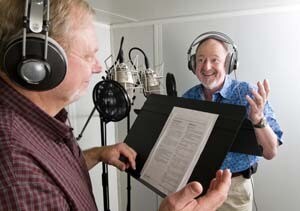
Two individuals wearing headphones stand in a recording booth, speaking into microphones with a music stand holding printed pages between them.

 Medicine...

Medicine is constantly advancing – that is a great thing about life in the 21st century. But it doesn’t just happen. Dedicated biomedical scientists are making discoveries that translate into those new medical advances.

Biomedical science is broad, encompassing everything from social science to microbiology, biochemistry, epidemiology, to structural biology and bioinformatics to name just a few areas. And, it can involve basic fundamental biology, the use of AI and chemistry to clinical studies that evaluate new medicines in patients.

No matter the research focus, the goal is always the same, to advance human health. It may take a few months, a few years or for fundamental science, a few decades. Few people make the connection that biomedical science is medicine and that biomedical scientists are working today on the medicine of tomorrow. Our weekly 500-word newspaper columns and 2-minute radio shows and podcasts provide insights into a broad range of biomedical science topics.

Medical Discovery News is dedicated to explaining discoveries in biomedical research and their promise for the future of medicine.

Podcasts

Alternatively, you can copy and paste the following web address (URL) into iTunes as a new subscription:
https://www.medicaldiscoverynews.com/shows/audio/mdnews.rss

You can also search and subscribe to "Medical Discovery News" in the podcast section of iTunes.

The www.medicaldiscoverynews.com web site and Medical Discovery News radio program (Program) are made possible by The University of Texas Medical Branch at Galveston (UTMB)as a community service and are intended to advance UTMB's mission of providing scholarly teaching, innovative scientific investigation, and state-of-the-art patient care in a learning environment to better the health of society and its commitment to the discovery of new innovative biomedical and health services knowledge leading to increasingly effective and accessible health care for the citizens of Texas.

All information provided on the web site and in the Program is for informational purposes only and is not intended for use as diagnosis or treatment of a health problem or as a substitute for consulting a licensed medical professional. Any information obtained by participating as a web site visitor or program listener is not intended to and should not be considered to constitute medical advice.

Thoughts and opinions expressed on the Program or on the website are those of the authors or guests and do not necessarily reflect the opinions of UTMB. The provision of links to other websites is not to be construed as written or implied sponsorship or endorsement of such websites by UTMB.

Please contact Dr. David Niesel or Dr. Norbert Herzog via email with any concerns, suggestions or comments.

All rights are reserved to information provided on the website or other information sources. No part of these programs can be reproduced stored in a retrieval system or transcribed in any form or by any means for personal or financial gained without the express written permission of Drs. Niesel and Dr. Herzog.