Medical Discovery NewsBridging the World of Medical Discovery and You

Recent Episodes

Trench Fever Returns to the Homeless

MP3 WAV

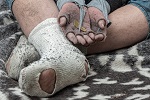
  • In war, fighting is just one of many ways soldiers suffer. They also endure disease and during World War I, a third of troops suffered from Trench Fever. It's rare to find cases today except in the homeless where it's increasing with the growing population.

    Medical officers during World War I noticed soldiers complaining of headache, dizziness, and severe pain in the lower back, legs, and shins. It was eventually named Trench fever in 1916 for the soldiers in trenches who were getting sick. But they didn't know its cause. One captain guessed the body louse was to blame since fever was common in the winter months when flies and mosquitos were rare.

    In 1917, a committee set up in France to study Trench Fever concluded the louse feces is how the disease spread. A year later, scientists identified the culprit, the bacterium Bartonella quintana.

    Fast forward a century and in 2019 the number of homeless jumped by 3 percent, the third straight year of growth. Up to 30 percent of homeless people are infected with Trench fever.

    The bacterium lives in the louse intestine and the insect's feces infect people through breaks in the skin. Fever begins about two to three weeks later and can recur every four to six days until it becomes less severe. But some infections can last up to eight years and develop into a fatal inflammation of the heart lining. To help the homeless avoid this kind of suffering they need better living conditions and support.

More Information

Today's Homeless Are Getting 'Trench Fever,' Infamous from WW I
A potentially deadly condition that plagued soldiers in the First World War is showing up in homeless people, Canadian researchers report...

Bartonella quintana and Urban Trench Fever
Contemporary Bartonella quintana infections have emerged in diverse regions of the world, predominantly involving socially disadvantaged persons. Available data suggest that the human body louse Pediculus humanus is the vector for transmission of B. quintana...

Trench Fever in the First World War
In mid-1915 physicians in the British Expeditionary Force on the Western Front in France began to notice an unusual acute febrile illness in soldiers accompanied by headache, dizziness, back ache, and a peculiar pain and stiffness in the legs, particularly the shins. Within a few months hundreds of cases had been identified clinically and, to great disappointment, laboratory studies had been unable to identify a cause. Early on, highest on the list of possibilities was a kind of enteric fever, thus, a new relative of typhoid fever. The soldiers, with rare insight, began calling it "trench fever" and their superiors eventually followed suit in the summer of 1916...


Two individuals wearing headphones stand in a recording booth, speaking into microphones with a music stand holding printed pages between them.

 Medicine...

Medicine is constantly advancing – that is a great thing about life in the 21st century. But it doesn’t just happen. Dedicated biomedical scientists are making discoveries that translate into those new medical advances.

Biomedical science is broad, encompassing everything from social science to microbiology, biochemistry, epidemiology, to structural biology and bioinformatics to name just a few areas. And, it can involve basic fundamental biology, the use of AI and chemistry to clinical studies that evaluate new medicines in patients.

No matter the research focus, the goal is always the same, to advance human health. It may take a few months, a few years or for fundamental science, a few decades. Few people make the connection that biomedical science is medicine and that biomedical scientists are working today on the medicine of tomorrow. Our weekly 500-word newspaper columns and 2-minute radio shows and podcasts provide insights into a broad range of biomedical science topics.

Medical Discovery News is dedicated to explaining discoveries in biomedical research and their promise for the future of medicine.

Podcasts

Alternatively, you can copy and paste the following web address (URL) into iTunes as a new subscription:
https://www.medicaldiscoverynews.com/shows/audio/mdnews.rss

You can also search and subscribe to "Medical Discovery News" in the podcast section of iTunes.

The www.medicaldiscoverynews.com web site and Medical Discovery News radio program (Program) are made possible by The University of Texas Medical Branch at Galveston (UTMB)as a community service and are intended to advance UTMB's mission of providing scholarly teaching, innovative scientific investigation, and state-of-the-art patient care in a learning environment to better the health of society and its commitment to the discovery of new innovative biomedical and health services knowledge leading to increasingly effective and accessible health care for the citizens of Texas.

All information provided on the web site and in the Program is for informational purposes only and is not intended for use as diagnosis or treatment of a health problem or as a substitute for consulting a licensed medical professional. Any information obtained by participating as a web site visitor or program listener is not intended to and should not be considered to constitute medical advice.

Thoughts and opinions expressed on the Program or on the website are those of the authors or guests and do not necessarily reflect the opinions of UTMB. The provision of links to other websites is not to be construed as written or implied sponsorship or endorsement of such websites by UTMB.

Please contact Dr. David Niesel or Dr. Norbert Herzog via email with any concerns, suggestions or comments.

All rights are reserved to information provided on the website or other information sources. No part of these programs can be reproduced stored in a retrieval system or transcribed in any form or by any means for personal or financial gained without the express written permission of Drs. Niesel and Dr. Herzog.