Recent Episodes
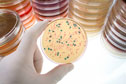
Venter and New Life
How about we head to the lab Norbert, do a DNA transplant and create a new life form?
Okay, Dr. Frankenstein — what are you talking about?
It's a bit complicated but fascinating! Scientists at the J. Craig Venter Institute took a very small bacterium called Mycobacterium mycoides and moved all its genes into a yeast cell.
Why a yeast cell? Because scientists understand its inner workings so well that it can be used like an auto repair shop.
That is true, we do know the yeast cell inside and out and in this study scientists figured out that they could move a bacterium's genes into a yeast cell and manipulate them.
The genes could be repaired, removed or even swapped out! Imagine saying... Hey Dave, hand me a gene that'll make the kind of protein I want.
That is what these researchers did.
Once they finished altering the DNA of mycobacterium mycoides they then transplanted the genes into another bacterium. They gave the genes time to become active – sort of like "booting up" new software in a computer and voila — a totally new life form is born!
The implications for this work are enormous. First the concept of using yeast cells as a retooling factory is a real advancement.
The result is that scientists can now create microbes for specific tasks and put them to work for us! For example, the Venter group is modifying a microbe called cyanobacteria to optimize the production of the next generation of biofuels.
Making biodiesel for example will become more efficient and cost effective.
Being able to custom make a bacterium to do your bidding has great potential. We are talking about creating powerful new drugs; inexpensive ways of making specialty chemicals; and producing new vaccines.
More Information
Artificial life, the stuff of dreams and nightmares, has arrived
Article in The Economist that provides a description of this advance and a discussion of the positive and not so positive implications of his new technology.
For more information...
Scientists create cell based on man-made genetic instructions
Story from the Washington Post that Scientists "have created a cell controlled entirely by man-made genetic instructions — the latest step toward creating life from scratch." "The achievement is a landmark in the emerging field of "synthetic biology," which aims to control the behavior of organisms by manipulating their genes."
For more information...
Creation of a Bacterial Cell Controlled by a Chemically Synthesized Genome
Daniel G. Gibson et al Science Express (May 20, 2010), doi 10.1126/science.1190719
The original Science report from the J. Craig Venter Institute on the creation of a new microbial life form. 'We report the design, synthesis, and assembly of the 1.08-Mbp Mycoplasma mycoides JCVI-syn1.0 genome starting from digitized genome sequence information and its transplantation into a Mycoplasma capricolum recipient cell to create new Mycoplasma mycoides cells that are controlled only by the synthetic chromosome.
For more information...