Medical Discovery NewsBridging the World of Medical Discovery and You

Recent Episodes

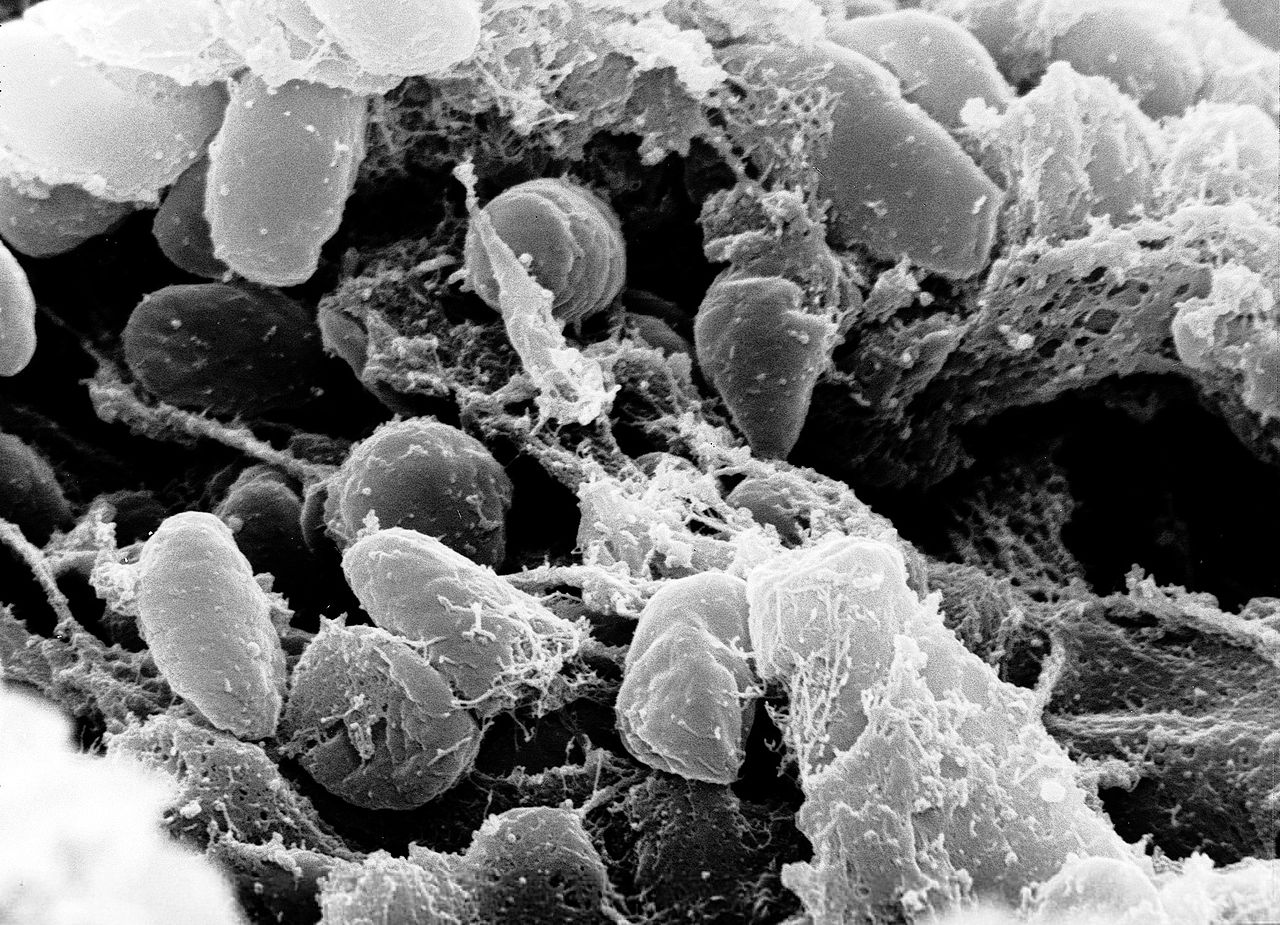
microscopic image of y pestis

Was This the First Pandemic

MP3 WAV

  • Pandemics linger even while some people want to believe it’s over. COVID-19 is a good example. So, let’s look back at three huge pandemics caused by one bacterium, Yersinia pestis, that continues to persist today.   

    The first, the Plague of Justinian, began around 500CE and lasted for200 years. It killed 50 million people in Northern Egypt near the town of Pelusium.     

    The second Pandemic occurred in the mid 1300s. In just 7 years, it killed two thirds of Europe’s population plus 25 million people in Asia and Africa. This one lasted four centuries.  

    The third plague began in China and continues today with outbreaks in numerous countries every year.  Even though yersinia pestis is blamed for all three plagues, it’s never been found near Pelusium, the site of the first outbreak. No bodies near the city had enough protein to identify the microbe. Then excavations in the 90s uncovered a mass grave not far from the city with skeletons of 100 adults. Researchers removed molars and ribs to look for traces of Y. pestis. Recently, they identified evidence of the bacterium’s proteins and DNA from those remains.  It’s the first hard evidence that Y. pestis was behind the First Pandemic in the Byzantine Empire.

    Cities like Jerash were centers of trade that made it easier for the bacteria to spread. We saw that with COVID-19 and it’s a lesson we learned and will heed into the future.  

More Information

The "Plague Of Justinian" May Have Been The First Pandemic. DNA At A Mass Grave Has Finally Identified Its Cause.
Looking at DNA at an arena turned into a mass grave at the epicenter of the outbreak, scientists found a familiar old foe.

Genetic Evidence of Yersinia pestis from the First Pandemic
We present the first genomic evidence of Yersinia pestis from the First Pandemic in the Eastern Mediterranean. Whole-genome sequencing revealed a single uniform strain, consistent with a rapid local outbreak. We integrate archaeology, proteomics, and ancient DNA to connect evidence to historical accounts of the Plague of Justinian ~1500 years ago.

Ancient Origins and Global Diversity of Plague: Genomic Evidence for Deep Eurasian Reservoirs and Recurrent Emergence
Yersinia pestis, the causative agent of plague, has triggered multiple pandemics throughout human history, yet its long-term evolutionary patterns and reservoir dynamics remain poorly understood. Here, we present a global phylogenomic analysis of ancient and modern Y. pestis strains spanning from the Neolithic and Bronze Age to the present day. 

Two individuals wearing headphones stand in a recording booth, speaking into microphones with a music stand holding printed pages between them.

 Medicine...

Medicine is constantly advancing – that is a great thing about life in the 21st century. But it doesn’t just happen. Dedicated biomedical scientists are making discoveries that translate into those new medical advances.

Biomedical science is broad, encompassing everything from social science to microbiology, biochemistry, epidemiology, to structural biology and bioinformatics to name just a few areas. And, it can involve basic fundamental biology, the use of AI and chemistry to clinical studies that evaluate new medicines in patients.

No matter the research focus, the goal is always the same, to advance human health. It may take a few months, a few years or for fundamental science, a few decades. Few people make the connection that biomedical science is medicine and that biomedical scientists are working today on the medicine of tomorrow. Our weekly 500-word newspaper columns and 2-minute radio shows and podcasts provide insights into a broad range of biomedical science topics.

Medical Discovery News is dedicated to explaining discoveries in biomedical research and their promise for the future of medicine.

Podcasts

Alternatively, you can copy and paste the following web address (URL) into iTunes as a new subscription:
https://www.medicaldiscoverynews.com/shows/audio/mdnews.rss

You can also search and subscribe to "Medical Discovery News" in the podcast section of iTunes.

The www.medicaldiscoverynews.com web site and Medical Discovery News radio program (Program) are made possible by The University of Texas Medical Branch at Galveston (UTMB)as a community service and are intended to advance UTMB's mission of providing scholarly teaching, innovative scientific investigation, and state-of-the-art patient care in a learning environment to better the health of society and its commitment to the discovery of new innovative biomedical and health services knowledge leading to increasingly effective and accessible health care for the citizens of Texas.

All information provided on the web site and in the Program is for informational purposes only and is not intended for use as diagnosis or treatment of a health problem or as a substitute for consulting a licensed medical professional. Any information obtained by participating as a web site visitor or program listener is not intended to and should not be considered to constitute medical advice.

Thoughts and opinions expressed on the Program or on the website are those of the authors or guests and do not necessarily reflect the opinions of UTMB. The provision of links to other websites is not to be construed as written or implied sponsorship or endorsement of such websites by UTMB.

Please contact Dr. David Niesel or Dr. Norbert Herzog via email with any concerns, suggestions or comments.

All rights are reserved to information provided on the website or other information sources. No part of these programs can be reproduced stored in a retrieval system or transcribed in any form or by any means for personal or financial gained without the express written permission of Drs. Niesel and Dr. Herzog.