Recent Episodes
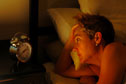
We Just Don't Get Enough Sleep
Most people I know don't seem to get enough sleep... with the pressures of demanding jobs and household duties, it's just hard to get more than six hours a night.
I have that problem but after today's episode, I'm going to try a lot harder because a study now confirms a link between consistently sleeping less than six hours a day and early death.
Wow. I didn't know it was that serious!
Researchers compiled and analyzed data from 16 studies in Europe, Asia and the US covering 25 years, 1.3 million people and over 100-thousand deaths.
It showed those who sleep less than 6 hours are 12-percent more likely to die early than those who slept 6 to8 hours every night.
So what's happening during sleep and why is it so important? When we're awake a chemical called adenosine may be building up in our blood to cause drowsiness. The chemical gradually breaks down while we sleep.
And as we fall asleep neurons in the brainstem appear to switch off the signals that keep us awake.
While scientists are still figuring out why we need sleep, animal studies show it's necessary for survival. Sleep is essential for well functioning immune and nervous systems.
On too little sleep, our memory and physical performance can suffer and we can't do math as well. Really deny us sleep and we can hallucinate and develop mood swings.
Some experts believe sleep gives neurons a chance to shut down and repair themselves. Otherwise they could malfunction from being depleted of energy or polluted with cellular byproducts.
Sleep may also allow the brain to exercise important neuronal connections that could deteriorate from lack of activity.
Sleep researchers still have much to learn which is amazing since we spend a third of our lives sleeping ' or do we anymore?
More Information
The original research article entitled "Sleep Duration and All-Cause Mortality: A Systematic Review and Meta-Analysis of Prospective Studies" that reported the results of the sleep studies was published in the Journal Sleep by Francesco P. Cappuccio, MD and colleagues.
For more information...
MedlinePlus is the National Institutes of Health's Web site for patients and their families and friends. Produced by the National Library of Medicine, it brings you information about diseases, conditions, and wellness issues in language you can understand. MedlinePlus offers reliable, up-to-date health information, anytime, anywhere, for free. You can use MedlinePlus to learn about the latest treatments, look up information on a drug or supplement, find out the meanings of words, or view medical videos or illustrations. You can also get links to the latest medical research on your topic or find out about clinical trials on a disease or condition.
For more information...
The Academy of Sleep Medicine's web site includes links to information about sleep disorders as well as lists and links to physicians and clinics that specialize in treating these disorders.
For more information...
eMedicineHealth.com is a consumer health information site that contains over 900 health and medical articles written by physicians for patients and consumers. A web page about sleep and disorders of sleep can be read here.
KidsHealth is has a large library of information about the health of children and teens. As part of The Nemours Foundation's Center for Children's Health Media, KidsHealth also provides families with perspective, advice, and comfort about a wide range of physical, emotional, and behavioral issues that affect children and teens. Their web site on sleep issues for children can be read here.
60 minutes episode about sleep can be read and seen here.