Medical Discovery NewsBridging the World of Medical Discovery and You

Recent Episodes

When Evolution Takes an Evil Twist

MP3 WAV

  • Even people who aren't big fans of spy shows seem to love scenes where agents disguised with latex masks, slip past their adversaries and then give us the big reveal.

    It's a great analogy for microbes that use this game of disguise and attack.

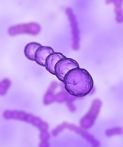
    Consider the bacterium Streptococcus pneumonia or S. pneumoniae for short. It's the number one cause of community acquired pneumonia, meningitis and ear infections in children. This wily microbe has now learned to outwit vaccines.

    The vaccines are Pneumovax and Prevnar which have been quite effective against common strains of S. pneumoniae. They do not protect against rarer strains of the bacteria, which can end up causing disease after the vaccine gets rid of the common strains.

    That's what happened when Alaskan children were first vaccinated. Their infection rates plummeted but returned within three years, when rarely seen strains began infecting kids. This is called replacement disease.

    So, how is the virus getting around the vaccine? Well, recall we said the vaccine had eliminated the common strains – well, scientists began seeing them again. How?

    By sequencing the whole genomes of these common strains, molecular epidemiologists are finding evidence of something called horizontal gene transfer.

    Just like the mission impossible agents putting on latex masks, these bacteria are swapping genomic sequences with a rare strain, changing the way they look so that they can avoid the vaccines. They're constantly swapping genes, which is how they found a way around the vaccines. And now some are even resistant to the antibiotics used to treat them.

    What we're seeing is evolution at work, and the changes are rapid. This study shows microbiologists like us just how hard it will be to eliminate disease causing microbes with this same ability to adapt.

More Information

Rapid pneumococcal evolution in response to clinical interventions
Original research paper in a highly respected journal that presents experimental results and analysis that documents this modern rapid evolution of the bacterial pathogen Streptococcus pneumnoniae.
For more information...

Fear of Replacement: What if a vaccine kills off one strain of a disease'but makes room for another?
Nicely written article in Slate by Arthur Allen that provides a nice overview of replacement disease and explains the Alaskan children's study. This is a great overview for the non-expert reader.
For more information...

Streptococcus pneumoniae
Overview of Streptococcus pneumoniae by the Centers for Disease Control (CDC) focusing on the Alaskan children's study. This site also provides much useful information about this bacterium and the diseases it causes and the vaccines that are currently in use to control them.
For more information...


Two individuals wearing headphones stand in a recording booth, speaking into microphones with a music stand holding printed pages between them.

 Medicine...

Medicine is constantly advancing – that is a great thing about life in the 21st century. But it doesn’t just happen. Dedicated biomedical scientists are making discoveries that translate into those new medical advances.

Biomedical science is broad, encompassing everything from social science to microbiology, biochemistry, epidemiology, to structural biology and bioinformatics to name just a few areas. And, it can involve basic fundamental biology, the use of AI and chemistry to clinical studies that evaluate new medicines in patients.

No matter the research focus, the goal is always the same, to advance human health. It may take a few months, a few years or for fundamental science, a few decades. Few people make the connection that biomedical science is medicine and that biomedical scientists are working today on the medicine of tomorrow. Our weekly 500-word newspaper columns and 2-minute radio shows and podcasts provide insights into a broad range of biomedical science topics.

Medical Discovery News is dedicated to explaining discoveries in biomedical research and their promise for the future of medicine.

Podcasts

Alternatively, you can copy and paste the following web address (URL) into iTunes as a new subscription:
https://www.medicaldiscoverynews.com/shows/audio/mdnews.rss

You can also search and subscribe to "Medical Discovery News" in the podcast section of iTunes.

The www.medicaldiscoverynews.com web site and Medical Discovery News radio program (Program) are made possible by The University of Texas Medical Branch at Galveston (UTMB)as a community service and are intended to advance UTMB's mission of providing scholarly teaching, innovative scientific investigation, and state-of-the-art patient care in a learning environment to better the health of society and its commitment to the discovery of new innovative biomedical and health services knowledge leading to increasingly effective and accessible health care for the citizens of Texas.

All information provided on the web site and in the Program is for informational purposes only and is not intended for use as diagnosis or treatment of a health problem or as a substitute for consulting a licensed medical professional. Any information obtained by participating as a web site visitor or program listener is not intended to and should not be considered to constitute medical advice.

Thoughts and opinions expressed on the Program or on the website are those of the authors or guests and do not necessarily reflect the opinions of UTMB. The provision of links to other websites is not to be construed as written or implied sponsorship or endorsement of such websites by UTMB.

Please contact Dr. David Niesel or Dr. Norbert Herzog via email with any concerns, suggestions or comments.

All rights are reserved to information provided on the website or other information sources. No part of these programs can be reproduced stored in a retrieval system or transcribed in any form or by any means for personal or financial gained without the express written permission of Drs. Niesel and Dr. Herzog.