Medical Discovery NewsBridging the World of Medical Discovery and You

Recent Episodes

Which Way is Up?

MP3 WAV

  • I've been dizzy before, Norbert, but what I experienced recently was debilitating.

    It wiped me out for a week. Turns out, I had BPPV, or benign paroxysmal positional vertigo.

    That can be scary, Dave. Someone we know who also had BPPV thought he was having a stroke when it happened to him. This is a common cause of vertigo which, though not serious, could cause you to fall.

    Because while it's happening, you don't know up from down or left from right.

    These brief episodes of dizziness can be mild or intense. And they're triggered by changes in the position of your head. So, moving your head up or down or suddenly rising from or turning over in bed can cause you to feel like the room is spinning.

    Fortunately, the symptoms usually last less than a minute but it's possible the effect can linger, making you unsteady.

    For people under fifty, the likely cause of BPPV is head injury. But in older people, there's probably degeneration to an organ inside the inner ear called the vestibular labyrinth.

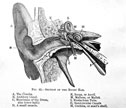
    Inside this organ are fluid-filled semi-circular canals with fine, hair-like sensors that monitor your head position. Another structure in the organ, called the utricle, contains crystals that monitor the position of your head in relation to gravity.

    In BPPV patients, these crystals dislodge, enter one of the semicircular canals and begin to stimulate the sensors. This throws off the sensors' ability to gauge normal head position, which makes the person dizzy.

    Fortunately, your doctor can teach you something called the canalith repositioning procedure. They're simple, slow head movements to shift the crystals out of the canals.

    You can also learn which head positions to avoid to prevent the crystals from dislodging and literally turning your life upside down.

More Information

Benign Positional Vertigo
Nice overview that is easy to read with a wide range of helpful information from New York Times.com.
For more information...

Benign paroxysmal positional vertigo (BPPV)
Information from a trusted source – the Mayo Clinic staff: "Benign paroxysmal positional vertigo (BPPV) is one of the most common causes of vertigo — the sudden sensation that you're spinning or that your head is spinning inside."
For more information...

Benign paroxysmal positional vertigo (BPPV)
Information from the Vestibular Disorders Association. "Benign paroxysmal positional vertigo (BPPV) is a disorder that causes vertigo, dizziness, and other symptoms due to debris that has collected within a part of the inner ear. This debris, called otoconia, is made up of small crystals of calcium carbonate (sometimes referred to colloquially as "ear rocks")"
For more information...


Two individuals wearing headphones stand in a recording booth, speaking into microphones with a music stand holding printed pages between them.

 Medicine...

Medicine is constantly advancing – that is a great thing about life in the 21st century. But it doesn’t just happen. Dedicated biomedical scientists are making discoveries that translate into those new medical advances.

Biomedical science is broad, encompassing everything from social science to microbiology, biochemistry, epidemiology, to structural biology and bioinformatics to name just a few areas. And, it can involve basic fundamental biology, the use of AI and chemistry to clinical studies that evaluate new medicines in patients.

No matter the research focus, the goal is always the same, to advance human health. It may take a few months, a few years or for fundamental science, a few decades. Few people make the connection that biomedical science is medicine and that biomedical scientists are working today on the medicine of tomorrow. Our weekly 500-word newspaper columns and 2-minute radio shows and podcasts provide insights into a broad range of biomedical science topics.

Medical Discovery News is dedicated to explaining discoveries in biomedical research and their promise for the future of medicine.

Podcasts

Alternatively, you can copy and paste the following web address (URL) into iTunes as a new subscription:
https://www.medicaldiscoverynews.com/shows/audio/mdnews.rss

You can also search and subscribe to "Medical Discovery News" in the podcast section of iTunes.

The www.medicaldiscoverynews.com web site and Medical Discovery News radio program (Program) are made possible by The University of Texas Medical Branch at Galveston (UTMB)as a community service and are intended to advance UTMB's mission of providing scholarly teaching, innovative scientific investigation, and state-of-the-art patient care in a learning environment to better the health of society and its commitment to the discovery of new innovative biomedical and health services knowledge leading to increasingly effective and accessible health care for the citizens of Texas.

All information provided on the web site and in the Program is for informational purposes only and is not intended for use as diagnosis or treatment of a health problem or as a substitute for consulting a licensed medical professional. Any information obtained by participating as a web site visitor or program listener is not intended to and should not be considered to constitute medical advice.

Thoughts and opinions expressed on the Program or on the website are those of the authors or guests and do not necessarily reflect the opinions of UTMB. The provision of links to other websites is not to be construed as written or implied sponsorship or endorsement of such websites by UTMB.

Please contact Dr. David Niesel or Dr. Norbert Herzog via email with any concerns, suggestions or comments.

All rights are reserved to information provided on the website or other information sources. No part of these programs can be reproduced stored in a retrieval system or transcribed in any form or by any means for personal or financial gained without the express written permission of Drs. Niesel and Dr. Herzog.