
Medical Discovery NewsBridging the World of Medical Discovery and You

Recent Episodes

Why Include Both Sexes in Studies

MP3 WAV

  • Even though I know my wife and I can be polar opposites, science doesn't treat us that way. Most medical treatments have been developed using males, but we're seeing problems with that universal approach.

    For example, thirty years ago the World Health Organization quickly withdrew a new measles vaccine in several countries after infant girls died in clinical trials even though boys were unaffected. In 2000, we learned women with HIV are infected with many different forms of the virus but men just by one. Women also tend to suffer more severe symptoms of the flu in spite of having fewer viruses in their blood.

    It's possible women mount a greater immune response resulting in more severe symptoms, but could this amplified response explain why more women get auto-immune diseases? Unfortunately, despite these differences, many studies simply don't use females because menstrual cycles and pregnancy introduce complicating factors.

    But now scientists are being encouraged to include both sexes. For example, one study of Gambian infants found girls given a tuberculosis vaccine suppressed production of an anti-inflammatory protein not seen in boys, giving the girls better immune response. In a study comparing men and women with sex changes, scientists plan to see whether the female hormone estrogen activates cells that defend against viruses while the male hormone testosterone suppresses it.

    Both US and European granting agencies now require that researchers report the sex of the animals used in pre-clinical trials, however, they don't yet have to report the differences in the results. IF they did, women's healthcare could improve and show just how different we are.

More Information

Why can't a woman be more like a man?
New HIV research shows once again that women are a law unto themselves...

Why don't medical studies include equal numbers of men and women?
Women are underrepresented in medical research, only making up one-third of participants in studies testing drugs and medical devices...

Gender bias in research: How does it affect evidence based medicine?
The evidence basis of medicine may be fundamentally flawed because there is an ongoing failure of research tools to include sex differences in study design and analysis...
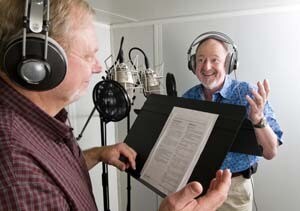

Two individuals wearing headphones stand in a recording booth, speaking into microphones with a music stand holding printed pages between them.

 Medicine...

Medicine is constantly advancing – that is a great thing about life in the 21st century. But it doesn’t just happen. Dedicated biomedical scientists are making discoveries that translate into those new medical advances.

Biomedical science is broad, encompassing everything from social science to microbiology, biochemistry, epidemiology, to structural biology and bioinformatics to name just a few areas. And, it can involve basic fundamental biology, the use of AI and chemistry to clinical studies that evaluate new medicines in patients.

No matter the research focus, the goal is always the same, to advance human health. It may take a few months, a few years or for fundamental science, a few decades. Few people make the connection that biomedical science is medicine and that biomedical scientists are working today on the medicine of tomorrow. Our weekly 500-word newspaper columns and 2-minute radio shows and podcasts provide insights into a broad range of biomedical science topics.

Medical Discovery News is dedicated to explaining discoveries in biomedical research and their promise for the future of medicine.

Podcasts

Alternatively, you can copy and paste the following web address (URL) into iTunes as a new subscription:
https://www.medicaldiscoverynews.com/shows/audio/mdnews.rss

You can also search and subscribe to "Medical Discovery News" in the podcast section of iTunes.

The www.medicaldiscoverynews.com web site and Medical Discovery News radio program (Program) are made possible by The University of Texas Medical Branch at Galveston (UTMB)as a community service and are intended to advance UTMB's mission of providing scholarly teaching, innovative scientific investigation, and state-of-the-art patient care in a learning environment to better the health of society and its commitment to the discovery of new innovative biomedical and health services knowledge leading to increasingly effective and accessible health care for the citizens of Texas.

All information provided on the web site and in the Program is for informational purposes only and is not intended for use as diagnosis or treatment of a health problem or as a substitute for consulting a licensed medical professional. Any information obtained by participating as a web site visitor or program listener is not intended to and should not be considered to constitute medical advice.

Thoughts and opinions expressed on the Program or on the website are those of the authors or guests and do not necessarily reflect the opinions of UTMB. The provision of links to other websites is not to be construed as written or implied sponsorship or endorsement of such websites by UTMB.

Please contact Dr. David Niesel or Dr. Norbert Herzog via email with any concerns, suggestions or comments.

All rights are reserved to information provided on the website or other information sources. No part of these programs can be reproduced stored in a retrieval system or transcribed in any form or by any means for personal or financial gained without the express written permission of Drs. Niesel and Dr. Herzog.