Medical Discovery NewsBridging the World of Medical Discovery and You

Recent Episodes

Your Eyes Got Rhythm

MP3 WAV

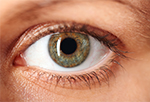
  • Of all the things we could say about music, here's an unexpected one: Even if you can't follow a beat, your pupils do! That's pretty remarkable! A recent study shows that your pupils dilate more or less in response to changes in musical beats. This suggests people have an innate sense of meter which is the pattern of stronger and weaker beats in music.

    Perception of a musical beat is a fundamental human ability and by age four we can detect meter. But we don't understand exactly how we do it. For example just how close do we have to pay attention or if at all to detect a beat? To help answer that question, consider that in rock music, the first beat is more important and you'd guess we'd miss it if it weren't there. But is that a learned response or is it innate?

    In order to find out, researchers exposed sleeping infants to rock drum rhythms. They did respond more when the first beat was missing compared to later beats. This suggest humans are able to perceive meter at birth.

    Now what about our pupils? One of the things our pupils respond to is that they dilate when we're surprised. So researchers monitored people's pupils as they listened to rock music in which the strong, first beat and weaker beats were imperceptibly dropped randomly.

    They found the pupils dilated more in response to the missing beats and more so to the missing stronger first beats. Again, this suggests that people have an innate sense of hierarchical meter and musical training did not influence these results.

    So, next time someone accuses you of being a bad dancer, just say, "Tell that to my pupils!"

More Information

Pupillary response indexes the metrical hierarchy of unattended rhythmic violations
Atser Damsma & Hedderik van Rijn. Brain and Cognition. Volume 111, 2017, Pages 95-103.

Did you miss that musical beat? Your pupils didn't
In a new study, neuroscientists played drumming patterns from Western music, including beats typical in pop and rock, while asking volunteers to focus on computer screens for an unrelated fast-paced task that involved pressing the space bar as quickly as possible in response to a signal on the screen...

You may not have rhythm, but your eyeballs sure do
Tracking eye movement gives researchers a peek into how the brain reacts to music...

 Medicine...

Medicine is constantly advancing – that is a great thing about life in the 21st century. But it doesn’t just happen. Dedicated biomedical scientists are making discoveries that translate into those new medical advances.

Biomedical science is broad, encompassing everything from social science to microbiology, biochemistry, epidemiology, to structural biology and bioinformatics to name just a few areas. And, it can involve basic fundamental biology, the use of AI and chemistry to clinical studies that evaluate new medicines in patients.

No matter the research focus, the goal is always the same, to advance human health. It may take a few months, a few years or for fundamental science, a few decades. Few people make the connection that biomedical science is medicine and that biomedical scientists are working today on the medicine of tomorrow. Our weekly 500-word newspaper columns and 2-minute radio shows and podcasts provide insights into a broad range of biomedical science topics.

Medical Discovery News is dedicated to explaining discoveries in biomedical research and their promise for the future of medicine.

Podcasts

Alternatively, you can copy and paste the following web address (URL) into iTunes as a new subscription:
https://www.medicaldiscoverynews.com/shows/audio/mdnews.rss

You can also search and subscribe to "Medical Discovery News" in the podcast section of iTunes.

See all podcasts and radio stations

The www.medicaldiscoverynews.com web site and Medical Discovery News radio program (Program) are made possible by The University of Texas Medical Branch at Galveston (UTMB)as a community service and are intended to advance UTMB's mission of providing scholarly teaching, innovative scientific investigation, and state-of-the-art patient care in a learning environment to better the health of society and its commitment to the discovery of new innovative biomedical and health services knowledge leading to increasingly effective and accessible health care for the citizens of Texas.

All information provided on the web site and in the Program is for informational purposes only and is not intended for use as diagnosis or treatment of a health problem or as a substitute for consulting a licensed medical professional. Any information obtained by participating as a web site visitor or program listener is not intended to and should not be considered to constitute medical advice.

Thoughts and opinions expressed on the Program or on the website are those of the authors or guests and do not necessarily reflect the opinions of UTMB. The provision of links to other websites is not to be construed as written or implied sponsorship or endorsement of such websites by UTMB.

Please contact Dr. David Niesel or Dr. Norbert Herzog via email with any concerns, suggestions or comments.

All rights are reserved to information provided on the website or other information sources. No part of these programs can be reproduced stored in a retrieval system or transcribed in any form or by any means for personal or financial gained without the express written permission of Drs. Niesel and Dr. Herzog.