Medical Discovery NewsBridging the World of Medical Discovery and You

Recent Episodes

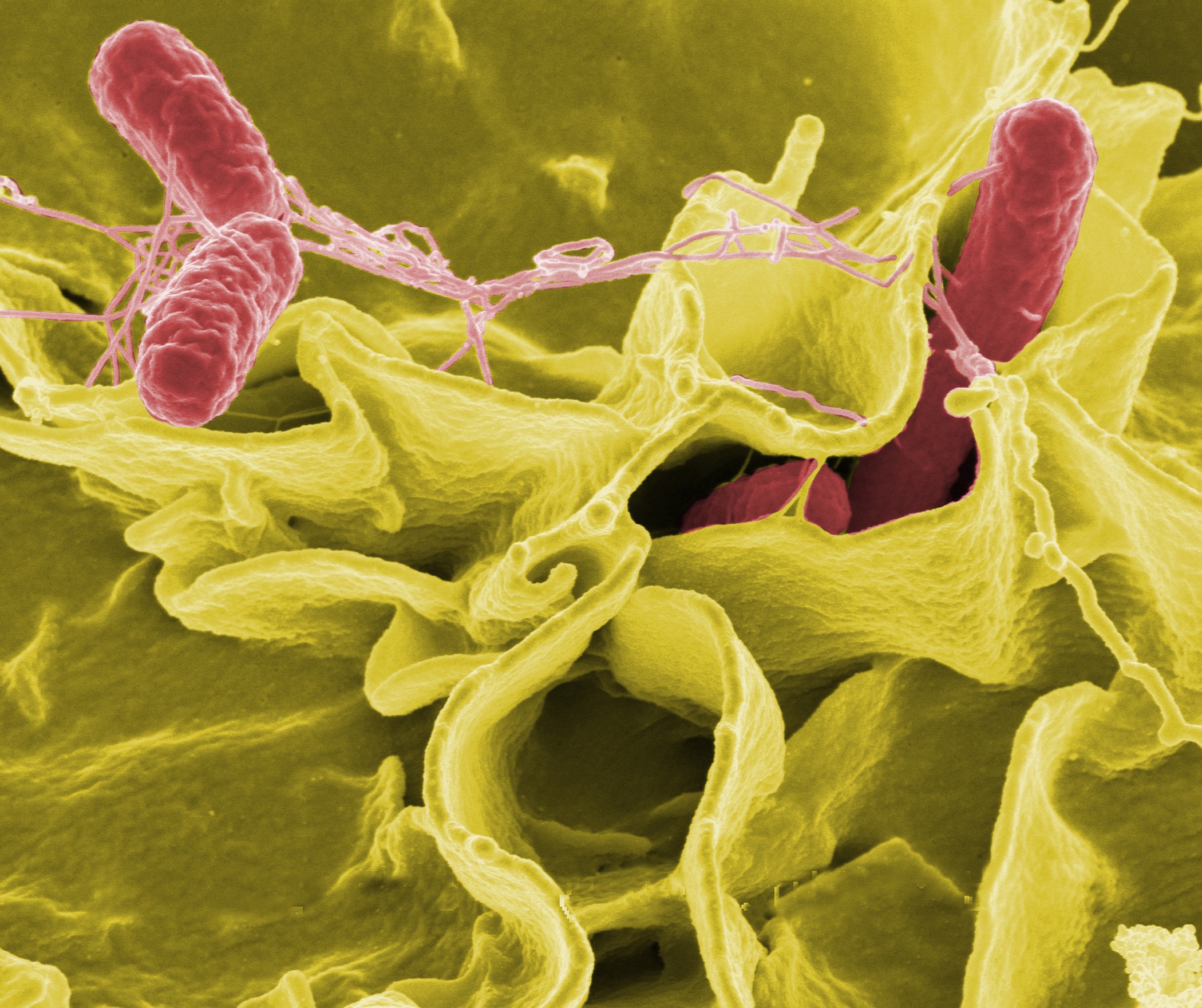
magnified gut microbiome

Your Memory and Your Microbiome

MP3 WAV

  • One of our favorite subjects is the human microbiome, the microbes that live in and on us. We’re only touching the tip of how these forty trillion microbes impact our health and now scientists have found one more. Our microbiome may play a role in dementia! Researchers working with mice learned that a bacterium disrupts memory formation in the brain.  

    You can test memory in mice with novel objects. Young mice spend more time examining new objects than familiar ones. Old mice forget what they’ve seen and treat all objects as novel.  When researchers tried housing the old and young mice together, the young mice forgot the familiar object, suggesting the old mice passed memory loss to them. How could this be? 

    Experiments using germ free mice may have found the answer.  These mice have no microbiome so researchers could transplant the microbiome of the old mice to the young mice. These mice then developed memory loss! Researchers were able to identify one culprit, the bacterium Parabacteriodes goldsteinii . They produce medium length fatty acids that accumulate in the gut and activate immune cells there. The cells produce inflammatory molecules, which impair neurons in the gut’s vagus nerve. When this happens, normal communication with the brain is disrupted and memories are not formed. 

    It’d be astonishing if our gut bacteria play a key role in our cognitive decline! We’re already treating some diseases by changing the microbial composition in the gut. Maybe one day, we can do the same to preserve our mind.  

More Information

How Gut Bacteria Could Trigger Memory Loss as We Age
Memory loss and aging go hand-in-hand for most of us, but scientists are getting closer to understanding why. A new study, conducted by researchers at the Arc Institute in Palo Alto, California, and published in Nature, found that a prime suspect may be living in our gut.

Intestinal interoceptive dysfunction drives age-associated cognitive decline
Ageing is accompanied by declining memory function, with extremely heterogeneous manifestation in the human population. Brain-extrinsic factors influencing cognitive decline, such as gastrointestinal signals, have emerged as attractive targets for peripheral interventions, but the underlying mechanisms remain largely unclear. Here, by charting a high-resolution map of microbiome ageing and its functional consequences throughout the lifespan of mice, we identify a mechanism by which inhibition of gut–brain signaling during ageing results in impaired neuronal activation in the hippocampus and loss of memory encoding.

Two individuals wearing headphones stand in a recording booth, speaking into microphones with a music stand holding printed pages between them.

 Medicine...

Medicine is constantly advancing – that is a great thing about life in the 21st century. But it doesn’t just happen. Dedicated biomedical scientists are making discoveries that translate into those new medical advances.

Biomedical science is broad, encompassing everything from social science to microbiology, biochemistry, epidemiology, to structural biology and bioinformatics to name just a few areas. And, it can involve basic fundamental biology, the use of AI and chemistry to clinical studies that evaluate new medicines in patients.

No matter the research focus, the goal is always the same, to advance human health. It may take a few months, a few years or for fundamental science, a few decades. Few people make the connection that biomedical science is medicine and that biomedical scientists are working today on the medicine of tomorrow. Our weekly 500-word newspaper columns and 2-minute radio shows and podcasts provide insights into a broad range of biomedical science topics.

Medical Discovery News is dedicated to explaining discoveries in biomedical research and their promise for the future of medicine.

Podcasts

Alternatively, you can copy and paste the following web address (URL) into iTunes as a new subscription:
https://www.medicaldiscoverynews.com/shows/audio/mdnews.rss

You can also search and subscribe to "Medical Discovery News" in the podcast section of iTunes.

The www.medicaldiscoverynews.com web site and Medical Discovery News radio program (Program) are made possible by The University of Texas Medical Branch at Galveston (UTMB)as a community service and are intended to advance UTMB's mission of providing scholarly teaching, innovative scientific investigation, and state-of-the-art patient care in a learning environment to better the health of society and its commitment to the discovery of new innovative biomedical and health services knowledge leading to increasingly effective and accessible health care for the citizens of Texas.

All information provided on the web site and in the Program is for informational purposes only and is not intended for use as diagnosis or treatment of a health problem or as a substitute for consulting a licensed medical professional. Any information obtained by participating as a web site visitor or program listener is not intended to and should not be considered to constitute medical advice.

Thoughts and opinions expressed on the Program or on the website are those of the authors or guests and do not necessarily reflect the opinions of UTMB. The provision of links to other websites is not to be construed as written or implied sponsorship or endorsement of such websites by UTMB.

Please contact Dr. David Niesel or Dr. Norbert Herzog via email with any concerns, suggestions or comments.

All rights are reserved to information provided on the website or other information sources. No part of these programs can be reproduced stored in a retrieval system or transcribed in any form or by any means for personal or financial gained without the express written permission of Drs. Niesel and Dr. Herzog.