Medical Discovery NewsBridging the World of Medical Discovery and You

Recent Episodes

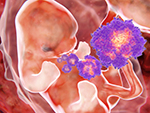
Zika Is More Than Microcephaly

MP3 WAV

  • Until recently, Zika transmission in the US was limited to Florida. But we all knew that wouldn't last. It then showed up in the Rio Grande Valley near Brownsville, Texas, and by the summer of 2017, Zika will have spread further.

    We've known about Zika since 1947 when it was first isolated in Uganda, Africa. It spread from there to SE Asia, Micronesia and finally South and Central America and the Caribbean. The attention the summer Olympics brought to Brazil, an epicenter of this infection has heightened the concern, especially the risks posed to newborns.

    An infected pregnant woman can give birth to a baby with a small head and brain called microcephaly. Many of these children do not survive into adulthood.

    A study in the journal Radiology has begun to identify some signs that microcephaly is evident early in pregnancy. Right now, this diagnosis can only be made in the late second to the third trimester.

    The study found that brain images reveal structural changes in the corpus callosum that controls communication between the two hemispheres of the brain. As early as the second trimester, images also show changes in the regions affecting speech, movement, thought and emotion. Another especially damaging effect are the calcium deposits that occur between the cortex, the brain's outer layer, and the underlying white matter. This affects learning, memory and coordination.

    Not only can these changes cause microcephaly, they could also result in other brain damage. We will be unaware of the full impact of the Zika virus on children until their brains reach full maturity at age 25.

More Information

Brain Scans of Brazilian Babies Show Array of Zika Effects
A study of brain scans and ultrasound pictures of 45 Brazilian babies whose mothers were infected with Zika in pregnancy shows that the virus can inflict serious damage to many different parts of the fetal brain beyond microcephaly, the condition of unusually small heads that has become the sinister signature of Zika.

What You Need to Know About Zika Virus for 2017
What scientists have learned about the disease in the off-season, where Zika is spreading now, and how to protect yourself...

So Far, Zika Is Showing Up in the United States Just Where the Modelers Said It Would
Scientists who use computer models to forecast future events often receive punishing criticism for getting it wrong. [...] So here's a ScienceInsider shoutout to some modelers who appear to have gotten it right: the meteorologists and entomologists who joined forces last May and predicted where local transmission of Zika in the continental United States was most likely to occur.


 Medicine...

Medicine is constantly advancing – that is a great thing about life in the 21st century. But it doesn’t just happen. Dedicated biomedical scientists are making discoveries that translate into those new medical advances.

Biomedical science is broad, encompassing everything from social science to microbiology, biochemistry, epidemiology, to structural biology and bioinformatics to name just a few areas. And, it can involve basic fundamental biology, the use of AI and chemistry to clinical studies that evaluate new medicines in patients.

No matter the research focus, the goal is always the same, to advance human health. It may take a few months, a few years or for fundamental science, a few decades. Few people make the connection that biomedical science is medicine and that biomedical scientists are working today on the medicine of tomorrow. Our weekly 500-word newspaper columns and 2-minute radio shows and podcasts provide insights into a broad range of biomedical science topics.

Medical Discovery News is dedicated to explaining discoveries in biomedical research and their promise for the future of medicine.

Podcasts

Alternatively, you can copy and paste the following web address (URL) into iTunes as a new subscription:
https://www.medicaldiscoverynews.com/shows/audio/mdnews.rss

You can also search and subscribe to "Medical Discovery News" in the podcast section of iTunes.

See all podcasts and radio stations

The www.medicaldiscoverynews.com web site and Medical Discovery News radio program (Program) are made possible by The University of Texas Medical Branch at Galveston (UTMB)as a community service and are intended to advance UTMB's mission of providing scholarly teaching, innovative scientific investigation, and state-of-the-art patient care in a learning environment to better the health of society and its commitment to the discovery of new innovative biomedical and health services knowledge leading to increasingly effective and accessible health care for the citizens of Texas.

All information provided on the web site and in the Program is for informational purposes only and is not intended for use as diagnosis or treatment of a health problem or as a substitute for consulting a licensed medical professional. Any information obtained by participating as a web site visitor or program listener is not intended to and should not be considered to constitute medical advice.

Thoughts and opinions expressed on the Program or on the website are those of the authors or guests and do not necessarily reflect the opinions of UTMB. The provision of links to other websites is not to be construed as written or implied sponsorship or endorsement of such websites by UTMB.

Please contact Dr. David Niesel or Dr. Norbert Herzog via email with any concerns, suggestions or comments.

All rights are reserved to information provided on the website or other information sources. No part of these programs can be reproduced stored in a retrieval system or transcribed in any form or by any means for personal or financial gained without the express written permission of Drs. Niesel and Dr. Herzog.