Infectious diseases transcend geographical and political boundaries. Given global interconnectedness through international travel and trade, localized outbreaks can rapidly escalate into global health crises. Preventing pandemics demands collective vigilance, collaboration, and prompt action against any emerging pathogen worldwide. We examine how researchers collaborated to study the mpox outbreak in Nigeria.
Historically, Nigeria reported only three human mpox cases over a 50-year period (4). However, in 2017, the situation dramatically changed when mpox re-emerged to cause an outbreak of mpox in Nigeria's Bayelsa State. This outbreak quickly spread to other states, with over 40 laboratory-confirmed cases reported within a month (5, 6). Estimates indicated that there were 122 confirmed or probable cases and 7 deaths for a fatality rate of 7%. The age of cases ranged from 2 days old to 50 years and 84 (69%) were males. A vesiculopustular rash occurred on all parts of the body of all patients, with the face being most affected, and the more common symptoms included fever, pruritus, headache, and lymphadenopathy. The epidemiology of the distribution of cases and contacts, revealed that both primary zoonotic and secondary human-to-human transmission. The outbreak involved the West African clade of mpox virus and was the largest documented outbreak of this clade among humans (7).
The Nigeria mpox outbreak led to travel-related cases linked to individuals from Nigeria were identified in the United Kingdom, United States, Israel, and Singapore (8). These events ultimately culminated in the global mpox outbreak of 2022. For decades, global health stakeholders had viewed mpox as a geographically constrained disease, primarily affecting people who resided in remote, rural communities. This perception led to insufficient investment in surveillance and control, creating vulnerabilities that contributed to the unprecedented global spread (8). 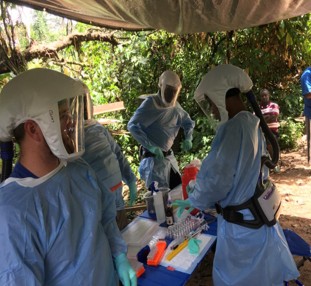
To identify the animal reservoirs of monkeypox virus (MPXV) in Nigeria, a One Health investigation team comprised of representatives from the National Veterinary Research Institute (NVRI), and Nigeria Center for Disease Control (CDC) collaborated with the US CDC & Prevention. Surveillance activities involving rodent and small mammal trapping at various sites including communities where index cases were found, including rainforest habitats, and savannah areas across Nigeria.
Necropsies of trapped rodents were conducted by trained personnel under strict biosafety procedures. Data such as sex, developmental stage, weight, foot, body and tail length measurements were recorded for identification purposes. Thereafter, liver, lungs, spleen, and skin samples were collected for molecular and serological testing for orthopoxvirus and MPXV. Despite sampling a wide range of rodents and small mammals, no MPXV was detected. However, orthopoxvirus was detected in Baoule's mouse (Mus baoulei) by real-time PCR assay and orthopoxvirus IgG antibody by enzyme-linked immunosorbent assay (ELISA) in soft-furred mouse (Praomys species), Black rat (Rattus rattus), feral cats, giant pouched rats, and shrews (9,10). The quest to understand the dynamics and identify the animal reservoir of MPXV in Nigeria continues, with plans for sampling more animal species and environmental sources.
References
1. "WHO Factsheet – Mpox (Monkeypox)". World Health Organization (WHO). 18 April 2023. Archived from the original on 21 April 2022. Retrieved 21 May 2023.
2. "Mpox Symptoms". U.S. Centers for Disease Control and Prevention (CDC). 15 March 2024. Archived from the original on 2 April 2024. Retrieved 22 August 2024.
3. "Mpox". World Health Organization (WHO). 17 August 2024. Archived from the original on 19 August 2024. Retrieved 22 August 2024.
4. Breman JG, Kalisa-Ruti, Steniowski MV, Zanotto E, Gromyko AI, Arita I. Human monkeypox, 1970-79. Bull World Health Organ. 1980;58(2):165-182.
5. Yinka-Ogunleye A, Aruna O, Ogoina D, et al. Reemergence of Human Monkeypox in Nigeria, 2017. Emerg Infect Dis. 2018;24(6):1149-1151. doi:10.3201/eid2406.180017
6. Ogoina D, Izibewule JH, Ogunleye A, et al. The 2017 human monkeypox outbreak in Nigeria-Report of outbreak experience and response in the Niger Delta University Teaching Hospital, Bayelsa State, Nigeria. PLoS One. 2019;14(4):e0214229. Published 2019 Apr 17. doi: 10.1371/journal.pone.0214229
7. Yinka-Ogunleye A, Aruna O, Dalhat M et al. Outbreak of human monkeypox in Nigeria in 2017–18: a clinical and epidemiological report The Lancet Infectious Diseases, 2019; 19, 872-879.
8. Alakunle E, Kolawole D, Diaz-Cánova D, Alele F, Adegboye O, Moens U and Okeke MI (2024) A comprehensive review of monkeypox virus and mpox characteristics. Front. Cell. Infect. Microbiol. 14:1360586. doi: 10.3389/fcimb.2024.1360586
9. Meseko C, Adedeji A, Shittu I, Obishakin E, Nanven M, Suleiman L, et al. Orthopoxvirus Infections in Rodents, Nigeria, 2018–2019. Emerg Infect Dis. 2023;29(2):433-434. doi: 10.3201/eid2902.221411
10. Adedeji AJ, Meseko CA, Shittu IA, Maurice N, Ladan S, Obishakin E, et al. Orthopoxvirus antibodies in feral mammals in mpox outbreak areas, Nigeria, 2021–2022. Emerg Infect Dis. 2026 May. doi: 10.3201/eid3205.251565