Since Russia’s invasion of Ukraine in February 2022, health, veterinary, and environmental systems in Ukraine have been profoundly disrupted. Despite these challenges, Ukraine has embraced a national Strategy for Biosafety and Biosecurity that is grounded in One Health principles and aligned with quadripartite frameworks that integrate human, animal, plant, and environmental health (Figure 1) [1].
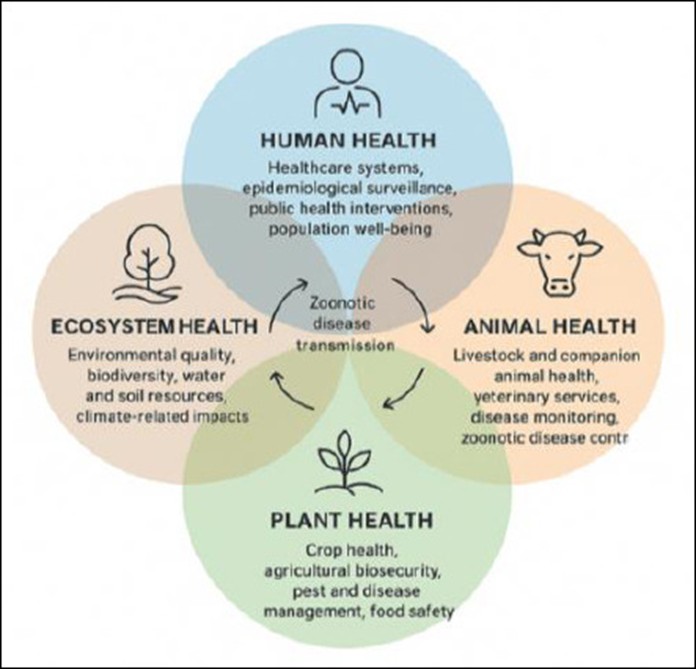
In Ukraine, One Health is understood as an operational framework that integrates human health, veterinary medicine, agriculture, and environmental protection to address zoonotic diseases, antimicrobial resistance (AMR), food safety, ecological risks, and biosecurity. This integration is reflected in national strategic documents [2, 3]. One Health implementation in Ukraine continues to grow through collaboration among veterinary, medical, environmental, and agricultural sectors.
Ukraine faces many interconnected challenges, including zoonotic diseases such as avian influenza, rabies, leptospirosis, and African swine fever. The war has additionally disrupted healthcare infrastructure, veterinary surveillance systems, and environmental monitoring programs. Ukrainian scientists emphasize that multisectoral collaboration is essential for improving disease surveillance, food safety, environmental protection, and antimicrobial resistance monitoring.
International organizations, including the Food and Agriculture Organization of the United Nations (FAO), World Health Organization (WHO), World Organization for Animal Health (WOAH), European Commission, World Food Program, World Bank, U.S. Agency for International Development (USAID) and Center Diseases Control (CDC) continue supporting One Health activities in Ukraine through laboratory strengthening, surveillance programs, and workforce development initiatives. These collaborations demonstrate the importance of global partnerships in protecting public health and preventing future biological threats.
To support these goals, UTMB’s One Health Research and Training Laboratory developed a USDA training proposal titled: “Training for Ukrainian Dairy Professionals in the Detection and Characterization of Viruses Causing Respiratory Diseases in Cattle.” The proposal, drafted by Dr. Marushchak (Figure 2) submitted to USDA in January 2025, sought to strengthen the Ukrainian dairy sector’s capacity to prevent and respond to respiratory virus outbreaks that could further strain the country’s war-damaged agricultural economy.

The proposed project was developed in collaboration with Ukrainian partners, including the State Service of Ukraine on Food Safety and Consumer Protection (SSUFSCP) and the Association of Milk Producers (AMP). Unfortunately, on 5/26/26 (fifteen months after submission) we learned that the US government has chosen not to fund proposals under this funding opportunity.
Despite the ongoing challenges caused by war, Ukrainian scientists and international collaborators continue working together to improve biosafety, strengthen laboratory systems, and build sustainable One Health networks for the future. Through education, research, and international cooperation, Ukraine continues to develop resilient systems to protect human, animal, and environmental health.
References
1. Gerilovych A, Shevchenko N, Pishchanskyi O, et al. Operationalizing the One Health approach in a conflict-affected setting: A scientometric review of policy foundations, systemic gaps, and future pathways in Ukraine. Vet World. 2026;19(1):389-408. doi:10.14202/vetworld.2026.389-408
2. Cabinet of Ministers of Ukraine. Strategy for biosafety and biosecurity for 2022–2025. Ministry of Environmental Protection and Natural Resources of Ukraine. 2022. Available from: https://mepr.gov.ua/en/uryad-vyznachyv-yak-vykonuvatymut-strategiyu-biobezpeky-ta-biologichnogo-zahystu-u-2022-2025-rokah. Retrieved on 04-08-2025
3. Cabinet of Ministers of Ukraine. Healthcare system development strategy 2030. 2021. Available from: https://healthstrategy2030.com.ua/en/strategy. Retrieved on 01-08-2025.