Vietnam has emerged as a leader in implementing the One Health approach through strong collaboration among government agencies, universities, international organizations, and research institutions in the national scale.
Recognized as a hotspot for emerging infectious and zoonotic diseases Vietnam has enthusiastically embraced the One Health approach beginning more than two decades ago. While Vietnam has many One Health-oriented programs, a key initiative has been Vietnam’s Partnership for Avian and Human Influenza (PAHI) that was established to coordinate national and international efforts against avian influenza and pandemic threats. In 2016, PAHI evolved into the One Health Partnership (OHP), broadening its focus to include zoonotic diseases, antimicrobial resistance (AMR), food safety, and environmental health.
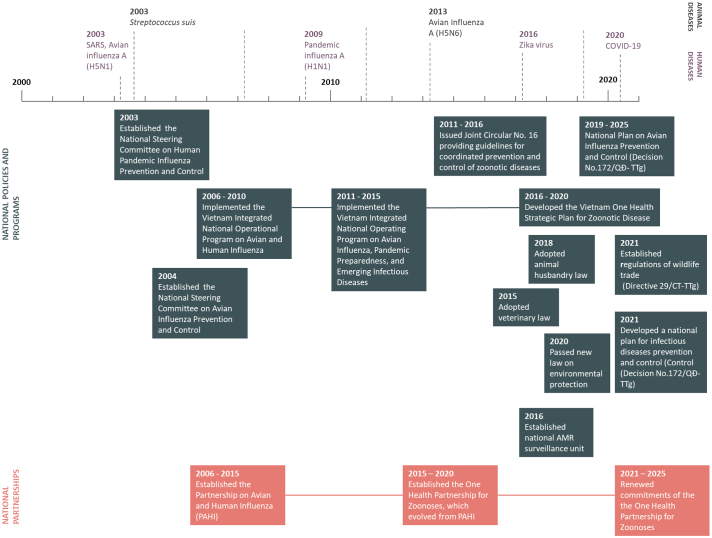
Figure 1 - National responses to emerging infectious diseases in Vietnam from 2000 to 2021. [1]
Today, the OHP in Vietnam has become one of the most established multisectoral coordination mechanisms for One Health implementation globally. “Vietnam ranks among the leading countries in operationalizing the One Health approach, supported by the well-established coordination framework of the One Health Partnership” noted Dr. Hung Nguyen-Viet, Director of International Livestock Research Institute (ILRI) in Asia.
He highlighted Vietnam’s active contribution to global initiatives, including projects such as PREventing ZOonotic Disease Emergence (PREZODE) initiated by the French President [2], which are being implemented in provinces such as Thai Nguyen and Dong Thap to reduce zoonotic disease risks and strengthen outbreak prevention. Hung also emphasized that “only when good coordination, sufficient resources, and effective implementation at the grassroots level is ensured, can the "One Health" approach truly become a widely implemented method in society, helping prevent future disease outbreaks and sustainably protect human, animal, and environmental health”.

Vietnam has strengthened workforce development through interdisciplinary One Health training programs. Thousands of students and early-career professionals have been trained in disease surveillance, outbreak preparedness, risk communication, and One Health principles. Universities nationwide have integrated One Health concepts into their curricula, while research collaborations continue to support evidence-based policy and cross-sectoral decision-making.
Recently, the One Health Partnership Framework for Zoonotic Diseases for 2026–2030 was launched with 57 member organizations from government, academia, international agencies, and the private sector. Building on more than 100 One Health projects implemented during 2021–2025, the expansion from 33 to 57 partners reflects Vietnam’s growing commitment to One Health implementation.
The UTMB One Health Laboratory has established collaborations and worked with several members of OHP and other Vietnamese institutions, such as ILRI, the National Institute of Veterinary Research, Bach Mai hospital, the Vietnam One Health Universities Network, Hanoi University of Public Health etc. With expertise in emerging infectious diseases, virology, and global health security, UTMB One Health Laboratory can further strengthen partnerships in Vietnam through collaborative research on zoonotic disease surveillance, genomic sequencing, pathogen discovery, and outbreak response systems. Expanding partnerships with Vietnamese institutions provides opportunities to advance innovative research, strengthen workforce capacity, and improve preparedness for future infectious disease threats.
References
[1] Nguyen-Viet H, Lam S, Nguyen-Mai H, Trang DT, Phuong VT, Tuan NDA, et al. Decades of emerging infectious disease, food safety, and antimicrobial resistance response in Vietnam: The role of One Health. One Health. 2022;14:100361.
[2] PREDOZE. PREZODE at a glance 2021 [Available from: https://prezode-initiative.org/en/overview/.