Scientists
Second Cycle
Years2023-2028
Year 8: 2025-2026

Cumulative Exposure to Natural Disasters and Mental Health among Older Adults in the U.S.
PI: Ying Huang, PhD, Assistant Professor, Department of Sociology and Demography, UTSA.
Mentor: Fernando Riosmena, PhD (UTSA).
Goal: To integrate multiple data sources to create a comprehensive measure of cumulative natural disaster exposure for adults transitioning from mid to late adulthood; and to evaluate how life course exposure to natural disasters differs across racial/ethnic groups and socioeconomic backgrounds, with a special focus on the Hispanic population.
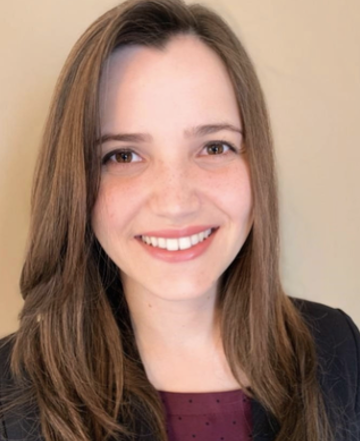
The Impact of Lifetime Smoking Exposure on the Cognitive Function of Older Mexican Adults
PI: Jaqueline C. Avila, PhD, Assistant Professor, Department of Gerontology, University of Massachusetts, Boston
Mentors: Rebeca Wong, PhD (UTSA), Claudia Kimie Suemot, MD, PhD, University of Sao Paulo Medical School. Sao Paulo, Brazil
Goal: To use lifetime smoking exposure in Mexico as a pilot example to assess how rapidly changing birth cohorts are experiencing the burden of smoking and its influence on cognitive impairment, and how changes in sex norms and educational levels across these cohorts modify this association.
Neighborhood Social Cohesion and Dual Trajectories of Functional Disability and Cognitive Decline among older Mexican Americans
PI: Weidi Qin, PhD, Assistant Professor, Sandra Rosenbaum School of Social Work, University of Wisconsin–Madison.
Mentor: Soham Al Snih, MD, PhD (UTMB), Emily J Nicklett (UTSA).
Goal: To contribute new evidence on the longitudinal relationships between functional limitations and cognitive decline among older Mexican Americans, and the moderating role of perceived neighborhood social cohesion.
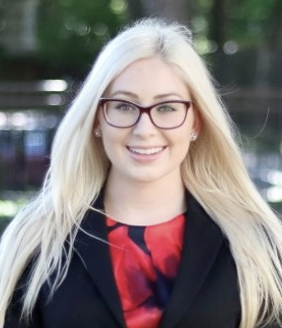
Older adults as peer support helpers: A feasibility and acceptability pilot targeting chronic pain and depression in Hispanic-predominant senior living communities
PI: Meredith Stensland, PhD, LMSW, Assistant Professor of Research, Department of Psychiatry and Behavioral Sciences (UTSA)
Mentor: David Leland Roberts, PhD (UTSA), Donald Douglas McGeary, PhD (UTSA), Lisa Kilpela PhD (UTSA), Emily J Nickelett, PhD (UTSA)
Goal: To assess the feasibility and acceptability of recruiting and training older adults to become peer support helpers to deliver a cognitive-behavioral intervention to older adults living with chronic pain and/or depression in senior living communities

Formal and Informal Caregiving for Medicare-Medicaid Dually Eligible Latino and non-Latino Older Adults in the United States
PI: Stipica Mudrazija, PhD, Assistant Professor, University of Washington
Mentor: Jacqueline L Angel, PhD (UTA)
Goal: To examine the utilization of formal and informal (mostly family) care among Medicare-Medicaid dually eligible adults aged 65 years and older; and compare utilization of care among older dual eligibles and non-eligibles
Year 7: 2024-2025
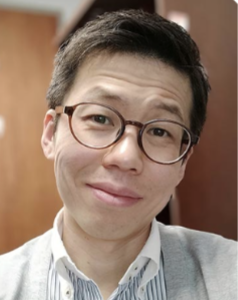
Healthcare preferences of older Hispanic residents in Texas
PI: Stephen Pan, PhD, Assistant Professor, Public Health, University of Texas at San Antonio
Mentors: Patricia Chalela, DrPH and Amelie Ramirez, DrPH, MPH
Goal: Optimize the study design and target population’s acceptability of a discrete choice experiment (DCE). The DCE will elucidate traditional and conventional healthcare preferences of older Hispanics in Texas when facing hypothetical symptoms of breast cancer and colorectal cancer. Identify attributes and levels for a DCE. The DCE will elucidate traditional and conventional healthcare preferences of older Hispanics in Texas when facing hypothetical symptoms of breast and colorectal cancer.
Year 6: 2023-2024
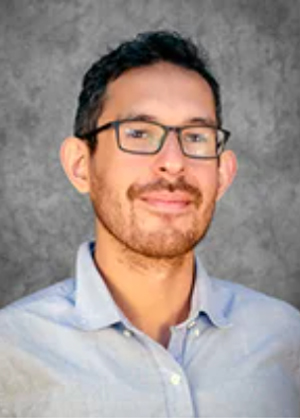
Racial differences in informant-reported functional decline and caregiving intensity
PI: Phillip Cantu, PhD, Assistant Professor, Division of Geriatrics, Department of Internal Medicine, University of Texas Medical Branch
Mentors: Rebeca Wong, PhD and Emily Nicklett, PhD
Goal: Investigate racial differences in informant-reported functional decline and caregiving intensity among older adults in the United States to understand how declines in physical and cognitive function impact the level of care received, particularly from informal sources like family and friends. Data from the Health and Retirement Survey (HRS) will be used to identify distinct classes of cognitive and functional decline reported by caregivers, and to compare these classes between different racial groups.
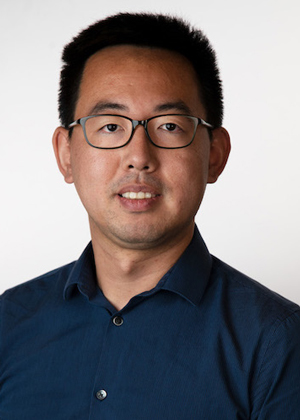
Racial and ethnic disparities in unmet care needs among older adults
PI: Zhiyong Lin, PhD, Assistant Professor, Sociology and Demography, University of Texas at San Antonio
Mentors: Fernando Riosmena, PhD and Debra Umberson, PhD
Goal: Investigate racial and ethnic disparities in unmet care needs among older adults in the United States to understand how various intersecting social identities, such as race, ethnicity, gender, and nativity, influence the experiences of older adults in receiving care. Data from the National Health and Aging Trends Study (NHATS) and National Study of Caregiving (NSOC) will be used to examine how these social factors interact to determine one's exposure to care needs and care networks, leading to unequal experiences of unmet care needs in later life.

Mixed methods to assess sex differences in end-of-life care in hospitalized Hispanic patients
PI: Myrna Katalina Serna, MD, MPH, Assistant Professor, Division of General Medicine, Department of Internal Medicine, University of Texas Medical Branch
Mentors: Abbey B. Berenson, MD, PhD and Jill Fleuriet, PhD
Goal: Assess sex differences in end-of-life care among hospitalized Hispanic patients to understand disparities in advance care planning, palliative care, and hospice enrollment within this population. Electronic Health Record data from UTMB spanning 2018-2023, focusing on Hispanic patients aged 75 and above hospitalized under general medicine services will be used. Multivariable logistic regression will be utilized to assess sex differences in end-of-life planning outcomes. In-depth interviews with 10-15 Hispanic women and 10-15 Hispanic men hospitalized at UTMB will be conducted to understand the underlying mechanisms driving these differences.
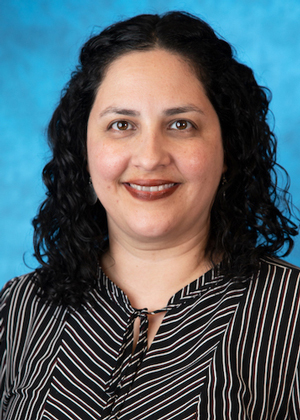
Cervical cancer screening in older Hispanic women living in Texas
PI: Coralia Vázquez-Otero, JD, MPH, PhD, Assistant Professor, Public Health, University of Texas at San Antonio
Mentors: Amelie Ramirez, PhD and Elizabeth Vaughn, MD, PhD
Goal: Characterize cervical cancer screening (CCS) in older Hispanic women living in Texas, with a particular emphasis on understanding and addressing disparities in cancer prevention and screening. By examining multilevel factors and disaggregating information by Hispanic subgroups, the project aims to provide a comprehensive understanding of the barriers and facilitators to CCS in this population.
First Cycle
Years:2017-2022
Year 5: 2022-2023
Racial/Ethnic Disparities in Non-Medical Prescription Drug Use Among U.S. Older Adults.
PI: Timothy J. Grigsby, PhD, University of Nevada
Mentors: Jay Shen, PhD and Chad L. Cross, PhD, MFT, Pstat(R), C-MDI
Goal: Characterize the trend in prevalence of Non-Medical Prescription Drug Use (NMPDU) in a nationally representative sample of U.S. older adults by race/ethnicity from 2015-2019; and explore how racial/ethnic NMPDU trends vary by education and income level.

Sociodemographic and Neurocognitive Characterization of Mexican American Bilinguals and Monolinguals Presenting with Typical and Pathological Cognitive Aging
PIs: Stephanie Grasso, University of Texas at Austin and Brian Downer, PhD, University of Texas Medical Branch
Goal: Characterize the sociodemographic profile of bilingualism, English proficiency, and language dominance in older Mexican Americans. Estimate the association of bilingualism, English proficiency, and language dominance with changes in cognitive function in Mexican Americans over a 20-year period. Identify cross-sectional differences in brain structure between Mexican American bilinguals and monolinguals presenting with typical cognitive aging, mild cognitive impairment (MCI), and Alzheimer’s dementia (AD). Evaluate the effects of bilingualism on longitudinal patterns of neurocognitive decline and the accuracy of deep machine learning to forecast these patterns over a six-year period in Mexican Americans with typical cognitive aging, MCI, and AD.
Year 4: 2021-2022

The influence of Natural Disaster Severity on Incident Adverse Health Outcomes among older Mexican Americans.
PI: Amie Hufton, PhD, Texas A&M University at Galveston
Mentors: John Prochaska, PhD and Kyriakos Markides, PhD
Goal: Examine the influence of natural disaster exposure and severity on incident mental, cognitive and physical health indicators among aging Mexican Americans. This retrospective analysis will a) describe the risk factors related to exposure to natural disasters associated with incident depression, cognition, or physical disability, and b) examine inequalities in these health outcomes by nativity (other or US born) in Mexican Americans who have participated in the Hispanic Established Population for the Epidemiological Study of the Elderly (H-EPESE).

Cognitive Demand of Lifetime Occupation among Older Mexican Adults.
PI: Chi-Ying “Cynthia” Li, PhD, University of Texas Medical Branch
Mentors: Rebeca Wong, PhD, and Soham Al Snih, MD, PhD.
Goal: This pilot will test the feasibility of constructing an index of cognitive demand by occupation, using the participants of the Mexican Health and Aging Study (MHAS) and their reported main occupation over the life course. In addition, the project will identify the influence of cognitive demands of occupations on the diverse trajectories of cognitive function in old age among Mexicans. The pilot project will use data from the MHAS 2012 and information on occupational skills available in the Occupational Information Network (O*NET) database, maintained by the US Department of Labor (https://www.onetonline.org/), and MHAS 2012 to 2018 for the trajectories.

Gender Differences in Pain and its Relation to Cognitive Function among Aging Mexicans.
PI: Sadaf Milani, PhD, University of Texas Medical Branch
Mentors: Mukaila Raji, MD, and Rebeca Wong, PhD
Goal: This pilot project will identify gender differences in patterns and covariates of persistent pain between two cohorts that have experienced distinct social changes in Mexico. We will identify sociodemographic, behavioral, and health correlates of pain among older Mexican men and women. We will compare the patterns among two cohorts, using non-overlapping age intervals: those aged 60 to 71 in 2001 and those aged 60 to 71 in 2012. In addition, we will use longitudinal data to assess gender differences in the relationship between persistent pain (reported in 2001/2003) and cognitive function among Mexicans over a 15-year follow-up (2003 to 2018).
Year 3: 2019-2020

Caregiving and Disability in Older Vietnamese in the U.S.
PI: Christina E. Miyawaki, PhD, University of Houston
Mentors: Kyriakos Markides, PhD and Hoang Nguyen, PhD

Assessing geographic and cultural disparities in neurocognitive testing in Hispanic Americans with end stage renal disease undergoing evaluation for kidney transplantation.
PI: Michael L Kueht, II, MD, University of Texas Medical Branch
Mentors: Soham Al Snih, MD, PhD and Muhammad Mujtaba, MD
Goal: Assess the prevalence and adequacy of neurocognitive testing in Hispanic Americans with end stage renal disease undergoing evaluation for kidney transplantation at two distant clinic sites within our institution, the Rio Grande Valley and Galveston Island. Determine the factors associated with cognitive impairment among Hispanic Americans with end stage renal disease undergoing evaluation for kidney transplantation at two distant clinic sites within our institution, the Rio Grande Valley and Galveston Island populations
Year 2: 2018-2019

Testosterone deficiency, therapy, and mortality among older Hispanic men.
PI: David S. Lopez, MS, MPH, DrPH, University of Texas Medical Branch
Mentors: Yong-fang Kuo, PhD and Kyriakos Markides, PhD
Household composition and cognitive change among older adults in Mexico.
PI: Jacqueline Torres, PhD, University of California, San Francisco
Mentors: Rebeca Wong, PhD and Kyriakos Markides, PhD
Year 1: 2017-2018

Life-space mobility, readmission, and mortality following stroke in Mexican Americans.
PI: Monique Pappadis, MEd, PhD, University of Texas Medical Branch
Mentors: Soham Al Snih, MD, PhD and Kenneth Ottenbacher, PhD

Awareness of cancer risk in Hispanic women aged 50 years and older
PI: Ana M. Rodriguez, MD, MPH, University of Texas Medical Branch
Mentors: James S. Goodwin, MD and Yong-Fang Kuo, PhD

Improving healthcare of older adults with ADRD: caregiver-patient dyads in the US and Mexico.
PI: Rafael Samper-Ternent, MD, PhD, University of Texas Medical Branch
Mentors: Rebeca Wong, PhD and Abbey Berenson, MD, PhD
Contact Us
Sealy Center on Aging (SCOA)
301 University Blvd.
Galveston, TX 77555-0177
Directions and Maps
Phone: (409) 747-0008
Email: aging.research@utmb.edu