National and international leaders convene at UTMB to connect clinical excellence, research, ethics and human dignity
The University of Texas Medical Branch Center for Correctional Healthcare Excellence (CCHE) welcomed clinicians, researchers, educators, policymakers and correctional leaders to Galveston on Friday, Aug. 7, 2026, for its inaugural symposium. Held at The San Luis Resort, Spa & Conference Center, the gathering placed correctional healthcare within a broader national and international conversation about clinical quality, evidence, innovation, ethics and the health of communities.
The program unfolded across mental and behavioral health, chronic disease, aging, trauma, infectious disease and data-driven research.
Setting the institutional and legal foundation
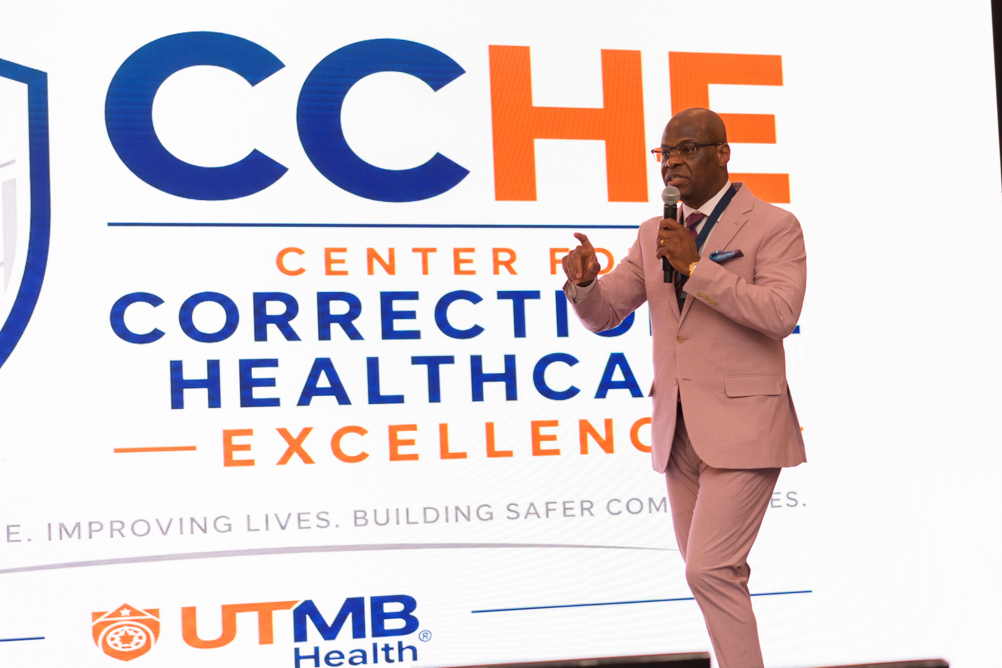
CCHE Director Olugbenga Ojo, MD, who also serves as chief medical officer and chief physician executive for Hospital Galveston and as an associate professor of medicine, opened the symposium by calling the field into a more visible place within academic medicine and national health discourse. He described correctional healthcare as care for a medically and socially complex population whose health affects families and communities, and he challenged the field to help define standards rather than merely meet them.
Jochen Reiser, MD, PhD, UTMB president and CEO of the UTMB Health System, welcomed participants by video and emphasized that improving care in correctional settings strengthens communities. He pointed to CCHE’s role as a place where healthcare professionals, researchers, educators, correctional leaders and policymakers can develop practical solutions, and he highlighted UTMB’s Carceral Medicine Fellowship and research capacity as investments in the field’s future.
Wayne Keathley, MPH, placed Correctional Managed Care within UTMB’s core mission and described it as a strategic institutional strength. He urged correctional healthcare to benefit fully from advances in telemedicine, artificial intelligence, behavioral health, population health and value-based care.
Owen Murray, DO, MBA, reflected on more than three decades of correctional healthcare at UTMB and the experience, infrastructure and longitudinal data now available to support improvement. He argued for clearer measures of quality across jails and prisons and for responsible data sharing that can support benchmarking, research and accountability.
Lannette Linthicum, MD, described the distinctive Texas model that joins the state correctional agency with academic health institutions to deliver a full continuum of care. Drawing on four decades in correctional medicine, she reviewed the legal foundation established by Estelle v. Gamble and the practical rights that follow from it including timely access, professional clinical judgment and delivery of ordered care. She also situated the Texas Department of Criminal Justice as a public-health partner whose responsibilities include treatment, prevention, education and successful return to the community.

An evidence base for mental illness and suicide
Professor Seena Fazel, MD, professor of forensic psychiatry and director of the Centre for Suicide Research at the University of Oxford, then presented an evidence-focused overview of mental illness and suicide in correctional settings.
He cautioned against inflated or imprecise prevalence claims, showing how systematic reviews and careful measurement can produce more credible estimates and better service planning. He examined the limited treatment evidence, the potential role of transparent risk-assessment tools and the need to connect prison mental-health services with sustained community follow-up, particularly because elevated risks continue after release.
National standards and operational innovation
Deborah Ross and Richard Forbus reviewed the National Commission on Correctional Health Care’s standards, accreditation work and educational role. Their presentation emphasized the value of consistent standards, stronger aggregation of correctional-health data and continuity between facilities and community care.
Johnny Wu, MD, offered a forward-looking perspective on operational innovation in correctional healthcare. His presentation underscored the value of designing specialized services around access, continuity, patient experience and efficient use of clinical expertise.
Behavioral health, opioid treatment and epidemiology
Joseph Penn, MD, traced the mental-health crisis behind bars to the downsizing of public psychiatric hospitals without sufficient investment in community-based care and reentry support. He described the resulting clinical complexity, including serious mental illness, substance use, trauma, self-harm and an aging population, and emphasized interdisciplinary teamwork, workforce development and academic partnerships.
Jennifer Clarke, MD, MPH, focused on medications for opioid use disorder and the evidence that treatment reduces overdose deaths and supports better outcomes after release. Using Rhode Island’s experience, she showed how policy, financing, data linkage and community partnerships determine whether an effective intervention reaches patients. She also highlighted opportunities for stronger studies and shared learning across correctional systems.
Jacques Baillargeon, PhD, presented research on mental-health epidemiology across Texas adult and juvenile correctional systems. He described the value, and the limitations, of electronic health-record data for tracking major depression, bipolar disorder, psychotic disorders, substance use and medication patterns over time. His presentation identified biostatistics, data science, interdisciplinary collaboration and carefully validated prognostic modeling as important tools for improving how limited resources are directed.
A keynote on working at the health-legal interface
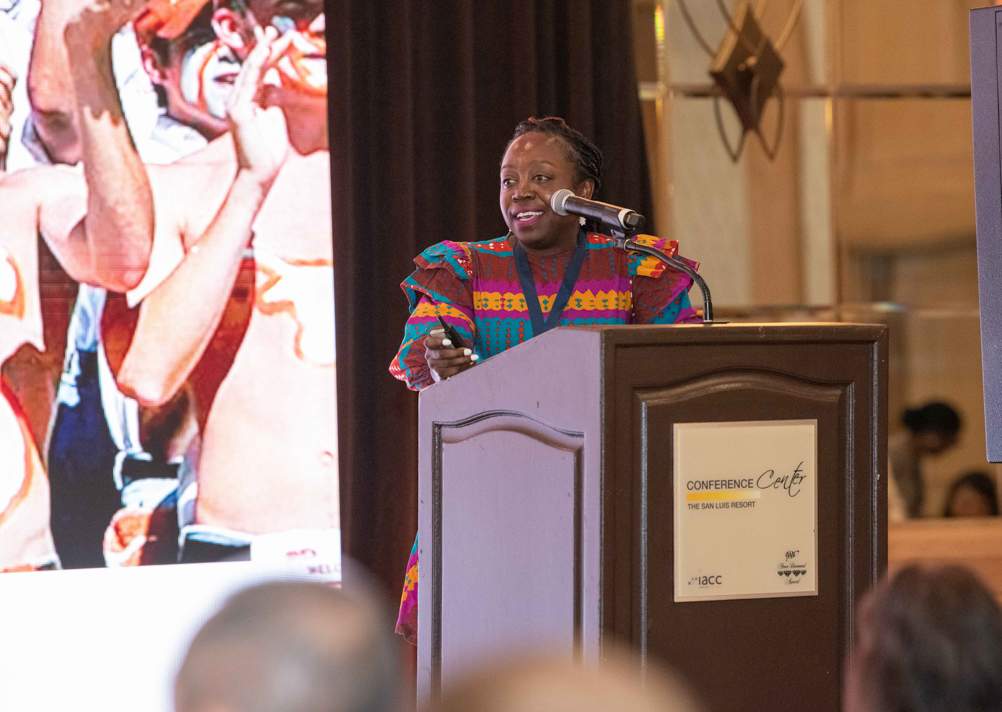
During the luncheon keynote, Sarah Y. Vinson, MD, examined what it means to work intentionally and sustainably at the health-legal interface. She connected behavior to context, structural trauma, social hierarchy and childhood experience, urging participants to question narratives that locate every problem solely within an individual. Her discussion of leadership, psychological safety, professional power and workforce well-being brought ethical and humanistic dimensions to the day’s clinical and research agenda.
Chronic disease, aging and trauma
Melissa Victory Brodman, MD, presented an epidemiologic study of acute myocardial infarction in the Texas incarcerated population. Her findings showed that older adults carry a disproportionate share of events and that heart attacks occur at a higher rate than expected, reinforcing the need for earlier risk assessment, reliable quality measures, medication management and prevention.
John McAllister, FFFLM, MRCGP, offered a United Kingdom perspective on the aging prison population. He described the difficulty of caring for people with frailty, dementia, mobility limitations and multiple chronic conditions in older facilities, and he emphasized the principle of equivalent care. His examples of multidisciplinary intake review, complex-care planning and release coordination illustrated the shift from reactive services toward proactive support.
Scott LePor, DO, extended the conversation on trauma by explaining how brain networks, predictive processing and stress responses shape behavior. He encouraged clinicians to understand some difficult behaviors as adaptations to unsafe or unpredictable environments and emphasized relational safety, connection and regulation as foundations for effective treatment.
Hepatitis C, liver cancer and the reach beyond the walls
Jessica Khan, MD, presented the Texas corrections hepatitis C program and its progress toward elimination. She described universal opt-out screening, dedicated centers of excellence, coordinated pharmacy support, treatment expansion and sustained patient education as parts of a system that has moved more patients into the cured group than remain awaiting treatment. Her presentation demonstrated how concentrated action in correctional settings can change the trajectory of a communicable disease beyond those settings.
Anne Spaulding, MD, MPH, traced a career of hepatitis research from bedside observations to descriptive epidemiology and population modeling. She explained that national hepatitis C elimination cannot be achieved while excluding correctional populations, and she called for stronger evidence in prisons and jails, research on emerging liver-health questions, and greater participation by people with lived experience in setting research priorities.
Mahnur Haider, MD, MPH, presented a large retrospective study of hepatocellular carcinoma in the Texas state correctional system. The analysis found a continuing burden of liver cancer even as hepatitis C treatment has expanded, underscoring the persistent risk among patients with cirrhosis and the need for surveillance, timely diagnosis and well-targeted prevention resources.
Drawing the day into one population-health narrative
Kristen Peek, PhD, closed the formal program by drawing the day’s many subjects into a single population-health narrative. Mental illness, chronic disease, aging, trauma and infection intersect within people and within systems, she explained, and those connections are especially visible in correctional settings. Prevention and care delivered inside facilities can improve health after release, strengthen families and support communities. Her remarks affirmed that the future will depend on excellent clinical care joined with earlier prevention, rigorous research, education, collaboration and recognition of the person behind every diagnosis.
The inaugural symposium marked an important step for CCHE and for a field too often kept at the margins of healthcare discussion. By bringing distinguished voices into sustained conversation, the Center demonstrated what its mission requires, which is clinical experience in dialogue with research, education shaped by practice, ethical reflection tied to institutional responsibility, and partnerships capable of carrying improvement beyond any single facility.
The Center for Correctional Healthcare Excellence advances clinical care, research, education and ethics in correctional health at UTMB. Learn about the Center for Correctional Healthcare Excellence.