abstract data circle graphic
The Data Management and Analysis Core

for Comparative Effectiveness Research on Cancer in Texas

Welcome to DMACData Management and Analysis Core for Comparative Effectiveness Research on Cancer in Texas

Building data infrastructure, providing training through workshops and lectures as well as pilot awards that support salaries and mentoring. Accelerating research along the entire cancer care continuum, from screening, diagnosis, and treatment to post-treatment surveillance, and survivorship.

This project is funded by CPRIT: https://www.cprit.state.tx.us/grants-funded/grants/rp210130

Contact Us

Samuel David, Biostatistician I
Phone: (409) 772-5514
Fax:  (409) 772-5272
Email:  savdavid@utmb.edu
Mailing address:
UHC Building 5.116
301 University Blvd.
Galveston, Texas 77555-0177

Current News


10.21.2025 Seminar Series: Challenges in Non-Inferiority Testing: Why It's Not Just a One-Sided Version of Superiority Testing

Sep 29, 2025, 10:48 AM by DMAC

Seminar Series

Tuesday, October 21, 2025

12:00-1:00PM

Challenges in Non-Inferiority Testing: Why It's Not Just a One-Sided Version of Superiority Testing

Presented by: Dr. Samiran Ghosh, Professor & Chair, Department of Biostatistics & Data Science, UT Health Houston

Abstract: Randomized Controlled Trials (RCTs) are an indispensable source of evidence for evaluating the efficacy of treatments across nearly all disease areas. With the growing availability of multiple treatment options, Comparative Effectiveness Research (CER) has gained increasing importance in supporting informed healthcare decisions. However, the design and analysis of effectiveness trials are significantly more complex than those of traditional efficacy trials. A major factor contributing to this complexity is the inclusion of active comparator arm(s) in RCTs, which gives rise to superiority and non-inferiority (NI) trial designs. Among these, the non-inferiority design plays a fundamental role in CER and will be a key focus of this talk. Non-inferiority (NI) trials are inherently complex, as they typically involve active control and require the specification of a non-inferiority margin a priori. Additional complications arise when the outcome of interest is not continuous, such as binary, count or time-to-event outcomes. In this talk, Dr. Ghosh will provide a broad overview of the key challenges in designing and analyzing NI trials, drawing from his decade-long work in this area. Dr. Ghosh will also present examples highlighting specific difficulties when the outcome of interest is time-to-event and discuss methodological considerations and potential solutions.

Hybrid Seminar: Contact Anirudh Babu (asbabu@utmb.edu) for additional information.

Background & Objectives

Comparative Effectiveness Research on Cancer in Texas (CERCIT) was established at UTMB in 2010 as a statewide resource for outcomes and comparative effectiveness research funded by The Cancer Prevention Research Institute of Texas (CPRIT).


The DMAC is committed to three primary objectives: 


History & Impact

Comparative Effectiveness Research on Cancer in Texas

Since 2010, the Data Management and Analysis Core (DMAC) of CERCIT has worked closely with the Texas Cancer Registry (TCR) to combine information from various large databases, like Medicare and Medicaid, for research purposes. Under the CPRIT-Core Facility Support Award, the goals of the DMAC have evolved to include connecting TCR databases with national surveys to improve research on patient outcomes. We also aim to train new researchers in comparative effectiveness research (CER) across Texas, especially those who are underrepresented.

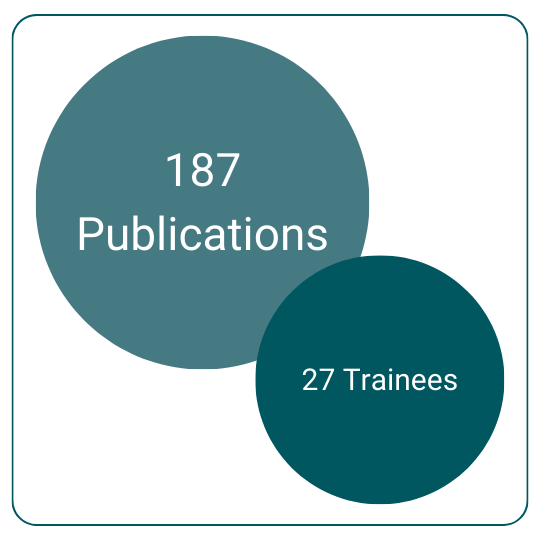
187 publications, 27 trainees

Findings from CERCIT have been disseminated via more than 187 scientific publications. Most importantly, CERCIT has built the data infrastructure for cancer CER through a close partnership with the Texas Cancer Registry (TCR) to link TCR data to Texas Medicare and Medicaid files. Another significant contribution in the first cycle of CERCIT was to train 27 junior clinical investigators in CER in the trajectory of the cancer care continuum through didactic experiences, and structured multidisciplinary mentoring in the Houston/Galveston area. In the current cycle, the training core focused on collecting patient-reported outcomes, through a collaboration with TCR. 

Expertise & Services

The DMAC distinguishes itself as a hub of expertise, offering a spectrum of services: Data Collaboration: Facilitating seamless collaboration with government contractors, ensuring ethical and regulatory compliance in data agreements, and linking processes.

In essence, the DMAC aspires to be the premier center for cancer research in Texas, uniting data excellence with a commitment to diversity and knowledge dissemination. Through impactful research findings and a legacy of training the next generation of researchers, CERCIT and the DMAC will continue to shape the future of cancer research, driving toward a world where innovative solutions transform the landscape of cancer care. 


Leadership

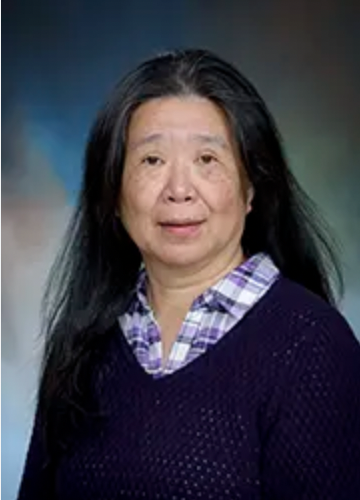
Principal Investigator: Yong-Fang Kuo, PhD 

woman in a studio setting


Professor and Chair
Department of Biostatistics & Data Science

Dr. Kuo is the Don W. and Frances Powell Professor in Aging Research and the director of the Office of Biostatistics in the UTMB School of Public and Population Health. She is the principal investigator of Data Management and Analysis Core for Comparative Effectiveness Research on Cancer in Texas.

Her research assesses patterns of care, treatment toxicities, and health outcomes using a variety of large data sets. She also examines healthcare delivery focused on hospitalist care and its impact, and the use and effectiveness of primary care provided by nurse practitioners in communities and nursing homes. Her research is widely published in medical and health services research journals. Dr. Kuo’s research has been funded by the National Institutes of Health (NIH) and the Agency for Healthcare Research and Quality.

As a biostatistician, she serves as the director of Biostatistics and Analysis Core for several center grants funded by NIH and the Cancer Prevention and Research Institute of Texas. She has been a biostatistics mentor for more than 80 trainees including junior faculty, pre-doc, and post-doc fellows. Her expertise is in the analyses for comparative effectiveness research, pharmacoepidemiology, and health outcome studies.