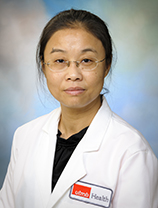
Qing Yang, MD, MS Associate Professor
MRB 2.143C (O) | 2.164 &166 (L)
Tel: (409) 772-1802 | Fax: (409) 762-9382
qiyang@utmb.edu
Education and Training
My current and future research program centers on three major areas:
1. Mechanisms underlying the characteristic “stocking-and-glove” sensory dysfunction of CIPN. We seek to identify the cellular and molecular determinants responsible for the unique distal pattern of sensory neuron injury observed in cancer patients receiving chemotherapy.
2. Neuroimmune regulation of CIPN. We investigate how perineural immune cells, particularly mast cells, contribute to chemotherapy-induced nerve injury, neuroinflammation, and chronic pain.
3. Gut microbiome–sensory neuron interactions in CIPN. We aim to define how gut microbiota regulates sensory neuron function, influence individual susceptibility to CIPN, and serve as a source of predictive biomarkers and therapeutic targets.
A second major research area is neuroprotection and regeneration following spinal cord injury (SCI). Our work examines how dura mast cell activation, and neuroimmune communication influence neuronal survival, functional recovery, and long-term neurobehavioral outcomes after injury. These studies aim to uncover therapeutic targets that enhance neural repair and improve recovery after SCI.
Through these efforts, the Yang Laboratory seeks to advance the understanding of nervous system disorders and accelerate the development of mechanism-based therapies for neuropathy, chronic pain, and neurological injury.
.jpg?sfvrsn=d824b254_1 "Website YANG (1)")