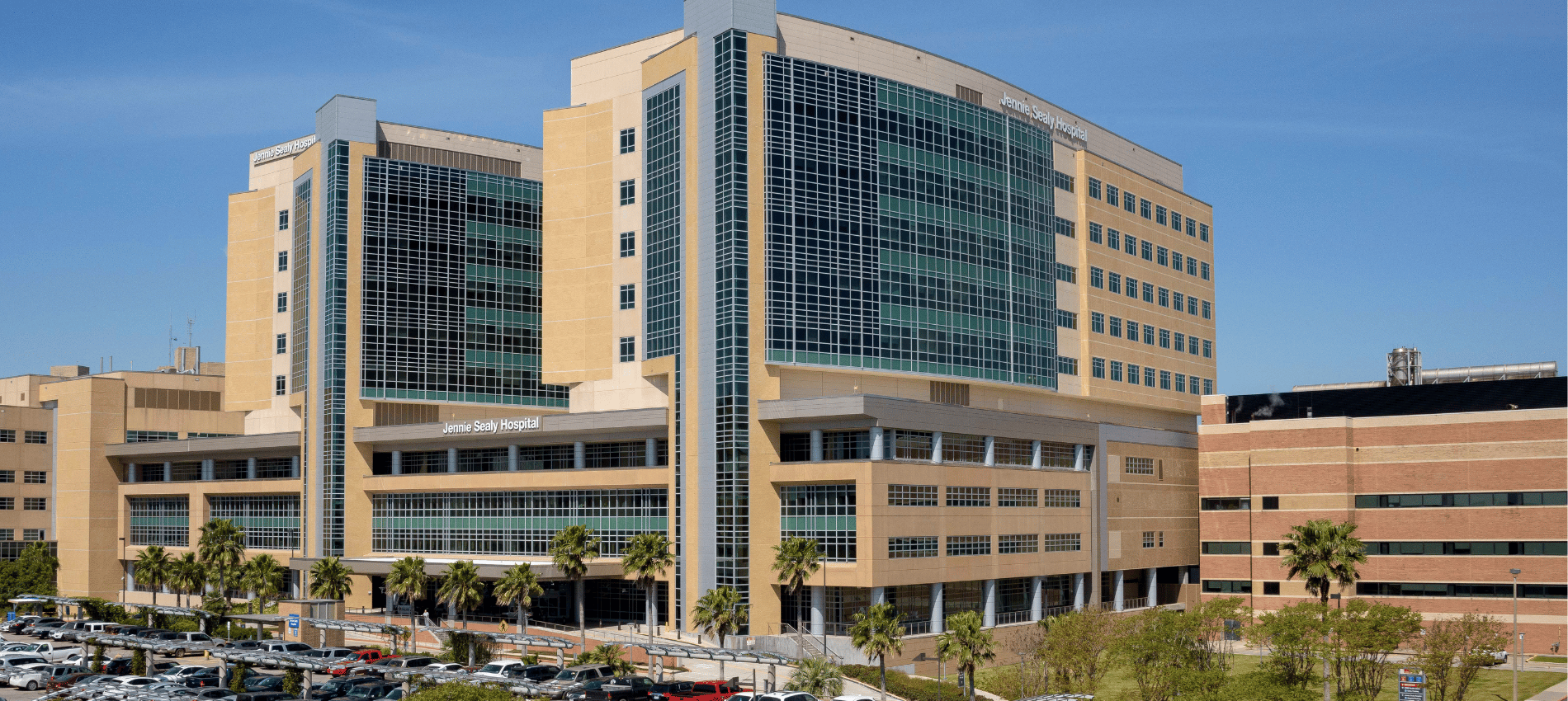
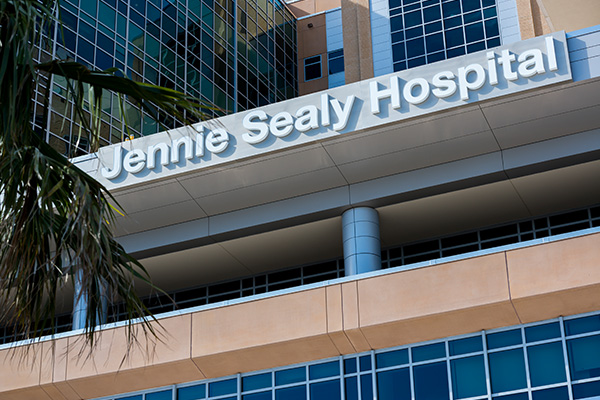
On his first shift at the newly opened Jennie Sealy Hospital in April 2016, nurse Scott Woodby stepped into hallways filled with sunlight, patient rooms thoughtfully arranged for families, and windows drenched in the green-blue hues coming from Galveston Bay.
Yet as the day unfolded, it wasn’t just the architecture or plentiful amenities that left a lasting impression on him, but the sight of interdisciplinary teams moving nearly 200 patients into their new rooms with seamless precision—a display of coordination and teamwork that set the tone for an extraordinary decade that has followed.
“Being able to provide a space where family felt welcomed and comfortable to stay with their patient was a really big emphasis in the build, like providing a refrigerator for the patient and their family, as well as a couch for them to stay on,” Woodby says. “We could tell that helped make family members feel more comfortable, and then ultimately having that kind of a support person be able to stay with the patient, made the patient feel more comfortable and heal faster.”

“Jennie Sealy Hospital reflects that evolution of combining resilience, innovation, and a culture of quality and accountability.”
GULSHAN SHARMA, MD, MPH, FCCP SVP & Chief Medical Officer & Clinical Innovation Officer

“The next decade will be about building on the strong foundation that Jennie Sealy represents.”
WAYNE KEATHLEY, MPH EVP & Chief Operating Officer UTMB Health System
The 765,000-square-foot, $438 million facility marked a turning point for The University of Texas Medical Branch after the devastation of Hurricane Ike in 2008. Named after the daughter of John and Rebecca Sealy, the hospital’s dedication ceremony in March 2016 drew hundreds of state and local leaders, employees, and community members who celebrated what then-President David Callender called “an indelible sign of what vision and hope and hard work can inspire.”
He praised the perseverance of his staff, saying, “This is a celebration of a resilient people whose will, determination, and just plain stubbornness lifted UTMB from the dark throes of devastation into the bright light of this beautiful day.”
Philanthropy played a pivotal role in making the hospital a reality. The Sealy & Smith Foundation contributed $170 million—the largest gift in UTMB’s history—underscoring the community’s dedication to healthcare excellence. The gift was part of the $450 million Working Wonders Campaign. In addition to funding Jennie Sealy Hospital, the campaign generated resources for student scholarships, faculty endowments, and research.
Support also came from major foundations such as the Moody Foundation, Moody Endowment, Kempner Fund, and Fondren Foundation, along with countless individual donors. UTMB faculty, retirees, and staff contributed another $13.3 million as part of UTMB Family Campaign.
Woodby, who has been with UTMB Health since 1996, remembered the excitement among staff as they looked forward to a new beginning, especially because they had a voice in shaping the new hospital.
Employees from across the health system were asked to share their ideas, review mockups of rooms, and give their input on a range of design and construction decisions.
“One of the biggest changes was just the physical size of the rooms,” Woodby says. “They are probably three times the size of the rooms in John Sealy, which allowed a lot more freedom of movement.”
Among the new features were 20 operating suites, intraoperative MRI capability, and several thoughtful touches that still make a difference in daily care. Woodby describes how sections of the flooring, which resemble standard wood, are marked at 10-foot intervals—an intentional detail that helps physical therapy staff measure patient progress during walks. The hospital also installed ceiling lifts in every room, replacing portable ones and making it much easier, safer, and more comfortable for patients.
Part of that comfort, Woodby says, comes from the floor-to-ceiling windows alone. “There are times in our unit when family members are experiencing grief and moments in their lives that are extremely stressful, and I’ll look down the hallway, and I’ll see a family member just leaning on the window looking out into the Bay.”
BY THE NUMBERS
- 0,000 SQUARE FEET
- 0 PATIENT BEDS
- 0+ EMPLOYEES
- 0,500+ PATIENTS
- 0,600+ SURGERIES PERFORMED
Work on Jennie Sealy Hospital didn’t stop once the doors opened. In the time since, the hospital has grown significantly. The number of beds has increased from 222 to 250, and the workforce has expanded from 1,568 employees to 1,833. Over the past 10 years, Jennie Sealy has cared for more than 277,500 patients and performed over 134,600 surgeries, reflecting its role as a hub for complex care and innovation, which in turn, has led to prestigious recognition for quality and safety from national quality scorecards like Vizient and Healthgrades.
“Having served UTMB for over two decades, I have seen tremendous progress in how we deliver care and uphold our commitment to our patients,” says Senior Vice President and Chief Medical and Clinical Innovation Officer Dr. Gulshan Sharma. “Jennie Sealy Hospital reflects that evolution of combining resilience, innovation, and a culture of quality and accountability. It is a privilege to be part of this institution.”
As leaders look toward expanding access to care across Southeast Texas, Jennie Sealy Hospital will remain the anchor of the health system, looking out over the Bay just as UTMB has since the beginning. An almost defiant reminder that the institution is here to stay.
“The next decade will be about building on the strong foundation that Jennie Sealy represents,” says Wayne Keathley, executive vice president and chief operating officer of the health system. “She is more than a beautiful, modern facility—she’s a point of pride for UTMB and a timeless symbol of our resilience.”
As for what could be expected to remain the same, Woodby says he hopes the organization continues to create a culture of family.
“That has been kind of a theme within UTMB for the entirety of my career,” Woodby says. “Although it’s a really large place, everybody still feels like they’re part of the UTMB family.”