Peptide Mapping
Peptide mapping seeks to achieve maximal amino acid coverage of the protein of interest rather than just a few quantifiable peptides as in proteomics. Peptide mapping is typically performed only on relatively pure proteins, which require monitoring specific amino acid sites for possible modifications or point mutations; typically, this requires treatment with several proteases, either in serial or parallel to maximize protein sequence coverage, particularly within targeted regions of a protein sequence.
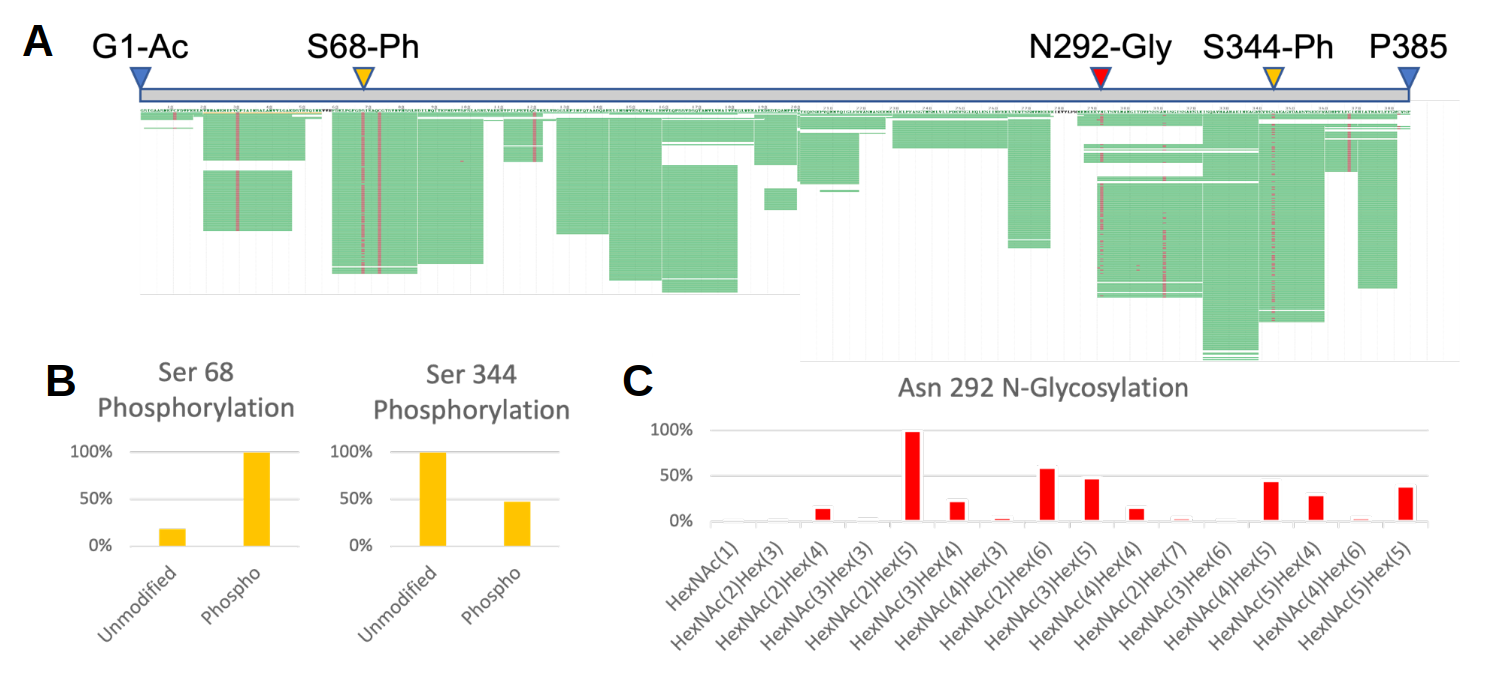
Figure 1. An example of peptide mapping of ovalbumin depicting amino acid sequence coverage (A), relative phosphorylation sites (B), and types of glycosylations detected (C).