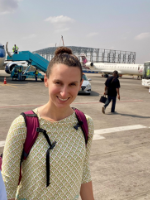
As an assistant professor of Epidemiology in UTMB’s School of Public and Population Health (SPPH), Dr. Cotter is focused on the daunting challenges of tackling Lassa fever and vaccine hesitancy by building solutions from the ground up.
Lassa fever virus (LASV) is transmitted primarily by rodents and causes hundreds of thousands of severe and fatal hemorrhagic disease cases each year in West Africa (1). Although promising vaccine candidates for Lassa fever have been developed, Dr. Cotter emphasizes that the social context of vaccine acceptance, underpinned by the knowledge, attitudes, and beliefs of people residing in the communities where LASV is endemic, is paramount. For new and trusting relationships in global health, her starting point is to meet with local people and try to understand, from their perspective, what is important to them. Her emphasis on context reflects what organizations like UNICEF and the Nigerian Centre for Disease Control have also found: building trust with local health workers, leaders, and families is key for both vaccine acceptance and disease outbreak response (2).

Working under the support of a UTMB Team Science pilot award, in collaboration with Dr. Susan McLellan of the UTMB Division of Infectious Diseases, Dr. Cotter invited social scientists from the University of Jos to help shape the research on vaccine hesitancy in Plateau state, central Nigeria. A similar, household-based vaccine hesitancy survey with associated vaccine confidence and risk tolerance scores had previously been used in Sierra Leone by researchers from the International Aids Vaccine Initiative (IAVI). To better tailor questions to the local context in Nigeria, Cotter encouraged her Nigerian colleagues to provide input and suggestions for additional investigation. “Social scientists in Nigeria are the people who understand the social thinking and what’s happening in Nigerian settings best, right? So, I asked them, ‘What are the questions we should be asking? What would you like to understand about vaccine hesitancy in this community?’” she says
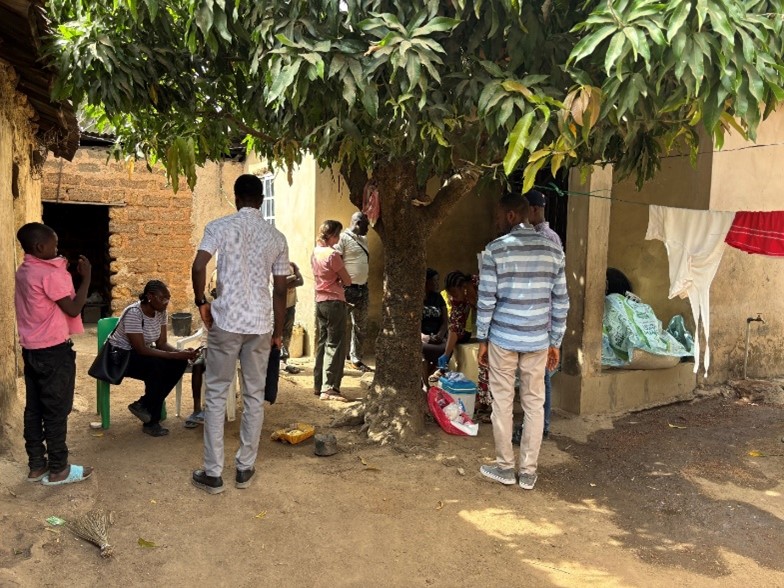
“I didn’t realize going into this situation that we would need to rely so heavily on local social scientists, or what a benefit that would provide. Social science is so necessary for this research, and it is great to work with professionals who really understand the local setting.” Bringing social scientists to the table and integrating their expertise into a community survey is an example of collaboration across disciplines: a powerful tenet of One Health. Cotter was trained in clinical veterinary medicine and epidemiology.
Partnerships like these aren’t always straightforward. Dr. Cotter notes that cultural differences in project leadership can add both richness and strain in building working relationships, but she believes these challenging moments are also where lasting trust, adaptation, and real scientific progress are forged.
Dr. Cotter’s experience reflects what public health researchers have observed for decades: to succeed, outreach and research must address community fears and foster genuine participation (2). For Dr. Cotter, that means investing in local leadership, flexible strategies, and relationships built on listening, not lecturing.
“You can’t assume that a U.S. or European model for research partnerships will translate; it has to be lived, and discussed, in context.” As Dr. Cotter looks ahead, whether to emerging disease outbreaks or enduring health threats, the lesson remains: global health works best when those closest to the challenge lead the way.
As a One Health practitioner, Dr. Cotter seeks to build bridges between professionals in human health, animal health, and environmental health, not only in Africa, but across the globe, and here in Texas, where she is also helping to organize interdisciplinary teams to respond to possible incursions of avian influenza in Galveston County.
References:
- Richmond JK, Baglole DJ. Lassa fever: epidemiology, clinical features, and social consequences. BMJ. 2003;327(7426):1271-1275. doi:10.1136/bmj.327.7426.1271
- HPV Vaccination Campaign Protects Girls in Nigeria. UNICEF USA website. https://www.unicefusa.org/stories/hpv-vaccination-campaign-protects-girls-nigeria. Published October 7, 2024.