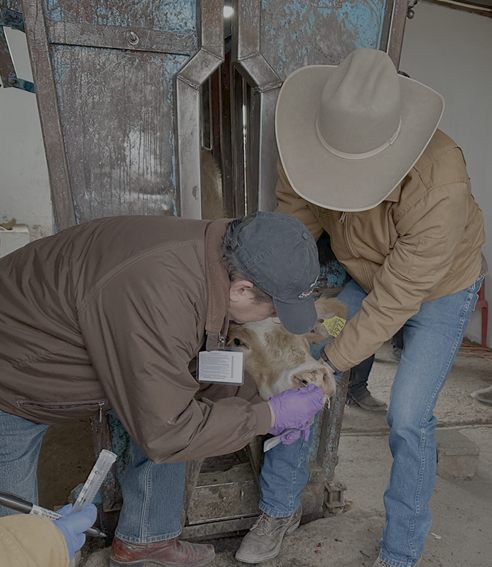
In the hunt for novel respiratory viruses on US and Mexican cattle farms, researchers from the University of Texas Medical Branch (UTMB) and the Universidad Autόnoma de Nuevo Leόn (UANL) made an intriguing discovery of a boosepivirus (BooV), which was recently reported in Influenza and Other Respiratory Viruses.
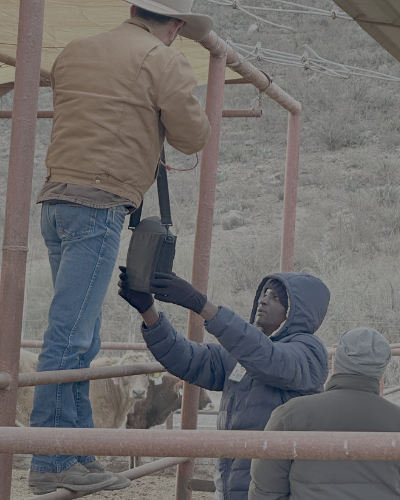
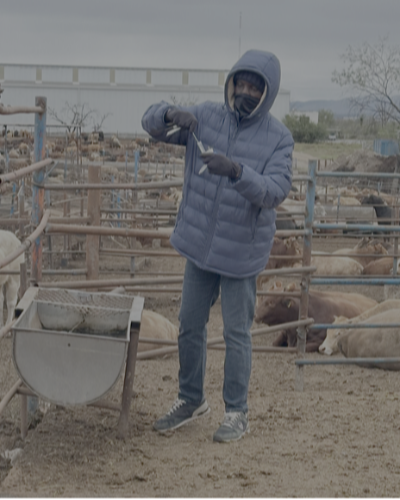
In 2024 UTMB researchers, guided by UANL collaborators, visited farms in Nuevo Leόn, Mexico where farm workers collected deep nasal swabs from 40 beef cattle with signs of respiratory illness and 12 bioaerosol samples. These samples were tested for coronaviruses, influenza A virus, and influenza D virus. All samples were negative for evidence of influenza A and D viruses. However, one of the 40 sick cow samples was further analyzed via mNGS based on a pan-coronavirus assay positivity for rodent coronavirus. While the UTMB researchers were able to identify a few viral reads for rodent coronavirus, a finding that was previously published, further examination of the sample revealed a full sequence that was closely related to a U.S. strain of BooV1.
BooV was first detected in fecal samples from Japanese cattle in 2009 and subsequently identified after 2019 across six U.S. states as a contributor to bovine enteric disease2. Bovine enteric disease is a significant source of morbidity and mortality early in bovine life. It is a complex condition because it is often a multifactorial condition that can be caused by viral, bacterial, and parasitic pathogens3.
While detecting this rare virus in cow feces would not be highly remarkable, this first detection of the BooV in a deep nasal swab of a yearling cow with respiratory symptoms is very intriguing and suggest this virus may be underestimated as simply an enteric disease. However, as Oguzie et al. rightfully and cautiously point out, the possibility of contamination from fecal matter in the yearling’s airway cannot be ruled out.
BooV belongs to the viral family Picornaviridae, which contains many viruses that cause disease in both humans and animals, including polio and foot-and-mouth disease4. While BooV has not been documented in humans, this virus is capable of infecting multiple species including cattle, sheep, and goats. Considering BooV is a relatively new virus, there are many research and diagnostic gaps that impede the understanding of this virus. BooV is not included in standard testing panels, and it was only first identified through NGS investigation (as in the case of this study). Further research is limited by the difficulty of isolating this virus, leaving much to uncover in terms of BooV's pathogenicity, characterization, and prevalence.
Other pathogens, such as the many bacteria and viruses that cause bovine respiratory disease (BRD), would need to be ruled out as the cause of illness among the cattle studied before it can be determined if BooV was the cause of illness. Highlighting the need for further One Health oriented surveillance of these understudied viruses.
References
- J. Oguzie, G. Hernandez-Vidal, G. Moreno-Degollado, and G. Gray, “ First Detection of Boosepivirus B1 in a Sick Yearling's Nasal Swab, Mexico,” Influenza and Other Respiratory Viruses 19, no. 10 (2025): e70165, https://doi.org/10.1111/irv.70165.
- Wang, L., Lim, A., & Fredrickson, R. (2022). Genomic characterization of a new bovine picornavirus (boosepivirus) in diarrheal cattle and detection in different states of the United States, 2019. Transboundary and Emerging Diseases, 69, 3109–3114. https://doi.org/10.1111/tbed.14390
- Hause, B.M., Nelson, E. & Christopher-Hennings, J. Identification of boosepivirus B in U.S. calves. Arch Virol 166, 3193–3197 (2021). https://doi.org/10.1007/s00705-021-05231-7
- Tuthill TJ, Groppelli E, Hogle JM, Rowlands DJ. Picornaviruses. Curr Top Microbiol Immunol. 2010;343:43-89. doi: 10.1007/82_2010_37. PMID: 20397067; PMCID: PMC3018333.