
In a collaborative study between the UTMB One Health lab and Vietnamese colleagues in Bach Mai national hospital, researchers discovered molecular evidence of a canine-like coronavirus that challenges what we know about human respiratory infections.

This study results, recently published in the International Journal of Infectious Diseases Regions, highlights the value of low-cost pan-species assays along with cell culture and sequencing analysis to detect novel unexpected human pathogens.
For UTMB’s One Health Laboratory, this approach has long been central to its strategy of applying viral discovery algorithms in a One-Health way where the human - animal environment closely interface or in hospital settings with patients hospitalized for pneumonia at geographic “hot spots” for viral emergence. As the authors argue, investing in these approaches could help detect the next pandemic threat before it spreads widely.
Among 197 patients hospitalized with pneumonia, the research team found that 18 of 41 coronavirus positive samples had nucleotide sequences strikingly similar to CCoV-HuPn-2018, a canine-like coronavirus first detected in Malaysia in 2018 [1]. The Vietnamese strains had nearly 100% sequence identity to the Malaysian isolate, raising urgent questions and health concerns about the emerging global prevalent of this virus as a cause of human disease. Until now, CCoV-HuPn-2018 had only been reported in Malaysia and Haiti [2]. Our finding of CCoV-HuPn-2018 in Vietnam suggested that this virus may be more geographically widespread than previously realized.
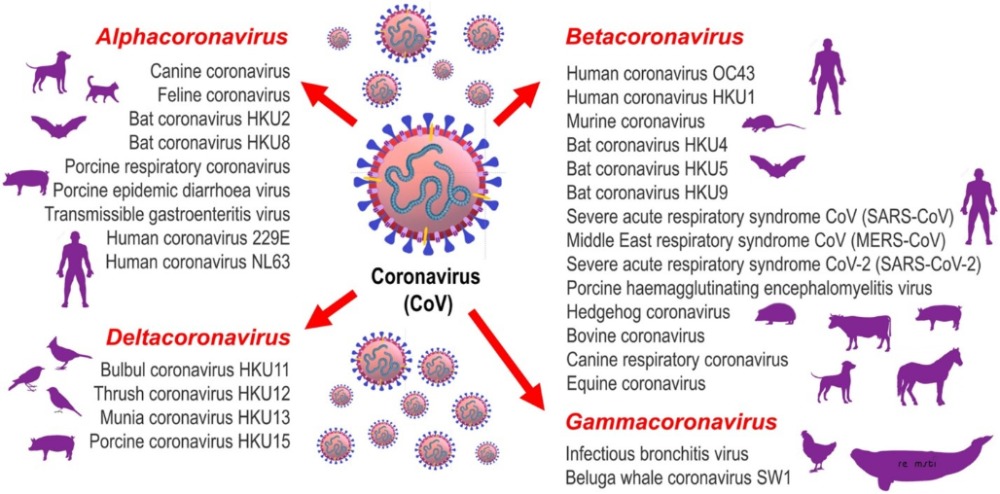 The emergence of COVID-19 demonstrated how quickly a novel coronavirus can reshape the world [3, 4]. While CCoV-HuPn-2018 is not yet known to cause widespread disease, the detection of the virus in multiple patients across Vietnam suggested that surveillance efforts are detecting the virus at an early stage.“There is now considerable evidence that this recombinant alphacoronavirus is the eighth unique coronavirus recognized to cause disease in humans,” Dr. Gregory Gray, the PI of UTMB One Health laboratory noted. But much remains unknown: How is this virus transmitted? Does the virus have animal reservoirs? Could the virus spark future outbreaks?
At its core, this discovery is a One Health story. Human coronaviruses don’t emerge in isolation—they often arise from the animal world, sometimes through recombination events that create new viral variants. By collaborating with practicing physicians and veterinarians, biomedical and veterinary researchers, and global health partners, the UTMB One Health Laboratory is building systems to bridge gaps between human and animal health surveillance.
The detection of a canine-like coronavirus in Vietnam illustrates why this integration matters. It underscores the need for continued surveillance and research into how animal viruses cross into humans and how such spillovers can be tracked in real time.
This discovery is not a cause for alarm, but for attention. The next steps will require:
- Expanded epidemiological studies to better understand prevalence, human disease burden and risk factors.
- Zoonotic investigations to determine the animal reservoirs in Southeast Asia.
- Broader genomic surveillance to track whether the virus is evolving or spreading across regions.
As the One Health community, works to strengthen pandemic preparedness, findings like these remind us of the value of early warning systems by active surveillance.
References
[1] Vlasova AN, Diaz A, Damtie D, Xiu L, Toh TH, Lee JS, et al. Novel Canine Coronavirus Isolated from a Hospitalized Patient With Pneumonia in East Malaysia. Clin Infect Dis. 2022;74(3):446-54.
[2] Lednicky JA, Tagliamonte MS, White SK, Blohm GM, Alam MM, Iovine NM, et al. Isolation of a Novel Recombinant Canine Coronavirus From a Visitor to Haiti: Further Evidence of Transmission of Coronaviruses of Zoonotic Origin to Humans. Clin Infect Dis. 2022;75(1):e1184-e7.
[3] Peng M. Outbreak of COVID-19: An emerging global pandemic threat. Biomed Pharmacother. 2020;129:110499.
[4] Yee J, Unger L, Zadravecz F, Cariello P, Seibert A, Johnson MA, Fuller MJ. Novel coronavirus 2019 (COVID-19): Emergence and implications for emergency care. J Am Coll Emerg Physicians Open. 2020;1(2):63-9.
[5] Sharun K, Sircar S, Malik YS, Singh RK, Dhama K. How close is SARS-CoV-2 to canine and feline coronaviruses? J Small Anim Pract. 2020;61(8):523-6.