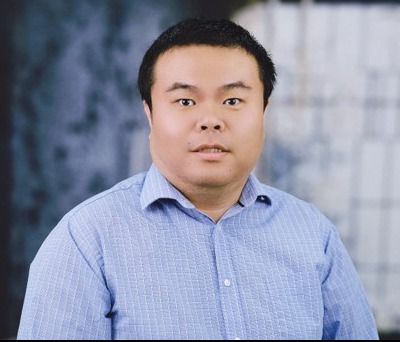
Dr. Chen’s team focuses on diagnostic tool development for pathogens that may require prolonged healthcare management such as hepatitis C virus (HCV) or for pathogens with limited diagnostics. Dr. Chen hopes to overcome healthcare disparities by utilizing inexpensive, more sensitive, portable, and user-friendly point of care (POC) testing to remove delayed diagnosis as a barrier to treatment, and thus level the playing field between developing countries and the developed world one diagnostic at a time.
Dr. Chen became interested in his current area of research when working on his PhD at the University of Houston with Dr. Richard Willson, with a concentration in chemical biology. At that time Dr. Chen was working on antibodies, which is what he attributes to catapulting his career in the direction of diagnostic testing. Dr. Chen credits his current field of work to his advisor Professor Hadi Shafiee, with whom he worked during his post-doctoral training at Harvard Medical School. Some of Dr. Chen’s previous work includes point of care viral pathogen detection (hepatitis C virus (HCV), avian influenza A virus (AIV), influenza D virus (IDV), salmonella bacteria, severe acute respiratory syndrome coronavirus 2 (SARS-CoV-2), human immunodeficiency virus, hepatitis B virus (HBV), etc.) and detection of medications such as fentanyl.
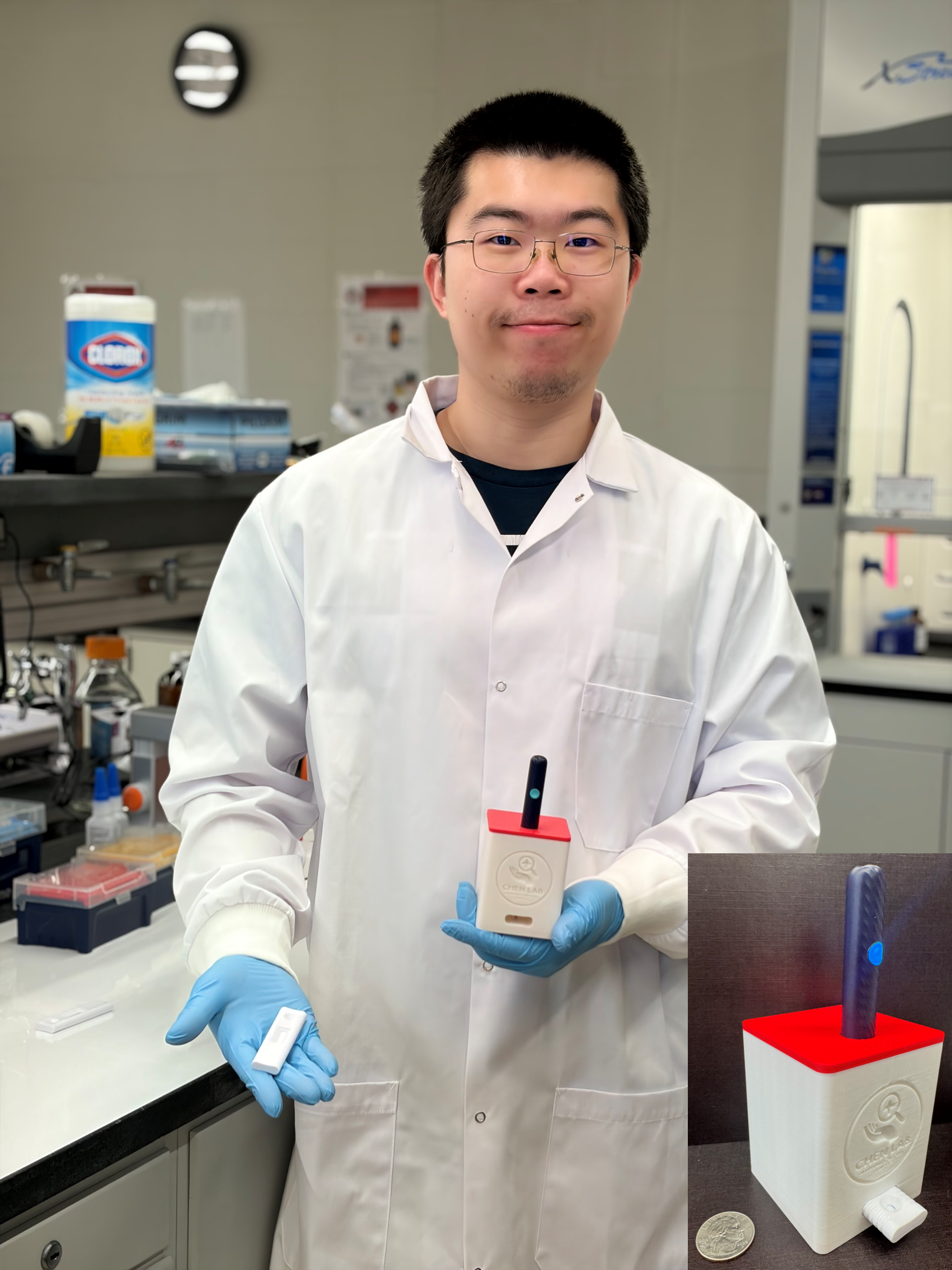
Dr. Chen spoke passionately about the team's HCV work. He described how hepatitis C virus infection is largely curable. However, the two-step diagnostic confirmation is complex and expensive and often a barrier to diagnosing this viral infection among patients. If treatment could be started more quickly for hepatitis C infected patients, fewer patients would experience the long-term burdens and systemic effects of this virus that can ultimately turn deadly. For providers, patients, and families, having a portable, easy to use, one-time POC testing option could be a game changer!
From a One Health perspective, Dr. Chen recognizes how improved testing can affect the food supply and environment, stating that improved testing is also important for farms, particularly small farms, which carry a huge financial burden as a result of recalls. More sensitive and timely testing available for bacteria such as for salmonella, prevents products from reaching the public prior to recall causing illness, and reduces the financial burden of the recall to the farmers.
With a background in chemical biology and translational medicine, Dr. Chen also recognizes how naturally occurring products of our environment, such as bioluminescence, can be utilized in a productive way for public health. Dr. Chen’s recent work utilizing bioluminescence as a modality in diagnostics surpasses 94% accuracy in a study looking at a variety of pathogens including SARS-CoV-2, HIV, HBV, and HCV.2
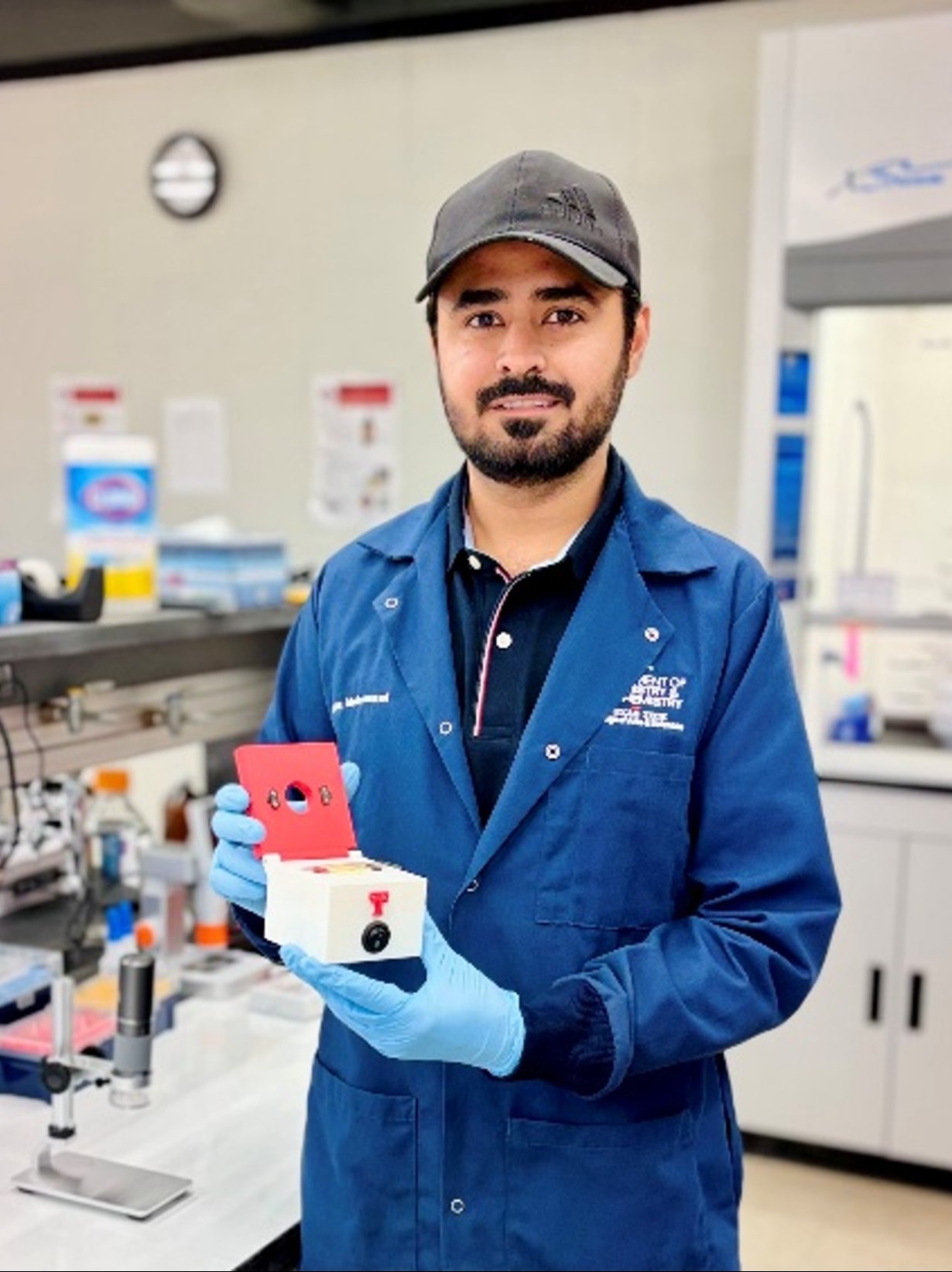
Many diseases are also inherently shared with wildlife, and ideally, we want to be able to easily track spread, intervention, and vaccinations, aiding in the prevention of mass spread of disease rather than cleaning up on the back end. Some specific examples Dr. Chen provided were SARS-CoV-2, AIV, and IDV. All three of these viruses are recognized as the cause of respiratory infections and sometimes severe disease in pigs and cattle. This is a potential threat to the food supply, and therefore global health overall.
Dr. Chen notes that there is a large gap between technological development and public health and believes that the development of artificial intelligence (AI) will be a novel, and positive tool to bridge this gap in years to come. Some of this work appears to be already underway; in 2021 Dr. Chen developed an ultra-sensitive SARS CoV-2 antigen assay with smart phone readout to track antigen dynamics in different patient populations in different stages of infection;3 the first of its kind. Future interests involve observing and molding how AI can be a valuable contender in developing sensitive, quick, one-time diagnostics; useful in preventing disease progression so that global public health may be protected.
When asked what key thing he has learned through his journey, Dr. Chen reports without hesitation the differences in sample metrics. Dr. Chen describes that everyone is from different age groups, different nationalities, different genders, and overall have different compositions, so overall there are huge variations. Thinking forward, AI may be the solution. “When we have hundreds of millions of compositions in the system, and they somehow influence the final result, AI is obviously a very powerful tool to deal with multiple parameters very efficiently”. This is Dr. Chen’s forward-thinking vision!
References:
- Chen lab TTU Chemistry. Lab 1. (n.d.). https://www.chenlabttu.com/
- Kim S, Cho G, Lee J, Doshi K, Gharpure S, Kim J, Gwak J, Hardie JM, Kanakasabapathy MK, Kandula H, Thirumalaraju P, Song Y, Chen H, Kuritzkes DR, Li JZ, Tsibris AM, Shafiee H. Ultrasensitive and long-lasting bioluminescence immunoassay for point-of-care viral antigen detection. Nat Biomed Eng. 2025 Nov;9(11):1998-2012. doi: 10.1038/s41551-025-01405-9. Epub 2025 May 30. PMID: 40447759; PMCID: PMC12463137.
- Chen H, Li Z, Feng S, Wang A, Richard-Greenblatt M, Hutson E, Andrianus S, Glaser LJ, Rodino KG, Qian J, Jayaraman D, Collman RG, Glascock A, Bushman FD, Lee JS, Cherry S, Fausto A, Weiss SR, Koo H, Corby PM, O'Doherty U, Garfall AL, Vogl DT, Stadtmauer EA, Wang P. Femtomolar SARS-CoV-2 Antigen Detection Using the Microbubbling Digital Assay with Smartphone Readout Enables Antigen Burden Quantitation and Dynamics Tracking. medRxiv [Preprint]. 2021 Mar 26:2021.03.17.21253847. doi: 10.1101/2021.03.17.21253847. Update in: Clin Chem. 2021 Dec 30;68(1):230-239. doi: 10.1093/clinchem/hvab158. PMID: 33791710; PMCID: PMC8010739.