
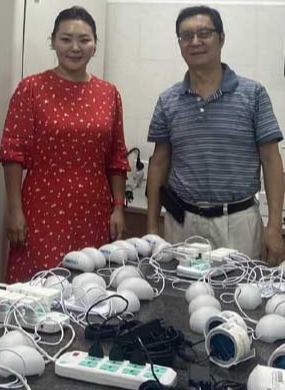
Professor Davaalkham currently is the Dean of the School of Public Health at the Mongolian National University of Medical Sciences (MNUMS), Ulaanbaatar, Mongolia. Over the course of her career, she has held several senior academic and professional leadership roles, including Professor and Head of the Department of Epidemiology and Biostatistics at MNUMS, and Head of the Mongolian Professional Committee of Public Health. She is also affiliated with the International Epidemiologic Association and participates in a range of international and local professional associations and committees that support public health research and workforce development.
Her professional journey is anchored in a strong academic foundation. Professor Davaalkham earned her bachelor’s degree in medicine from the Health Sciences University of Mongolia in 2001, and later completed her PhD in medicine in Japan, following study and training from 2003 to 2007. She also holds a master’s degree in administration from the Mongolian Academy of Management. In addition, she has participated in long-term and short-term trainings and fellowship programs across multiple countries, including the United States, United Kingdom, Germany, Japan, Malaysia, Taiwan, and Thailand, broadening her technical expertise and international collaboration network.
Professor Davaalkham’s research portfolio reflects Mongolia’s evolving health priorities. She has conducted epidemiological studies on both communicable and non-communicable diseases, with particular attention to nationally relevant burdens and actionable policy questions. Her work includes a nationwide cohort study on chronic diseases in the Mongolian population. This effort supports long-term understanding of risk factors and outcomes. She has also led and contributed to multiple studies examining hepatitis B and C infections across different age groups, providing data critical for disease control strategies and prevention planning. Another central pillar of her work has focused on air pollution and the environment, where her research has helped inform health policy discussions in Mongolia by linking environmental exposures to population health outcomes.
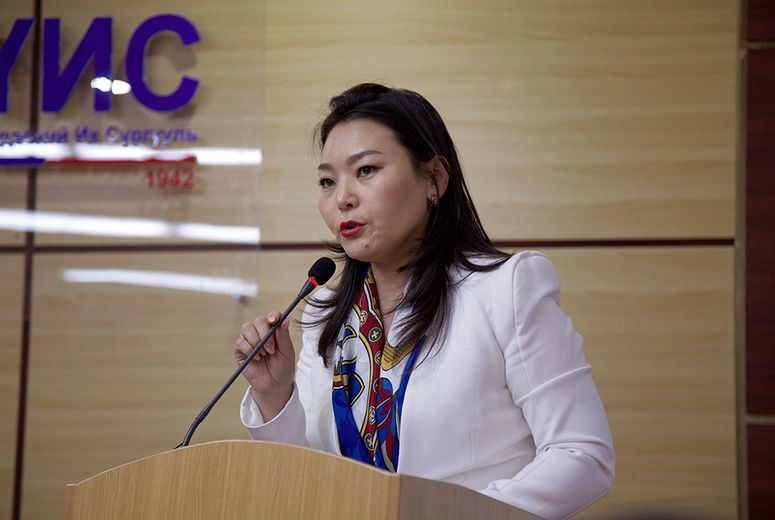
Her impact extends beyond research output to sustained academic mentorship. Across her academic career, she has supervised over 17 doctoral students and more than 40 master’s students, contributing to the growth of Mongolia’s public health and epidemiology workforce. In addition to her national research leadership, she has strengthened international research partnerships, under the Global Environmental and Occupational Health (GEOHealth) Center, her collaborative leadership with Dr. Gregory Gray from the University of Texas Medical Branch (UTMB) One Health program. This program has supported a joint effort to train Mongolian fellows and advance research collaborations in the intersection of epidemiology, environmental exposures, and population health.
In recognition of her contributions, Professor Davaalkham has received multiple awards from the Mongolian Ministry of Health and the Mongolian Academy of Sciences, as well as the Mongolian President’s Award, the highest honor from the Ministry of Education and Science. She has also received international recognition, including awards from professional public health organizations.
With leadership roles spanning academia, professional committees, and scientific publishing, Professor Davaalkham remains a central force in Mongolia’s public health landscape, advancing rigorous epidemiology, strengthening training pathways, and generating evidence that supports public health decision-making.