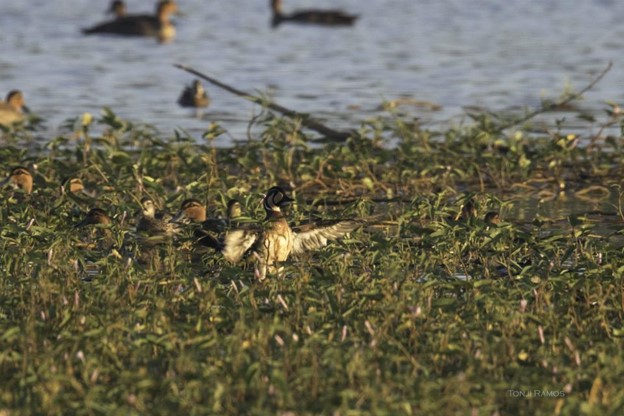

In November and December 2025, the Galveston County Health District (GCHD) reported confirmed avian influenza in local birds, with testing identifying Influenza Type A positive for the H5 strain, described as presumptively positive for Highly Pathogenic Avian Influenza (HPAI).1 That announcement wasn’t just a wildlife update; it was a One Health observation in real time. In Galveston County, 27 dead birds were reported, and ten were sent to the University of Texas Medical Branch (UTMB) One Health Laboratory for diagnostic testing and confirmation, reflecting the kind of rapid cross-sector response needed when an animal health event could affect pets and people.1 Avian influenza is primarily a disease of birds, but the virus can spill over into other animals under the right conditions.² While these viruses are mostly adapted to birds, history has shown they can occasionally infect people and other mammals—typically after close contact with infected birds or contaminated environments. Past spillover events, such as H5N1 and H7N9 outbreaks linked to poultry exposure, are why public health agencies emphasize early detection in animals. Monitoring and testing sick or dead birds helps partners understand where the virus is showing up, which species are affected, and whether the risk picture is changing.
According to GCHD, 10 people had direct contact with infected birds and were evaluated; those who developed symptoms were tested and the results were negative for influenza virus, and eight individuals received Tamiflu (oseltamivir) as post-exposure prophylaxis. GCHD also stated that there was no evidence of human-to-human transmission at the time and that the risk to the general public remained low. Nationally, the CDC continues to describe the current public health risk as low and uses multiple surveillance systems to monitor for unusual influenza activity.
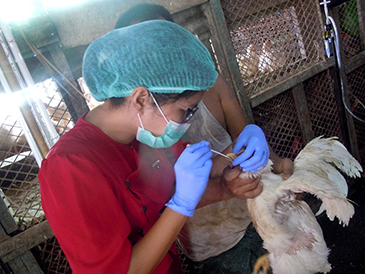
Because some mammals can be infected after contact with sick or dead birds, individuals are urged to take extra caution, especially to avoid contact with outdoor cats because they hunt or scavenge birds and therefore, are at higher risk of exposure to the virus.
Additionally, it’s advised to watch for symptoms in pets and other domestic animals, such as lethargy, loss of appetite, fever, breathing difficulty, discharge, neurologic signs (stumbling/tremors/disorientation), or sudden death, and seeking veterinary care if these occur.
This is exactly the kind of “connected systems” work UTMB One Health was built for, with a mission to improve health in humans, animals, and the environment through research and capacity building.3
A partial list of participants in the “Community-Based Partnership for Highly Pathogenic Avian Influenza Viruses among Deceased Wild Birds, Galveston County, Texas” include:
- Galveston County Health District: Philip K. Keiser, Amanda Wolfe
- Galveston County Animal Services: Shivonne M. Ryans, Robert Kaufman, Alexandra Sierra, Craig Mixson, Dontrae Smith, Emily Barnes, Faith Mohr, Gretchen Gray, Lori Mead,
- Galveston National Laboratory: Gene G. Olinger
- Division of Infectious Diseases, Department of Medicine, School of Medicine UTMB: Lyudmyla V. Marushchak, Judith U. Oguzie, Thang Nguyen-Tien, Jessica Rodriguez, Ismaila Shittu, Claudia M. Trujillo-Vargas, Susan L. F. McLellan, and Corri B. Levine.
- Department of Epidemiology, School of School of Public and Population Health UTMB: Caitlin J. Cotter, Jillian Clack
- UTMB’s Special Pathogens Excellence in Clinical Treatment: Susan L. F. McLellan, Corri B. Levine
References
- Galveston County Health District. (2025, December 1). Galveston County confirms avian influenza in local bird population. https://www.gchd.org/Home/Components/News/News/4936/65
- Centers for Disease Control and Prevention. H5 bird flu: Current situation. Centers for Disease Control and Prevention. https://www.cdc.gov/bird-flu/situation-summary/index.html
- The University of Texas Medical Branch at Galveston. About us (UTMB One Health). https://www.utmb.edu/one-health/about-us