
Within a decade only, the world was reminded, at enormous cost, that respiratory viruses in Orthomyxoviridae and Coronaviridae families, particularly those spilling over from animals, can outpace even the most advanced public health systems. In a recent commentary, “Influenza D and Canine Coronavirus HuPn-2018: Emerging Respiratory Virus Threats”, published in Emerging Infectious Diseases [1], researchers from the UTMB One Health lab cautioned that we may once again be overlooking warning signs.
Their focus was on two lesser-known, but potentially consequential viruses: FluD and a novel canine–feline recombinant alphacoronavirus known as CCoV-HuPn-2018. While neither has caused a recognized large-scale human epidemic, the accumulating scientific evidence suggests that both deserve closer public health attention.
Two Viruses, One Pattern
Influenza D: A Quietly Expanding Orthomyxovirus
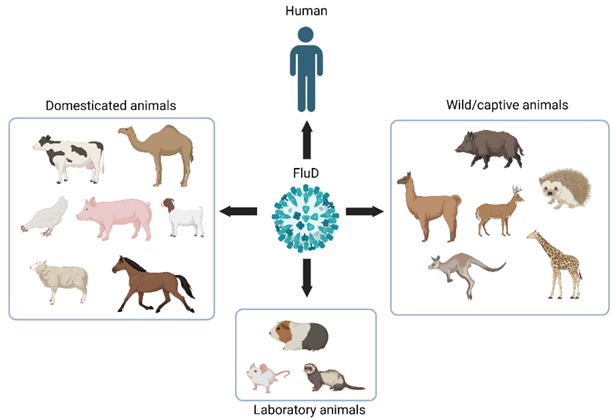
First identified and characterized in pigs in 2011 [2], influenza D belongs to the Orthomyxoviridae family, the same viral family responsible for past influenza pandemics. Although it primarily circulates in livestock, recent serologic studies, including one conducted in China [3] provided evidence of widespread human infection. Some findings suggested that the virus already possesses limited human-to-human transmission capacity.
CCoV-HuPn-2018: A Silent Coronavirus
CCoV-HuPn-2018 was first isolated from a hospitalized pneumonia patient in Malaysia in 2018 [4] and later detected among patients in Haiti [5] and Vietnam [6]. This recombinant alphacoronavirus is now recognized as the eighth unique coronavirus known to infect humans. Like other coronaviruses, it most likely emerged through recombination and cross-species transmission events.
The parallels with SARS-CoV, MERS-CoV, and SARS-CoV-2 are difficult to ignore. Members of the Coronaviridae family have repeatedly demonstrated their capacity to jump species barriers and adapt to efficient transmission to humans. Yet there are currently no commercial molecular or serologic diagnostic tests available for the routine detection of CCoV-HuPn-2018.

The One Health Imperative
Influenza viruses and coronaviruses circulate widely in animal reservoirs such as cattle, swine, cats, dogs, bats etc… and occasionally acquire the genetic changes necessary to infect people. This is where a One Health approach becomes indispensable. By integrating veterinary surveillance, wildlife ecology, human clinical monitoring, and advanced laboratory diagnostics, researchers can detect emerging health threats before they escalate.
The commentary emphasizes practical, achievable actions:
- Development of commercial real-time reverse transcription PCR diagnostic tests targeting FluD and CCoV-HuPN-2018 viruses.
- Periodic surveillance in pneumonia patients and in animals in geographic “hot spots” for viral emergence.
- Expanded use of pan-species Polymerase Chain Reaction (PCR) assays and next-generation nucleotide sequencing platforms.
- Early evaluation of antiviral therapies, and if warranted by epidemiology, consideration of vaccine development.
After two major respiratory pandemics in 2009 and 2019, the question is no longer whether zoonotic respiratory viruses will emerge again. It is whether we will recognize and respond to them intime. The One Health message is clear: preparedness must begin before human case numbers start to rise rapidly. By investing now in diagnostics, surveillance systems, and cross-sector collaboration, we can reduce the chance of being “fooled” again by a virus that was quietly circulating long before it was noticed.
References
- Gray GC, Vlasova AN, Lednicky JA, Nguyen-Tien T, Shittu I, Li F. Emerging Respiratory Virus Threats from Influenza D and Canine Coronavirus HuPn-2018. Emerg Infect Dis. 2026;32(1):1-6.
- Hause BM, Collin EA, Liu R, Huang B, Sheng Z, Lu W, et al. Characterization of a novel influenza virus in cattle and Swine: proposal for a new genus in the Orthomyxoviridae family. mBio. 2014;5(2):e00031-14.
- Gao H, Sun W, Lu P, Dong Z, Wu J, Li Y, et al. Efficient airborne transmission of influenza D virus in ferret models and serological evidence of human exposure in Northeast China. Emerg Microbes Infect. 2025;14(1):2564308.
- Vlasova AN, Diaz A, Damtie D, Xiu L, Toh TH, Lee JS, et al. Novel Canine Coronavirus Isolated from a Hospitalized Patient With Pneumonia in East Malaysia. Clin Infect Dis. 2022;74(3):446-54.
- Lednicky JA, Tagliamonte MS, White SK, Blohm GM, Alam MM, Iovine NM, et al. Isolation of a Novel Recombinant Canine Coronavirus From a Visitor to Haiti: Further Evidence of Transmission of Coronaviruses of Zoonotic Origin to Humans. Clin Infect Dis. 2022;75(1):e1184-e7.
- Phan PT, Wijayaratne G, Bodinayake CK, Oguzie JU, Nguyen-Tien T, Marushchak LV, et al. Diverse respiratory viruses detected among hospitalized patients with pneumonia in Sri Lanka and Vietnam. IJID Reg. 2025;17:100757.
- Tortorici MA, Walls AC, Joshi A, Park YJ, Eguia RT, Miranda MC, et al. Structure, receptor recognition, and antigenicity of the human coronavirus CCoV-HuPn-2018 spike glycoprotein. Cell. 2022;185(13):2279-91 e17.